Search This Blog

Saturday, May 19, 2018

Oscars 2018


I am too busy to write much this year about the movies. Here are my favorite from last year. Bold indicates a winner.


BEST PICTURE
Battle of the Sexes
The Beguiled
Call Me By Your Name
The Florida Project
Jumanji: Welcome to the Jungle
Lady Bird
The Little Hours
Logan
Thor: Ragnarok
Wakefield


BEST DIRECTOR
The Beguiled – Sofia Coppola
Dunkirk – Christopher Nolan
Lady Bird – Greta Gerwig
The Florida Project – Sean Baker
Call Me By Your Name - Luca Guadagnino


BEST ORIGINAL SCREENPLAY
The Big Sick – Kumail Nanjiani and Emily V. Gordon
Logan Lucky - Rebecca Blunt
Lady Bird – Greta Gerwig
Three Billboards Outside Ebbing, Missouri - Martin McDonagh
The Florida Project – Sean Baker


BEST ADAPTED SCREENPLAY
Logan – James Mangold
The Beguiled – Sofia Coppola
The Little Hours - Jeff Baena 
Call Me By Your Name - James Ivory
Jumanji: Welcome to the Jungle - Chris McKenna and Erik Sommers


BEST ACTOR
Logan – Hugh Jackman
Wakefield – Bryan Cranston
Call Me By Your Name – Timothee Chalemet
Jumanji: Welcome to the Jungle – Dwayne “The Rock” Johnson
Phantom Thread – Daniel Day Lewis


BEST ACTRESS
Lady Bird – Saiorise Ronan
Battle of the Sexes – Emma Stone
Three Billboards Outside Ebbing, Missouri – Frances McDormand
The Florida Project – Brooklyn Prince
The Shape of Water – Sally Hawkins


BEST EDITING
Baby Driver
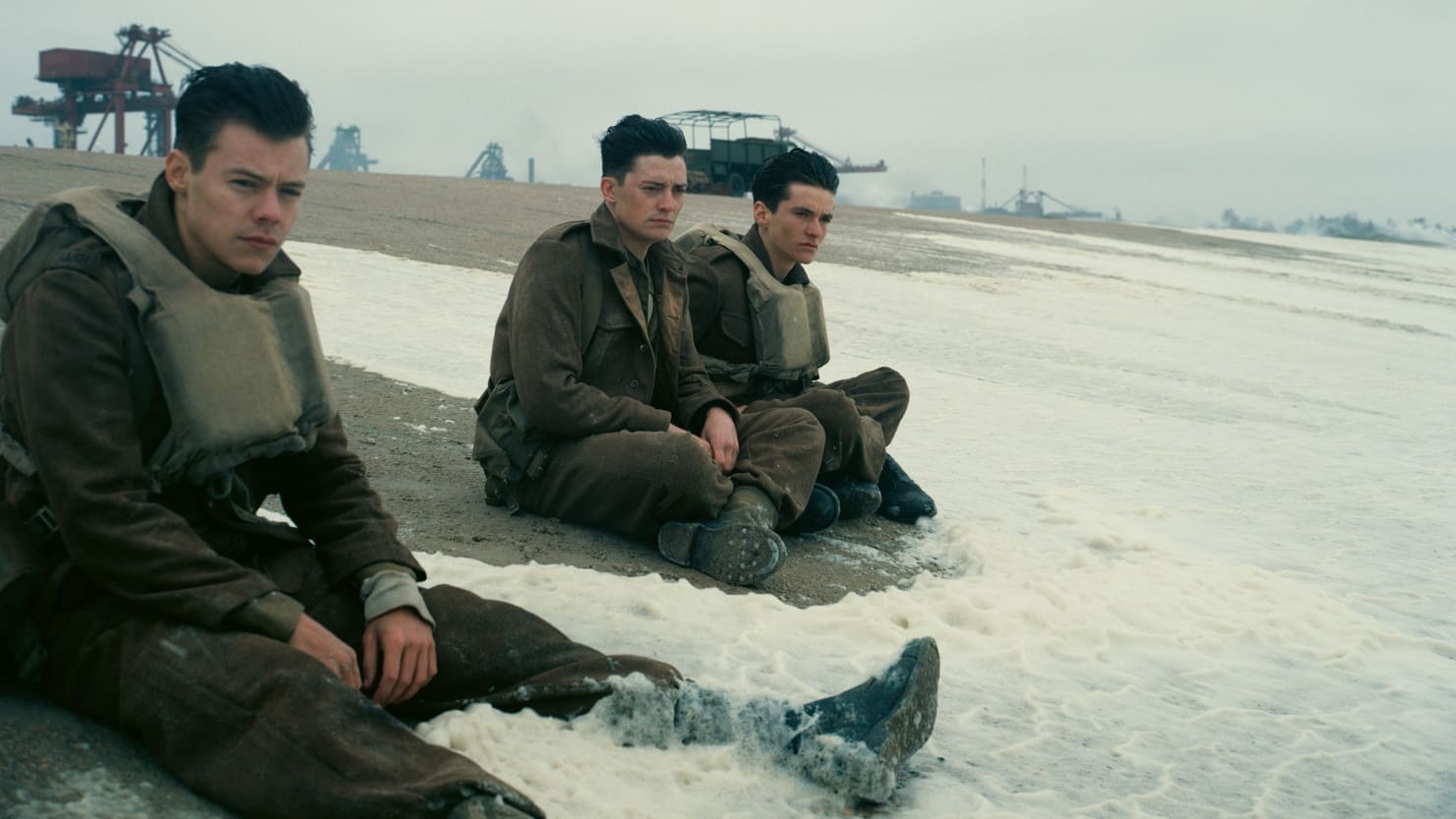
Dunkirk
Logan Lucky
Mother!
The Florida Project


BEST MAKEUP/HAIRSTYLING
Logan
Darkest Hour
The Shape of Water


BEST COSTUME DIRECTION
The Beguiled
Spider-Man: Homecoming
Blade Runner: 2049
Star Wars: The Last Jedi
Phantom Thread


BEST PRODUCTION DESIGN
The Beguiled
Blade Runner: 2049 
Thor: Ragnarok
The Shape of Water
Star Wars: The Last Jedi


BEST ANIMATED FEATURE
Coco


BEST CINEMATOGRAPHY
Dunkirk
IT
Blade Runner: 2049 - Roger Deakins!
The Shape of Water
Star Wars: The Last Jedi


BEST VISUAL EFFECTS
IT
Blade Runner: 2049
Thor: Ragnarok
Star Wars: The Last Jedi
Spiderman: Homecoming


BEST SOUND EDITING/MIXING
Baby Driver
Dunkirk
IT
Mother!
Star Wars: The Last Jedi


BEST DOCUMENTARY
Wormwood - Errol Morris


BEST SUPPORTING ACTOR
Christopher Plummer – All the Money in the World
Three Billboards Outside Ebbing, Missouri – Sam Rockwell
Mother! - Javier Bardem
The Florida Project – Willem Dafoe
Jumanji: Welcome to the Jungle – Jack Black


BEST SUPPORTING ACTRESS
The Beguiled – Nicole Kidman
Okja – Tilda Swinton
The Little Hours – Kate Micucci
Lady Bird – Laurie Metcalf
The Florida Project – Bria Vinai


BEST USE OF A SONG
Coco – Remember Me
The Little Hours – Gregorian Chant
Baby Driver – Mint Royale Blue Song
Baywatch – Panda Dance Scene
Logan Lucky – Take Me Home Country Roads by John Denver


Ready Player One (4/5 Stars)


Steven Spielberg, the father of blockbuster, made his splash in the genre in 1975 with the movie Jaws. In addition to being a great action movie, it had a great “making of” story. Apparently the main reason Spielberg kept the shark off-screen for most of the movie was because he couldn’t get his fake-looking mechanical shark to work. He spent most of the making of the movie innovating off of the top of his head various ways to accomplish the presence of a fearsome creature while not actually showing it. Contrast this situation with his latest Ready Player One, a movie backed by fully mature computer technology that can materialize anything Spielberg could possibly want and then some with an absurd ease. The climax of the movie is an insanely complex battle that takes place on an entirely digital snowscape with entirely digital characters, the most notable being Mecha-Godzilla and the Iron Giant. Think about it: only forty-three years ago, Spielberg couldn’t get his shark to work. The seemingly exponential progress of the visual arts in movies is absolutely mind-blowing.

Ready Player One seems preternaturally designed to exploit this new capability. The movie takes place in 2045 in a dystopic version of Columbus, Ohio. Apparently the outside world has turned to shit, so everyone now spends their lives in a virtual reality called the Oasis. The Oasis is everything you could possibly want it to be and you can be anybody you want to be in it (at least physically). It was dreamed up by a man named Halliday (played by Mark Rylance). It has rules much like World of Warcraft and leans heavily an ethos of ultimate freedom i.e. anarchy. Apparently if you kill someone in the Oasis, you get to keep all of their digital money and purchases. This lawlessness has seeped into the real world. A giant corporation has monopoly power on much of the Oasis and uses rent seeking to gain more. It also has a sort of debtor’s prison set up, where if you go into debt buying their stuff, you can end it up in a box in a warehouse in the real world spending your days mining virtual gold.

What drives the plot in Ready Player One is the last wishes of the Oasis creator. Apparently he hid an Easter Egg somewhere in the Oasis. The person who finds it, gets control of the entire thing. The Oasis creator also really loved 1980s pop culture, so every character who wants to find the Easter Egg has to steep himself in that stuff. In fact, there is a scene where the CEO of the evil corporation (who not coincidentally looks exactly like the principal in “The Breakfast Club”) tries to buy the services of our humble hero Wade. He attempts to do this by making a lot of 1980s pop culture reference, as if you know, he really cared about that stuff.

I for one do not care about 1980s pop culture references and believe that any author/screenwriter who believes that anyone in the 2045 would care is delusional. As Mr. Spielberg is responsible for many of the 1980s references himself, one could add the term narcissistic to delusional. And on a personal note, I have a general protest against metaness, in this case a heavy reliance on references to 1980s pop culture. Meta-ness is a bit like telling the same joke twice. It is remembering how great and/or funny some thing in the past was, which is generally an inferior experience to viewing something great and/or funny right now. (Why watch a movie that relies on your memory of past movies to work? Why not just rewatch the old movie? That is what I say.) But its not correct to simply attack the conceit of the movie without addressing how a movie is about it. Putting aside the silliness of the idea and the inferiority of meta-ness, the movie is well made. I mean that first car chase scene. Amazing.

My favorite part of this movie is the inclusion of a mercenary character named I-R0k, who is unmistakably voiced by the great T.J. Miller. The character looks like a bad ass. He has a cavity in the shape of a skull in the middle of his torso. However, he talks like a total nerd and gives away the underlying absurdity of this world, that however elaborate and mind-blowing it looks, it is actually just a bunch of people in trailer parks sitting on their couches wearing goggles.

Given how far the visual capabilities in movies have come in the last fifty years, it seems like it should continue to progress. But look at this movie, what is left to be accomplished in this field. What can be done visually that has not already been done before? Perhaps at this point, when visual delights like this become routine and maybe boring, the movies will come full circle and recreate the problem Spielberg encountered in Jaws. That is, the shark wasn’t working so he could not rely on anything visual to create action and suspense. Instead, he focused on story and character. If scenes like the war in Ready Player One become common-place, and there is nowhere bigger and elaborate to go, perhaps the movies will finally get back to the basics of storytelling.

Sunday, April 29, 2018

Isle of Dogs (5/5 Stars)


 Crisis! Setting: The Japanese Archipelago, Megasaki Prefecture. An epidemic of snout fever is raging through the population of dogs with no signs of abatement. Mayor Kobayashi initiates a dramatic solution: Ban all dogs to the nearby trash island. Wholly Moses! Whatever happened to man’s best friend?

So begins in efficient precision the conceit of Writer/Director Wes Anderson and co.’s third masterpiece in a row (following Moonrise Kingdom and The Grand Budapest Hotel) the Isle of Dogs. I say Wes Anderson and co. because it so obvious from his last three movies that he has assembled an extraordinary crew of artists around him. These movies are quite frankly on another level. A few words of effusive praise can be spent on the look of the movie. It is rendered in spare crisp black and white tones, obviously heavily influenced, nay in direct homage, to the efficient elegance of the best of Japanese art. It is an animated movie, using the same stop-motion technology and style Anderson previously used in Fantastic Mr. Fox. As such, the entirety of each and every frame is designed. And what design! Pick a frame at random and you’ve got a painting.

After the dogs are unfairly marooned, a young boy named Atari pilots his way to the Isle of Dogs to find his beloved dog Spot. Atari his helped in his search by a group of dogs with names such as Chief, Rex, Boss, King, and Duke, voiced by such A-listers and Anderson regulars as Bryan Cranston, Edward Norton, Bill Murray, Bob Balaban, and Jeff Goldblum respectively. Why do they help the child? Because they are dogs and dogs love children. Such cute logic is all over this movie. (For example, a not-so-subtle reason for the nefariousness of the Kobayashi clan is the fact that they are associated with cats. The ancient grudge between cats and dogs is continued). The plot is disarmingly simple and the sympathy it commands so persuasive (unless you’re are some kind of cat-lover/dog-hater) that I expect this movie will become the favorite movie of legions of children. For once, grateful parents will have at least one movie their kids are obsessed with that they would not mind watching a hundred times over.

Isle of Dogs is routinely funny in that wry and dry Wes Anderson way. His humor has gotten sharper over the years and his last three movies are a testament to that. There is a particularly good joke concerning a dog, called the Oracle, who the other dogs believe has special powers. Actually she has figured out how to watch T.V. and is letting everyone know what she is sees on the news.

The pathos works as well. One flashback scene shows the first meeting of Atari and Spots, his newly assigned guard-dog. Spot, as if a seasoned professional, describes at length his employment to Atari, the various functions he has and his and commitment to Atari’s well-being. “In other words,” Spots concludes, “I am your dog.” There is a simple profundity to that which just killed me.

I have left to discuss perhaps the more original and inventive detail of Isle of Dogs. The human characters are Japanese and speak Japanese, which the movie chooses to not provide subtitles for. The barks of the dogs, however, have been rendered into English. This provides for a unique experience in which half of the dialogue is not understandable, or is being translated by more-or-less reliable translators. There are enough visual cues so that an English only speaker can definitely understand what is going on, but the decision made by Anderson to not provide a translation of the Japanese is an interesting one. Like Lost in Translation, I expect part of the experience is not understanding the Japanese language. Or it could be that Anderson wanted to make it clear that the Japanese and the dogs indeed speak different languages and do not fully understand each other. In any case, it works.

I always pegged Wes Anderson as more of a “cat guy”. Obviously, I was wrong.  


The Death of Stalin (5/5 Stars)


Democracies get all the bad press as dictators and totalitarian governments don't allow their citizens to complain about them. So there seem to be several movies a year that feature the failings of American politics (not to mention daily editorial pieces in press) but not so many concerning the truly awful governments. When the truly awful governments are covered, they get the Nazi treatment so to speak. They are the evil antagonists in the action blockbuster or serious drama. Almost never are unspeakably bad governments used for laughs. That makes the horrifying and hilarious satire “The Death of Stalin” a rare treat. Watching it will not only make you laugh but thank your lucky stars no movie like this could ever be made about America.

The writer-director of “The Death of Stalin” is Armando Ianucci. It is a perfect meeting of man and material. Mr. Ianucci has spent the last decade and a half satirizing British politics (“The Thick of It”) and American politics (“Veep”) and at least one time both (“In the Loop”). Mr. Ianucci specializes in cruelty. In British and American politics this played out in bullying, betrayals and language whose foulness is matched only by its creativity. In Soviet politics, women are raped and men are murdered. Mr. Ianucci may be the only person in the business that could have pulled off the black humor in this picture as well as he does.

If one ignores the sheer terror of it all, Russia under Stalin had a lot that was funny about it. When Stalin collapses from a stroke late one night, his guards are so scared of Stalin’s potential anger for needlessly interrupting him that they pretend not to hear anything. Stalin is not discovered until the morning. When he finally is discovered, it is determined that a doctor should be called. However, Stalin had previously ordered the murder of all the best doctors in Moscow because he believed that Western medicine was a conspiracy. The inferior doctors are brought in to help. However, they do not use the equipment that would save Stalin’s life because it was manufactured in the United States. Stalin eventually dies betrayed by the incompetence his despotic rule bestowed upon his country.

The movie is the comedic version of “1984”. Everyone participates in ‘double-think’. That is the ability to know something is untrue and to believe it anyway because Stalin said so. Everyone knows that Stalin is a homicidal maniac. When they hear of his death, they grovel and weep and mourn deeply their country’s awesome loss. Meanwhile a power vacuum has opened and the members of Stalin’s highest committee start vying for power. There is a great scene where they must pretend that Stalin is without error while making their first order of business to halt his latest round of political assassinations ordered just a week before.

The two men vying for ultimate power after Stalin’s death are Lavrenti Beria (Simon Russell Beale), the head of Stalin’s secret police, and Nikita Khruschev (Steve Buscemi). Stalin’s successor-in-name is his deputy Georgy Malenkov (Jeffrey Tambor). Rounding out the committee is Vyacheslav Molotov (Michael Palin). Mr. Ianucci makes an interesting choice in directing the actors to use their regular voices instead of adopting Russian accents. This choice is confusing and then illuminating. After all, Russians do not hear accents when they speak to each other. (The best version would be for all the actors to speak Russian. However, that would impair Ianucci’s ability to write sharp satire in his style.) So everyone might as well speak in their native accents. This reminded me of the American accents in “Amadeus”, which also worked remarkably well.

The performance of Steve Buscemi is a revelation. Like the actor, the man Khruschev seems a harmless character actor. But this betrays a deep political cunning, which Iannucci and Buscemi slowly develops until the moment of action when Nikita outmaneuvers his enemies and takes control. Then the comeuppance is chilling and exhilarating. As Khruschev also seems to be the least worst of all the members of the committee, this brutal satire also unexpectedly has a happy ending. Jeffrey Tambor as well is perfectly cast as a weak man. Michael Palin’s presence appropriately connects Iannucci’s cruel style with its most obvious predecessor, Monty Python. This is a great movie. Unsurprisingly, it has been banned in Russia. Apparently they are still afraid of Stalin over there.  

Friday, March 30, 2018

Black Panther (5/5 Stars)


I would hesitate to say this next thing if it hadn’t been for multitudes of people saying it before me. In fact, before seeing Black Panther I would have argued against it. I would have pointed to about thirty years of movies starting with Spike Lee and John Singleton to argue that black representation in film has been around for awhile. Important movies about the black experience in America have been made by distinguished filmmakers (say Amistad and 12 Years a Slave). There have even been black super-hero movies (Blade and Hancock). But Black Panther is a special movie. Never before has a very large studio thrown so much money and effort in such an unadulterated way towards making an arguably “African” movie. Black people have always been with us but not really like this. Like India in Slumdog Millionaire and China in the opening ceremony of the 2008 Beijing Olympics, Black Panther can be categorized as a “coming out” party. And what a party it is.

For one thing, black people are being represented from a position of strength. The Black Panther, as a Marvel Superhero, is the crown-prince of the fictional kingdom of Wakaanda. Wakaanda is based on the old European myths of utopic cities such as El Dorado and Shangrila that stayed in static idyllic peace while the outside world suffered through the hell of progress. Wakaanda is situated on top of large deposits of Vibranium, a mineral that seems to literally do everything from providing energy, making airplanes, and cloaking entire cities from view of the outside world. As far as the country’s wealth in concerned, Wakaanda is a production designer’s magnum opus of contradictory elements. Wakaanda is essentially a science fiction version of Africa, traditional elements intertwined with technology several decades ahead of the rest of the world. The same can be said of the costumes and makeup of the movie, all three of which should run away with Oscars next year. Black Panther is a gorgeous movie in all its respects. Wakaanda is also an Enlightened country. Even though Wakaanda’s political model is based on fights to the death for dominance (this is a comic book movie after all), women apparently have equal status as men and actually form the most prestigious parts of the army as well as, as far as I could tell, the one and only scientific post in the whole country.

(For reasons that could fill several books, the idea of an isolated highly technological egalitarian utopia is stupidly wrong. The apparent location of Wakaanda, northeast Congo, also known as the world capital of anarchy, poverty, and rape, is the perfect location for the manifestation of a stupidly wrong idea. However, as this is a comic book movie, I will try to refrain from lecturing on the subject of economics.)

The main theme of the movie is whether or not Wakaanda should use its wealth and technology to help the rest of the world or to conquer it in revenge for the oppression of black people. In an interesting twist, the rest of the world is mainly represented by the projects of Oakland, California (where it should be noted, Director Ryan Coogler is from and where he made his first great movie Fruitvale Station). The movie handles this subject the way Nelson Mandela would handle it, with great maturity.

I’m not exactly sure what the black panther legend means in Africa or where exactly it comes from. Here, in America, the Black Panthers were a militant vigilante group that took it upon themselves to police the police, sometimes coming in direct conflict with them (I am also told they did community service). The Marvel superhero actually precedes the militant group by several years and simply does not have the same philosophy. Actually, the philosophy of the militant group is more closely aligned in Black Panther by the main bad guy, a man named Killmonger, played by Michael B. Jordan. This is a black panther in the American sense. Fueled by resentment and hatred, he is bent on using Wakaanda’s wealth and technology to burn everything down. Coogler’s treatment of Killmonger is empathatic but not sympathetic. He develops the character well and explains his actions, but ultimately does not agree with him.

There is one particular scene that stood out to me. When the Black Panther (Chadwick Boseman) is first made a King, he goes through an ancient ritual in which he visits his ancestors in an ethereal version of the Serengeti. Later on in the movie, Killmonger goes through the same ritual. However, as his father was an exile from Wakaanda, Killmonger visits him where he ended up dying, a project in Oakland, California. It is a scene of great gravity and incongruity and one of the best manifestations of cultural displacement I have ever seen in a movie. It perhaps can be said that a King of a wealthy country like Wakaanda is privileged and can afford then to take a Nelson Mandela (also of royal blood) view of the world whereas Killmonger grew up poor and excluded and is entitled to his resentment. But no matter, the point I believe is that black people want to have the decision to choose to be included in the world. Given the choice, it seems that Black Panther is stating that they would choose inclusion. That’s fine with me. If that is where the words "black panther" lead now, I will follow.

So much of black culture seems to be simply reactionary to white culture (a dumb generalization but I don’t want to spend the space to get any more specific). By positioning Black Panther’s arguments and themes in a place outside of white influence, it allows the “peace and inclusion” choice to avoid the Uncle Tom label of appeasement. In recent years, I have been continually annoyed by other black movies (“black movies” another gross generalization but I won’t spend forever writing this) from the incompetent Selma to the insult-to-history which was Birth of a Nation to the multitudinous iterations of "untold stories" of the "first black ___ to do ___” like Hidden Figures that arrive in theaters in a ever-reliant stream. If the complete absence of white people in Black Panther indeed enabled its philosophical maturity and creativity, then we should start producing more "black movies" set entirely in Africa and/or space (having said that, the performance of Andy Serkis and Martin Freeman were fantastic in Black Panther). I also hope that Ryan Coogler can make some more personal movies. Chistopher Nolan got to switch between regular movies and blockbusters. Hopefully Coogler gets a similar deal.

The Florida Project (5/5 Stars)


Roger Ebert once remarked that the power of movies was derived from their ability to act as empathy machines. A great movie allows the viewer to experience different points of view, different people on different continents and in different periods of time. This movie is a great illustration of that insight. I knew nothing of this world and now I feel like I have spent several hours ensconced in it.

Writer/Director Sean Baker has been making movies for a good twenty years now, but he made headlines big enough to garner my attention a few years ago when he shot an entire movie on an iPhone. That movie was “Tangerine” and to my delight it was a real movie that contained a gimmick and not the other way around. More notably, “Tangerine” was about something I had never seen a movie about: a romantic rivalry between transvestite prostitutes with a subplot about a homosexual immigrant Armenian married-with-children taxi driver that frequented the services of the streetwalkers. Again, as Roger Ebert remarked again, to judge a movie objectively you must divorce yourself from the idea that a movie’s worth is derived from what it is about. You must judge the movie based on how it is about how it is about. The plot of “Tangerine” contains many choices and controversies that most of us would find crazy and petty. However, the characters in the story took the problems seriously and the movie took the characters seriously. I did not agree with what was going on but I understood it and in this way the movie must be judged as a good movie.

“The Florida Project” asks the same leap of the audience, to understand various people on the edge of society that are under stress and not dealing with it in constructive ways. What differentiates “The Florida Project” from “Tangerine” though is that it contains at least one great person among the throng of misfits and sublime vignettes of genuine beauty.

The story concerns the very free range childhood of Moonee (played by Brooklyn Prince) one summer in the cheap motel outskirts of Disneyworld, Florida. For all intents and purposes, Moonee and her mother Halley (played by Bria Vinai) are one step from being homeless. They live week to week in the cheapest of motels called “The Magic Kingdom”. The motel, painted bright pink, is home to those just visiting and those on the outskirts of society. It attracts a certain crowd of people that it takes a large degree of patience to work with. The hotel manager, Bobby, not only takes care of the motel, he in large part takes care of the people who live there. And especially, he takes care of the kids of the not-so-responsible adults that find themselves in such a place. A very interesting and sometimes heartbreaking part of Bobby’s job is the line he draws between people who are invited to stay at the hotel and those who are so far out of the mainstream that they become disinvited.

The sense of place that Sean Baker creates is indelible. If you didn’t know how a cheap motel works and the various sorts of people that frequent there you will have a good idea by the end of this movie. Our guide is Moonee a rambunctious six or seven year old as she finds and becomes best friends with another girl who just moved into the motel across the street, the Purple Castle. They explore the main strip, conspire to procure free ice cream, and generally annoy Bobby. At times I was taken out of the movie by just contemplating how natural is Brooklyn Prince’s performance. I’m not sure what spell Sean Baker cast over the child but he is getting scenes and reactions out of Moonee that seem impossible when one considers the difficulties of working with children.

The enabler of Moonee’s carefree sometimes dangerous childhood is her mother Halley. Moonee’s father is not around nor does Halley bother mentioning him during this movie. Halley is a bit of a free range child as well and the movie’s plot arc has more to do with Halley’s decline in prospects than any substantial change in Moonee. Sean Baker’s treatment of Halley says a lot about his great compassion for his characters. Baker is not defending Halley’s actions, but he does not condemn her unnecessarily as well. Nevertheless when child protective services shows up at the end, the audience understands why they have come and they understand why Moonee and Halley probably should be broken up. As Moonee’s childhood is a happy one and her mother obviously loves her, the actions of the government have more to do with a question of culture than a pattern of abuse. It fairly reminds me of the reasons given by past governments to separate children from indigenous tribal people and put them in government run orphanages and schools. That is, they simply believed the children would be better off. This is a good movie to have an interesting conversation with the people you have seen it with. “The Florida Project” is one of the best movies of 2017.

Monday, February 12, 2018

Phantom Thread (4/5 Stars)


Paul Thomas Anderson has my vote for the world’s most enigmatic writer-director. If I were to define his career into a type, most likely his next movie would prove me wrong. This is his filmography: “Hard Eight”, “Boogie Nights”, “Magnolia”, “Punch-Drunk Love”, “There Will Be Blood”, “The Master”, “Inherent Vice”, and now “Phantom Thread”. One used to be able to define him by locale. His first eight films all took place or were at least tangential to Southern California. “Phantom Thread” is about a dress-maker who lives in London, England. Its off the grid and comes back to back with “Inherent Vice” a movie that could not be more opposite in style and tone. As loose and wild as “Inherent Vice” was, “Phantom Thread” is uptight and repressed. The main character is Reynolds Woodcock, an aging dress-maker played by Daniel Day-Lewis at his most fastidious. At this rate, P.T. Anderson’s next movie might take place on the moon.

“Phantom Thread” presents an intense character study and utterly strange love story. Reynolds Woodcock is a great artist who uses the high demand and idol worship of his craft to tightly control the people in his life. In an early scene, brilliant in the efficiency of its setup, he breaks up with a significant other. She brings up during breakfast the fact that he does not pay enough attention to her. He responds that he has to deliver a dress that day and that he cannot start the day with a confrontation. She leaves and he does not seem to be bothered one bit. The line of people who want his attention are around the block outside.

Enter into his life, Alma, played by Vicky Krieps. He picks her out at a restaurant where she is a waitress because she is his favorite body type to make dresses for. Alma is a nobody next to Woodcock. Vicky Krieps could be said to be just an unknown (at least to me) opposite to Daniel Day-Lewis, one of the greatest actors in movies. At first glance, she would not seem to stand a chance in this relationship given the extraordinary level of competition for Woodcock’s affections and his intense focus on his work.

The movie is rather simple plot-wise so I will say less about it other than that Alma proves to be an especially worth adversary in the battle for Mr. Woodcock’s affections in ways that illustrate the notion that all things are fair in love and war.

The power struggle between Alma and Mr. Woodcock is surrounded by impeccable costume design. I have not the slightest notion of high fashion, but the women looked good in the dresses, that much I can say. Daniel Day-Lewis once again has the preternatural ability to convince the audience that he is and always has been this particular character. His retirement announcement is laughable given that he has only acted in six movies from 1998-2018 (Oscar nominated four times in that span, batting 0.750). I figured he was already retired and that he does acting gigs as a respite from not working. I expect we will see him once more in the 2020s just as soon as he feels like returning calls from A-List directors beggin to offer him another role of a lifetime. 

Sunday, February 11, 2018

Call Me By Your Name (4/5 Stars)


 Elio lives a charmed life. He is the teenage son of a graduate professor named Mr. Perlman and a mother who apparently inherited a Tuscan estate. Every summer the family vacations for three summer’s in an Italian paradise. They eat outside underneath olive trees, food served by the ancient stewards of the estate. There is wine and fish caught fresh from the nearby lake. There are teenage girls in the town that have the care-free summer off as well. Mr. Perlman seems like he is the friends of the most interesting people in the countryside. They come over for dinner and have conversations about highly intellectual topics. Mr. Perlman himself is an expert in ancient languages. Elio’s hobbies are swimming, flirting, and transcribing musical compositions. Really, the hardest thing about this movie is trying to shun the crushing sense of envy one feels while watching it. This looks and feels like the world’s best summer vacation.

The only thing that could possible count as some sort of conflict in this story is a forbidden love situation that also turns out as well as things possibly could have. Mr. Perlman, played by Michael Stuhlbarg, invites one of his graduate students to spend the summer with him as a research aide. This summer it is Oliver, played by Armie Hammer, a tall strapping late twenty-something. Elio, played by Timothee Chalamet, little by little falls in love with him. It is 1983, so homosexuality is still a concern to these particular characters. A 2017 audience will be more concerned about the fact that Elio is underage. This thorny issue the movie deftly handles with something akin to grace.

Most importantly, almost the entire story is told from the point of Elio, which provides the character with a high degree of agency. Timothee Chalamet here provides a sublime performance that has deservedly garnered him an Oscar nomination. It is a tricky feat to pull off, because the character cannot be any more articulate than a teenager and must necessarily convey a certain non-understanding of his homosexual feelings that apparently he was unaware of before this particular summer. He wants Oliver but at the same time understands the awkward position he is putting the older man in. He is also obviously nervous about revealing his feelings when there are so many good reasons why he would be rejected. To count the prospective ones off: Oliver believes it would damage his relationship with Mr. Perlman, Oliver does not have reciprocal feelings for Elio, Oliver has reciprocal feelings but does not believe he should act on them because of either a stance against homosexuality or Elio’s age, or Oliver likes Elio but not in a sexual way because he is not a homosexual himself.

How Elio comes out to Oliver is a tour de force scene of movie directing. Director Luca Guadagnino blocks the scene in front of a World War I memorial in the old Italian town’s square. It is the middle of the day, the square is deserted. The camera watches the action far away in a long shot. Oliver and Elio start the scene talking about the memorial. Elio stays on one side while Oliver walks around it on the other side. Although we hear Elio, we never see his face. The conversation switches from the memorial to an almost existential conversation about knowing things and wanting other people to know about the things you know. Almost nothing is actually said. There are no close-ups. But the amount of information conveyed to the audience is enormous. It is one of the best directed scenes of the year.

The movie’s theme is actually summarized in a scene near the end by Mr. Perlman. In most other movies, such an obvious exposition of “meaning” would not kindly looked upon. But this movie by that time had earned such a speech by living it out in real time for two hours. And Mr. Perlman, an educated and sensitive man, is actually a character well qualified to give it. This is the experience of “Call Me By Your Name” in a nutshell: A lot of scenes handled with grace and sensitivity that would probably crash and burn in offense and awkwardness in less qualified movies.

Not that all romances could be shown in this light. I do not believe a heterosexual romance of this kind would work even with the deftness of the makers of “Call Me By Your Name”. The closest movie that I believe has come to it was “Diary of a Teenage Girl” from 2015. I say that movie was the most similar because it too provided the very rare level of agency afforded to Elio here. However, it still concluded that the older man was not a good person. Is it possible that a movie someday could look on a heterosexual romance like the one seen in “Call Me By Your Name” and conclude that the older man is not guilty of something? Maybe, but not yet.