Search This Blog

Showing posts with label benedict wong. Show all posts

Monday, November 30, 2020

The Personal History of David Copperfield (4/5 Stars)


Writer/Director Armando Iannucci is one of my favorites. He is responsible for the early career of the British comedian Steve Coogan (David Partridge) and the best TV show about British politics (The Thick of It). Thereafter, he made a great movie that crossed over his British political show into American politics (In the Loop) and then seamlessly transferred his skills to one of the best shows about American politics (Veep). Since leaving Veep, he made a masterpiece, The Death of Stalin, which I called in my review a perfect marriage of artist and subject matter. His work, a worthy successor of Monty Python, is defined by that very British and very cruel sense of humor (a worthy American successor of Monty Python along the same lines is South Park). 

In the spirit of Monty Python then, And Now for Something Completely Different! For the first time in Iannucci’s career, he has expended money on set design and costumes. The Personal History of David Copperfield is a lark to look at it. It adapts the 19th century Charles Dickens' novel with color and flair. The stolid realism of his political films is completely gone. Moreover, the movie's storyline zips and churns through scenery and characters in a frenetic and fantastic pace. It is a giant leap in style for Iannucci and he accomplishes it like a natural.

The screenplay which Iannucci co-wrote with longtime collaborator Simon Blackwell. I have not read this particular Dickens work novel, but having read other of his books, I expect the screenwriters put in excellent work, omitting much extraneous details were successfully edited out while successfully retaining the emotional core and finding room for plenty of jokes. This does not feel like the usual Dickens adaptation, which is all the better because I have never felt Dickens to be especially adaptable.

In fact, I’m not sure I particularly like Dickens. I'm not sure I approve of the way he gave characters names that automatically signaled how you are supposed to feel about them, as if a book could be judged by its cover. Anyhow, if one were to adapt a Dickens book, what with all its contrivances, this would be the movie to show it is to be done. The unabashedly caricatures of personality are here. David Copperfield is as earnest as earnest comes. Mr. Murdstone is a mean monster. Uriah Heep is a total piece of shit. It is an unfair story told in an unrealistic abstract way as if to signal to the audience like a B movie would, hey this is not real life, have fun and enjoy yourself.

This brings me to the most noticeable part of the movie, what the movie has termed “color blind casting”. As you may suspect, this 19th century British novel about British people ought to be entirely populated by British people. However, Iannucci has cast an Indian in the title role (Dev Patel of Slumdog Millionaire fame), and several black people, some other Indians, and a Chinese man (Benedict Wong) in several of the supporting roles. 

Does this work? I am reminded of one of the stupider conversations I ever had with someone, a former roommate that attended the same college as Lena Dunham. He believed that Leonardo DiCaprio’s role in The Revenant could have been played just as well as a black man. (This role is based on the real-life personage of a fur trapper in 1820s America in the Louisiana Territory). I thought that point of view was idiotic. The movie was attempting to be as realistic as possible. It went so far as to shoot only with natural light. An undisguised black man as the protagonist would have been absolutely weird. I still stand by this sentiment, but at the same time, as a resident of New York City, I have seen many productions of Shakespeare plays which rely on color-blind casting. And for Shakespeare plays, color-blind casting works very well. After all, Shakespeare never had production value so there is very little realism in his works. The merits of his plays rely almost exclusively on the poetry of his words and acting, which can be done by anyone who can master the correct accent and style of performance. The color blind casting here works in the same way. There are many different ethnicities represented by the actors, but every single one of them speaks their lines in perfect 19th century English accents. (Not coincidentally I suppose, but the actors, if not British, come from places that have ties to the British Empire, in particular India, Africa, and Hong Kong. There are no Latin or Arab cast members).

The way the movie is presented is itself more abstract then realistic. Within this environment it makes sense to simply find the best actors around. Dev Patel, who has a very Tom Hanksian earnest everyman quality to him, is well cast in the lead role of David Copperfield. And I always like seeing Benedict Wong in anything. It would have been awesome if that was Chloe Sevigny in blackface, but apparently there is a black woman who looks just like her with the name of Rosalind Eleazar. The rest of the cast that is white is a who’s who of interesting actors: Tilda Swinton, Hugh Laurie, and Peter Capaldi amongst them. Then there is Ben Whishaw who plays Dickens’ classic creep Uriah Heep. He does a particularly good job at making one’s skin crawl as soon as he shows up on screen. I am reminded once more by how much Dickens hated lawyers.

The movie moves swiftly from interesting caricature to interesting caricature and through comedic interludes and dramatic pratfalls. It ends with a artistic cop-out that is becoming as cliched as a story ending in marriage or death. The main character aspires to be writer. He writes a book about the people within the story. This story is published and becomes wildly successful. And The End, Happily Ever After.

I have seen this sort of ending perhaps a dozen times. What does it mean? Does it not say that all the hardships we endure in our lives can be automatically validated if the general populace pays attention to it and bestow upon the writer fame and fortune? Is that true? If two people have an argument, and only one is famous, and as a result only one side of the argument is told, is there then only one side of the story, and the argument won. Perhaps I am being a little cynical. However, it has been postulated that David Copperfield is a veiled autobiography of Dickens. If it supposed to be at all objective, is it fair to give your step-father the surname of Murdstone or to name anyone you once knew Uriah Heep. Apart from that, I really did like this movie.

Friday, December 9, 2016

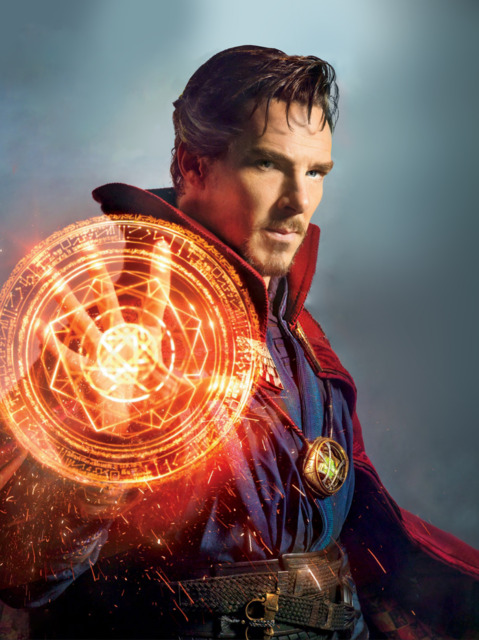
Dr. Strange (4/5 Stars)


I read somewhere that Marvel had just made the 13th successful blockbuster in a row. It speaks to the strength of the brand. True, it has a tremendous advantage in having a backlog of sixty years of story and the built-in audience to boot over other great brands such as Pixar, but that shouldn’t take away from the great franchise craft that can be found in these movies. “Dr. Strange” is one of my favorites already. It was so good that I saw it twice in a theater and took my family to see it over Thanksgiving.

Blockbusters are mainly to be seen for Spectacle. Spectacle should be big but also unique as should convey a sense of awe on the viewer. Given the consistent multitude of Spectacles that all look alike it is hard for any single one to have a great deal of their impact. A city being blown up hardly excites me anymore. I’ve already seen it many times.“Dr. Stange” to its great credit, showed me Spectacle I had never seen before. It was awesome.

To explain how, here is a character from the movie: “The Avengers protect the world from more physical dangers. We protect the world from supernatural forces from other worldly dimensions.” Like many comic books, “Dr. Strange” melds modern science with ancient bullshit. Dr. Strange practices magic but this magic comes in the form of 21st century mathematical babbel about relativity, the multiverse, and particle physics. The audience hardly understands either so I guess it makes sense to put them together. Anyway during certain fight scenes, the magic works less on the participants of the fight than on their surroundings. Spells are casts and buildings fold up and down, the axis of the world tilts, gravity goes every which way, and then everything splits up in a crazy fantastical kaleidoscopic effect. You really have to see it to believe it. I was blown away a couple of times by what was going on.

What makes it great of course is not necessarily that things are crazy, but that these things are explained, have rules, and follow them. The biggest laugh in the movie contains a fight between two ghosts of two physically comatose people in a hospital emergency room. How the movie gets there is just superb story-telling. It is a very nice ‘aha!’ moment.

Dr. Stephen Strange of course believes none of this in the beginning. He is a famous and successful brain surgeon dedicated to science. Like many Marvel Superheroes, his main flaw is arrogance (an all too common flaw for superheroes I still believe) and after an accident that ruins his hands, he humbles himself and seeks help from The Ancient One who lives in a monastery in Tibet. The background of these training scenes are perhaps more interesting than what takes place during them as it illustrates the benefits and limitations of corporate marketing.

This Tibetan monastary is an exceptionally diverse Tibetan monastary. The three main wizards are a Black Man named Mordo (Chiwetal Ejiofor), a Chinese man (Benedict Wong), and a Woman (Tilda Swinton). There are a multitude of others in the background. I spotted a Japanase guy somewhere at some point. White men are represented by our main protagonist, Dr. Steven Strange (Benedict Cumberbatch playing another snarky genius) and our main antagonist, Kaecilius (Mads Mikkelson). Everybody seems to be here except, well, Tibetans. Now the Tilda Swinton character, The Ancient One, used to be Tibetan in the comic book. But she was changed to a Celtic sorceress in the movie. Why? Well, one of the main markets for Marvel movies is China and the Chinese don’t like it when you say good things about Tibetan monks. Also notice that the three main sanctuaries for the wizards are located in New York, London, and Hong Kong. Now why would these three locations be all that special in terms of magic. The answer is they aren’t. What these three places happen to have in common is that they are major financial hubs, the three biggest in the world actually.

You can take a look at this and see crass manipulation of character and location for marketing reasons and corporate gain as well as craven capitulation in the face of a corrupt Chinese government. But you can look at the glass half-full as well. For instance, when corporations try to make as money as possible, they follow a strategy of inclusion. So these stories contain as many different and diverse people as possible. And really its the Chinese government, not Marvel, that are jerks at the end of the day. If Marvel wasn’t being pressured (i.e. the market was more free in China) The Ancient one would have remained Tibetan and we would have all enjoyed a movie that would have been even more cosmopolitan.


p.s. Conveniently, I can date back the start of the Marvel Universe (I put that at 2008’s Iron Man) with my arrival in New York. Yes, every time the Avengers and their enemies destroyed New York City, I was living there.

Saturday, October 10, 2015

The Martian (5/5 Stars)


Science. It works, bitches.
- XKCD T-shirt

“The Martian,” like this year’s other great blockbuster “Mad Max: Fury Road” is a movie that would not have been possible before the silent revolution in moviemaking that took place early this century. It is a niche blockbuster that combines the sort of expensive spectacle you have seen before with an unapologetic high common denominator focus of a particular audience. With Mad Max it was gearheads and metal freaks, in this case its engineering nerds and space wonks or whatever they call themselves. Gone are all the trappings of a Hollywood movie. There is no love triangle or family drama, no superpowers or aliens, no class warfare or crime, or even sex and violence. There is a Mars mission already underway at the start. There is a sandstorm and the team has to abort. During the abort, astronaut Mark Watney (Matt Damon) is struck by debris and presumed dead. The crew leaves Mars without him. But he is not dead. He is very much alive and now marooned on Mars. It will be another four years before the next mission can get there. How will he stay alive?

No, really, how exactly will he stay alive? Because the math (and there is a lot of scenes of Mark counting things and making calculations) says he will starve in 300 sols (Mars days) if he keeps to the rations he has stored. What follows for the entire length of the movie is a series of engineering problems. Mark has to use his knowledge of botany, chemistry, physics, and several other nerdy things to stay alive on this alien planet for years with nothing but the tools that were brought for a thirty day excusion. In the past studios were very hesistant to give a bunch of money to a movie that would take ten minutes to take the audience through a step-by-step chemical process on how to create water (interesting spoiler: it takes fire to create water) so the main character can grow potatoes. But this movie has taken that chance and given the box office receipts, it will succeed wildly in finding an audience nobody cared to cater to before. 

If you are into this sort of thing. If you are not turned off by people being smart and building cool things, then “The Martian” plays as an almost absurdly easy crowd-pleasing movie. The optimism and can-do attitude and cooperativeness of the best of science is all over the place. Whereas many other mainstream movies are individualistic in that stupid Ayn Randian sort of way (good me against bad world!), Mark Watney’s experience is no Robinson Crusoe type of existence. He is surviving by standing on the shoulders of giants: the knowledge passed down to him from his education, the equipment built for him by the NASA network, and once he achieves communication with NASA, the around the clock expertise, problem solving (math!), and selflessness of everybody on the ground and in space.

For a movie that is ostensibly about one person on one planet, the star power of the cast belies that it is merely that. In the spaceship, the rest of the crew includes Commander Jessica Chastain, Kate Mara, and the underrated Michael Pena. On the ground Jeff Daniels runs the show, Kristin Wiig is his press secretary, Sean Bean is in charge of the astronauts, Benedict Wong and his team builds the rockets over there at the Jet Propulsion Lab, Chiwetel Ejiofor is the satellite expert, and Donald Glover is calculating the fail-safe plan in Astrodynamics. Everybody is working together to save Mark Watney and though there are many arguments about the best way to do it, nobody is working against each other. Thus although there is plenty of suspense, there is pleasantly no drama.

Not that it’s easy. And this is where this kind of movie, even as successful as it will be, will be hard to replicate. It was based on a book written with no time constraints by an engineer in network with a bunch of nerds who were checking his work for scientific errors. The whole point was to be as scientifically accurate as possible not merely do enough to assuage an audience. I do not know how to replicate that on purpose but I sure hope some studio will try.

Ridley Scott directed this movie. He made his name a long time ago with such movies as Alien, Blade Runner, and Thelma and Louise. It has been awhile since he has been culturally relevant but he never stopped being an extremely competent filmmaker. He was the perfect person to be in charge of this movie, which is less about drama and more about technical expertise. Matt Damon stars as Mark Watney. This too is perfect casting as he excels at playing exceptionally smart/charming/handsome people.


One last note: would you be surprised that this movie was almost Rated R? As I said before, no violence and no sex, but there are Fucks abounding. The rule is that you have one Fuck. Two Fucks is an R.There are at least six or seven Fucks in this movie. The astute filmmaker will take notes on how you can have a Fuck in a movie without adding to the Fuck count. And yes take note on when to use that one real Fuck. I think they made the right choice here. After performing self-surgery without anesthesia is fine use of your one Fuck. Having said that, Fucks notwithstanding, all parents who want their kids to go to college and study something other than art history should take them to see this movie, It is a wonderful humorous optimitistic story about determination and teamwork that is appropriate for kids of all ages.