Search This Blog

Showing posts with label rachel mcadams. Show all posts

Saturday, July 11, 2020

Eurovision Song Contest: The Story of Fire Saga (4/5 Stars)


Earlier this year I was going through the movies of Bong Joon Ho and watched “Snowpiercer” for the first time. It was a decent movie about the last living humans spending time on a high-speed train whose cars were divided by class. The poor cars were in the derelict overcrowded caboose and each subsequent car being nicer and more luxurious. The content of each car was a mystery before the main characters invaded them, so there was a pleasant anticipation every ten minutes in the movie. The second to last car was a electronic music rave party. Lots of music, lights, drugs, and grinding. I felt that was an odd choice for the highest strata of society. Then I saw “Eurovision Song Contest: The Son of Fire Saga”. Now I get it. This movie is the last car on the apocalypse train.

This is a Will Ferrell comedy, written by Will Ferrell and a recent collaborator Andrew Steele. Andrew Steele was the main writer for the very funny miniseries “The Spoils of Babylon” and the just funny “Spoils Before Dying”. This movie has a certain comedic professionalism to it. The story telling is very efficient. Within the first five minutes we know the lifelong goal of the protagonists Lars Erickssong and Sigrit Ericksdottir is to win the Eurovision song contest, that Lars Erickssong has a disapproving father and that Sigrit Ericksdottir is secretly in love with Lars but Lars doesn’t know it (and they might be half-siblings?).

These are all well-worn comedic premises but they still work not less because of general wit of the screenplay and the performances of Ferrell as Lars, Pierce Brosnan as his father, and Rachel McAdams as Sigrit. Besides everything about Eurovision is a ridiculous music video fantasy. The freshness of the subject matter enlivens the entire movie.

Not that Eurovision is a new thing. Apparently it has been going on since the end of the World War II. Its huge in Europe and no-one in America knows anything about it. That dichotomy, Will Ferrell, says is what drew him to the project. Eurovision is a contest in which European countries sponsor home-grown acts in a singing contest held in a giant stadium and shown to millions of people on TV. We are shown a clip of ABBA singing a song about Waterloo in the early 1970s.

Lars and Sigrit are from a small fishing village in Iceland. When Lars learns that he and Sigrit get into the semifinals for Iceland, Lars rings the emergency bell in the local church tower. This is against the law and Lars promptly gets arrested. But in the police station, Lars and Sigrit plead with the local cops to just “be cool” and the cops just let Lars go. At another point, after Lars and Sigrit have inexplicably gotten into the Eurovision contest, they take part in what is called a Song-A-Long in a gigantic mansion. Every participant has ridiculous over-the-top makeup, hair, and costuming and check all the boxes in terms of ethnic and sexual identity. These people don’t have a care in the world. This musical interlude is the last car on the Apocalypse train.

Eurovision was directed by David Dobkin, who has done some pretty bad work in comedies before (see the lost opportunity that was Wedding Crashers). He is probably better appreciated for his music videos. The material here is a much better fit for him than his other movies. The movie has music throughout and Dobkin knows how to shoot in stage choreography for film. In particular, the closest this movie has to an antagonist, the Russian Alexander Lemtov (played by Dan Stevens), has two kind of ridiculously number involving taming lions, lions represented by male dancers with chiseled abdominal.

I had a lot of fun watching this movie. I enjoyed all of the songs, even Ya Ya Ding Dong. This movie is like the opposite of all the concurrent crises we have in America. We could probably use something like Eurovision here. The closest thing I guess would be American Idol, but that is a celebration of individualism and Coca-Cola, when it isn’t explicitly an exercise in sadism, not something that would bring people together.

Saturday, June 30, 2018

Disobedience (3/5 Stars)


I confess that I wanted this movie to be worse. Part of the reason I saw it at all had to do with the promised outrageous scandal of the Hasidic Jewish lesbian love affair between actresses Rachel Weisz and Rachel McAdams. A bad movie might have been hilarious and/or sexy. Unfortunately and fortunately this turned out to be a good movie about the forbidden romance of two Hasidic Jewish lesbians. Sexy at times yes, but not hilarious, and at some points rather touching. In fact, for the first time in an untold amount of movies, the conclusion to this particular type of story had a conservative bent. For once, sexual liberation does not get the upper hand in its age old war against traditional community values.

We find Ronit Krushka (played by Rachel Weisz) in New York. She works as a photographer. She ice skates. She drinks. She has casual sex with strange men. Then she receives a phone call. Her father, a venerated rabbi in a tightly bound Hasidic Jewish community in London has died. She has been outcast for some time.

She returns home. Everyone is surprised to see her but greet her with politeness. She first comes to the house of Dovid Kuperman (played by Alessandro Nivola). The funeral ceremonies are being held there because he was an important pupil of the rabbi. Its awkward though because Ronit and Dovid were in a relationship when she left for good. A further twist develops when the reason she the leave enters the room as Dovid’s now wife, one Esti Kuperman (played by Rachel McAdams). Esti it is established is lesbian. Ronit seems like she is bisexual. In any case, their relationship was frowned upon and Ronit simply left the community. Esti married Dovid.

For the most part, this movie follows the forbidden love genre track. It is a Romeo and Juliet storyline: the two lovers against the unjust world. Until, quite amazingly, it doesn’t follow through. There is something strange about this community. For all its stifling conformity, it is apparent that Ronit misses being apart of it. Witness her trying on a wig and keeping it on for a day. Look at the way she enviously eyes those she has left behind in the coffee shop. Then there is Esti. She finds Ronit more attractive than her husband, but she doesn’t want to elope to New York. She likes these people. There is even a scene where the husband is teaching Torah to some pimply faced teenage boys. They are studying a passage in which sex is the main feature. The boys interpret the passage as simply expressing physical pleasure. But, points out Dovid, isn’t there a type of love that is more than that?

What saves this movie from being a simple polemic against homosexuality is the main theme of it. It does not present the question as just dogma: if you don’t do as we say you will go to hell. It presents an actual choice. You can choose self-fulfillment in this particular way that this community does not recognize, or you can choose this community. The movie suggests that the latter can be a real choice made by a real person who is not brainwashed and not being abused by this community. That is, being part of this community might actually be worth the sacrifice being made. The point though is that the morality of the question necessarily depends on the choice of the individual. It is a question so fundamental to one’s identity that it needs to be independently made. What I love about this movie is that it asserts a free-thinking individual can assert an unselfish identity. There is rightly much cynicism about this topic, but yes, ultimately I believe it too.

Friday, December 9, 2016

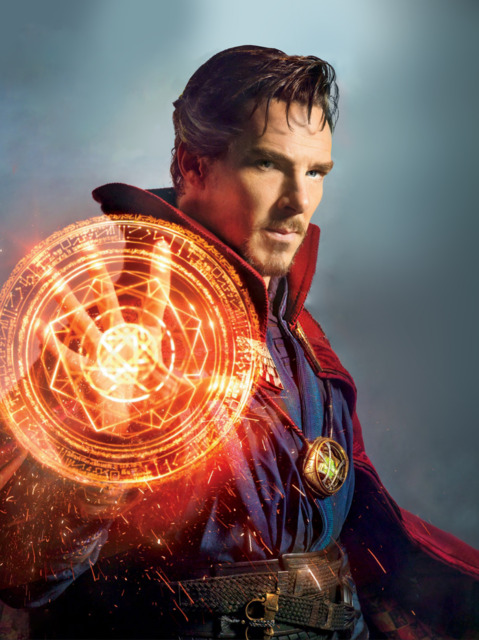
Dr. Strange (4/5 Stars)


I read somewhere that Marvel had just made the 13th successful blockbuster in a row. It speaks to the strength of the brand. True, it has a tremendous advantage in having a backlog of sixty years of story and the built-in audience to boot over other great brands such as Pixar, but that shouldn’t take away from the great franchise craft that can be found in these movies. “Dr. Strange” is one of my favorites already. It was so good that I saw it twice in a theater and took my family to see it over Thanksgiving.

Blockbusters are mainly to be seen for Spectacle. Spectacle should be big but also unique as should convey a sense of awe on the viewer. Given the consistent multitude of Spectacles that all look alike it is hard for any single one to have a great deal of their impact. A city being blown up hardly excites me anymore. I’ve already seen it many times.“Dr. Stange” to its great credit, showed me Spectacle I had never seen before. It was awesome.

To explain how, here is a character from the movie: “The Avengers protect the world from more physical dangers. We protect the world from supernatural forces from other worldly dimensions.” Like many comic books, “Dr. Strange” melds modern science with ancient bullshit. Dr. Strange practices magic but this magic comes in the form of 21st century mathematical babbel about relativity, the multiverse, and particle physics. The audience hardly understands either so I guess it makes sense to put them together. Anyway during certain fight scenes, the magic works less on the participants of the fight than on their surroundings. Spells are casts and buildings fold up and down, the axis of the world tilts, gravity goes every which way, and then everything splits up in a crazy fantastical kaleidoscopic effect. You really have to see it to believe it. I was blown away a couple of times by what was going on.

What makes it great of course is not necessarily that things are crazy, but that these things are explained, have rules, and follow them. The biggest laugh in the movie contains a fight between two ghosts of two physically comatose people in a hospital emergency room. How the movie gets there is just superb story-telling. It is a very nice ‘aha!’ moment.

Dr. Stephen Strange of course believes none of this in the beginning. He is a famous and successful brain surgeon dedicated to science. Like many Marvel Superheroes, his main flaw is arrogance (an all too common flaw for superheroes I still believe) and after an accident that ruins his hands, he humbles himself and seeks help from The Ancient One who lives in a monastery in Tibet. The background of these training scenes are perhaps more interesting than what takes place during them as it illustrates the benefits and limitations of corporate marketing.

This Tibetan monastary is an exceptionally diverse Tibetan monastary. The three main wizards are a Black Man named Mordo (Chiwetal Ejiofor), a Chinese man (Benedict Wong), and a Woman (Tilda Swinton). There are a multitude of others in the background. I spotted a Japanase guy somewhere at some point. White men are represented by our main protagonist, Dr. Steven Strange (Benedict Cumberbatch playing another snarky genius) and our main antagonist, Kaecilius (Mads Mikkelson). Everybody seems to be here except, well, Tibetans. Now the Tilda Swinton character, The Ancient One, used to be Tibetan in the comic book. But she was changed to a Celtic sorceress in the movie. Why? Well, one of the main markets for Marvel movies is China and the Chinese don’t like it when you say good things about Tibetan monks. Also notice that the three main sanctuaries for the wizards are located in New York, London, and Hong Kong. Now why would these three locations be all that special in terms of magic. The answer is they aren’t. What these three places happen to have in common is that they are major financial hubs, the three biggest in the world actually.

You can take a look at this and see crass manipulation of character and location for marketing reasons and corporate gain as well as craven capitulation in the face of a corrupt Chinese government. But you can look at the glass half-full as well. For instance, when corporations try to make as money as possible, they follow a strategy of inclusion. So these stories contain as many different and diverse people as possible. And really its the Chinese government, not Marvel, that are jerks at the end of the day. If Marvel wasn’t being pressured (i.e. the market was more free in China) The Ancient one would have remained Tibetan and we would have all enjoyed a movie that would have been even more cosmopolitan.


p.s. Conveniently, I can date back the start of the Marvel Universe (I put that at 2008’s Iron Man) with my arrival in New York. Yes, every time the Avengers and their enemies destroyed New York City, I was living there.

Sunday, December 6, 2015

Spotlight (5/5 Stars)


“Spotlight” is not so great as it is important. This reviewer attends the school that any subject matter no matter how unimportant has the potential to be elevated to perfection by a great artist. But there are some subject matters that are so important already any perceived effort at elevation may seem unduly indulgent or distracting. When Roger Ebert reviewed Steven Spielberg's “Schindler’s List,” he made a point to praise the absence of any of Spielbergian usual directorial flourishes. The movie was about the Holocaust. It would have been disrespectful to do anything fancy with the camera. Such is the same category “Spotlight” finds itself in. It is a movie about the group of reporters at the Boston Globe who broke the Catholic Church paedophilia scandal in 2002. Again the best praise I can give to the director/writer Thomas McCarthy is that he does not seem to be there at all. The direction is as straightforward as possible and nothing is heightened with unneeded suspense or dumbed down when a complicated explanation of court motions or journalistic procedures is needed. 

There are actually two stories in this movie and they complement each other. The Boston Globe in the late nineties was facing like every other local newspaper in America a crisis of falling readership and vanishing advertising revenue due to free digital content. There are layoffs and then there are more layoffs. The Globe is bought by the New York Times and they import a new head editor named Marty Baron (Liev Schreiber). The man is a Jew from Florida. That is to say he is not Irish Catholic from Boston like everyone else at the newspaper. It is his idea to look closer at a couple of stories the Globe has already done about a priest named Gagin accused of child abuse. A lawyer named Mitchell Garabedian said Cardinal Law of the Boston Archdiocese knew about Gagin for a long time and did not defrock him or turn him into the authorities. The court documents that may prove this accusation are sealed and Marty Baron wants to sue the church to unseal those documents.

There is not some great hurry to get onto this story by the people at the Globe. Nobody is really against it as much as it seems like they just don’t want to do it or even think about it. Only Mike Rezendes, the hungry young reporter played by Mark Ruffalo, is eager for the assignment. He is on screen about a minute before he already becomes everybody’s favorite character. Anyway the newspaper’s investigative team, Spotlight, takes on the task of delving a little bit deeper. The first task is to find the lawyer played by Stanley Tucci. Now this guy is a character and it matters too. His insight in one scene is enlightening to say the least.

He is talking to Mike and asks about the new editor. It is noteworthy that it is a Jew from out of town, he says, I should know I’m Armenian. (Mike is Catholic, but Portugese and lapsed). “It takes an outsider to put a light on this sort of thing. If it takes a village to raise a child, it takes a village to abuse a child.” In other words, everybody is guilty in some respect.

What is perhaps the most astonishing thing for the reporters is how little needs to be done before the story becomes bigger and bigger and bigger. And whenever they push a little harder and perhaps put a little more pressure on their targets, they get accusatory blowback about themselves. At one point the editor of Spotlight Walter 'Robby' Robinson (played by Michael Keaton) confronts a lawyer who has settled many cases with the church and demands a list of names. He provides one of the best “tough journalist” lines in the movie. “We got two stories here. One is about degenerate clergy. The other is about a bunch of lawyers turning child abuse into a cottage industry. Which one do you want us to write because we're writing one of them?” The lawyer is taken completely aback before he retorts with some emotion that all Robby has to do is check back issues of the Boston Globe. He sent them a list of twenty names five years ago. When Woodward and Bernstein were immortalized in “All the President’s Men” it made those two journalists look like super sleuths. This story is as much about a failure of journalism as much as it is a triumph of it. But even looking at it both ways, it becomes clear why local newspapers are very important. If the Boston Globe did not finally report this story, nobody would have. The national networks on TV certainly would not have come anywhere near this story. It is a very bad thing that investigative teams within local newspapers like Spotlight are becoming an extinct species.

For those interested in the subject matter (or all Catholics), this movie would make a great double feature with the documentary, “Deliver Us From Evil,’ which is about the church sheltering predator priests in California. (There is also a really good double feature in the journalism side. There I would recommend The Wire: Season 5). The complicity of the church is absolutely astounding and although there have been apologies and court settlements, very little has actually been done about the underlying policy that generates such an enormous amount of abuse. After all, what the Boston Globe took pains to explain is that this is not a few bad apples, it is a psychological phenomenon that springs from the celibacy requirement of priests and affects about 6% of the priest population. When the reporters learn that, they do the math. They were looking at 13 priests. Boston has 1500 priests. 6% of that population is 90 priests. Disturbingly they actually find 87 priests in Boston and confirm the number with an inside source from the church. It is a number that is absolutely stunning and there is a haze of silent desperation that hangs over the end of the movie. Sure it is good that the Globe finally uncovered the story, but if there were 87 predator priests in Boston, how did they miss it for so many years? The answer to that may lie in a conversation between the archbishop and the new editor. The archbishop states that it is in Boston’s good for its institutions to work together. Marty Baron disagrees. “Actually I feel for a paper to fulfill its function, it should stand alone.” Society needs its outsiders.

Spotlight should be any easy nomination for Best Picture and Best Writing (Josh Singer and Tom McCarthy). I would also like at least one actor to be nominated from the ensemble as a supporting actor. The movie has great performances by Stanley Tucci, Mark Ruffalo, and Michael Keaton. Take your pick. 

Thursday, July 31, 2014

A Most Wanted Man (4/5 Stars)


“A Most Wanted Man,’’ the last film of actor Philip Seymour Hoffman, is not a spy thriller. ‘Mission Impossible’ is a spy thriller. This is an entirely different animal. It is a spy procedural. Such an explanation is necessary because the movie concept is novel. A procedural is a type of movie that drums up its suspense by curtailing to the Aristotelian ideal of making the representation as real as possible. Among other things, they are great stories for the curious type of person who wants to learn how things work. The most common procedurals are police procedurals (‘True Detective’) and journalist procedurals (‘All the President’s Men’). I do not think I have ever seen a spy procedural. Spies are generally portraryed by the likes of James Bond, Jason Bourne, and Ethan Hunt and they spend far more time seducing, fighting, and stealing secrets than anything else. In this movie we have Philip Seymour Hoffman looking tired, disheveled, and overweight, going about the real business of a spy, that is to find informants through persuasions of incentive or coercion and slowly but surely work up the ladder. “It takes a minnow to catch a barracuda. A barracuda to catch a shark,” he explains. In this movie based on a Le Carre novel and directed with patience by Anton Corbijn we see exactly how it works. Don’t expect gunfights. It lacks in that respect, but as I’ve said, it should be interesting to those curious as to how things work.

The “Most Wanted Man” in the title refers to a Muslim refugee from Russia who shows up in the port of Hamburg, Germany. He may or may not be a terrorist. The Russians say he confessed but that was during a torturous investigation so take it with a grain of salt. He has come to Hamburg for a particular reason. He stands to gain an inheritance from the man who raped and impregnated his mother when she was fifteen. The inheritance is in the millions of dollars. What this refugee, perhaps terrorist, will do with that huge windfall of cash is of most concern to the several intelligence apparati in Hamburg, especially since the most wanted man considers the money unclean and doesn’t want to keep any of it. “You have nothing,” his lawyer (played by Rachel McAdams) reminds him. “I have God,” he explains.

This is an interesting movie for an American audience because it is not our jurisdiction the story takes place in. It takes place in Hamburg and the main spy played by Hoffman is German. The Americans are on the sidelines portrayed by Robin Wright, an intelligence agent stationed in the American embassy in Berlin. Robin Wright has achieved a gender bending feat in transitioning from romantic leads in her early career (The Princess Bride, Forrest Gump) to really dark and interesting character parts that have very little to do with being a woman (House of Cards, A Most Wanted Man). She has a great knack for showing up in a scene and immediately putting on the impression that she is not only better looking and more fashionable than you are but also more effective, capable, and informed. Then there is the late great Philip Seymour Hoffman who more effectively than any actor still alive creates vivid characters for the rest of us. Of great note is his German accent in this movie, which seems less like an exercise in diction but more of a character choice. That is to say it not only denotes the character as German but it also sounds like a tired bueruacrat caught between deadly extremists on one side and the assholes in charge on the other. The most effective scenes are the ones Wright and Hoffman have with each other. Hoffman tries to explain that he knows what he is doing and then there is Wright on the other side. Sure she is polite and hears Hoffman out, but also makes it clear that she doesn’t have to. She’s American and what America wants, America gets. Hoffman brings up that point himself in relation to the most wanted man. She says something about respecting German sovereignty and not acting to capture him on her own initiative. ‘That never stopped you before,’ says Hoffman. ‘We don’t do that anymore,’ smiles Wright. The subtext being of course, ‘unless we wanted to.’ The conclusion of the movie reminded me of watching the paranoid political thrillers of the 1970s. It’s a pessimistic view of American power to say the least.

Hoffman’s death affects the experience of this movie in the same way that Heath Ledger’s death affected watching ‘The Dark Knight.’ Hoffman here looks close to death. He is wan and sickly. He chain smokes. He is more overweight than any other point in his career. His character is disgraced. He has been demoted to Hamburg from Beirut where, through no fault of his own, the Americans blew his network and lot of people who trusted him were killed. As far as swan songs go, this is decent way to go out. It is appropriate for Philip Seymour Hoffman. Both the actor and the character end in a tragedy that only by hindsight seems possible because it is so maddeningly and infuriatingly unjustifiable. It was bullshit. He got a raw deal.

Rest in Peace.


Saturday, August 6, 2011

Midnight in Paris (5/5 Stars)


How to be an intellectual without being annoying about it.

There are two men in this movie that know an awful lot about Paris. One is, Paul, played by Michael Sheen. He’s the type of guy who would interrupt a tour guide, played here by 1st lady Carla Bruni of France, with the words, “If I’m not mistaken, Rodin’s the Thinker was influenced more by his mistress than his wife.” First of all, he does not think he is mistaken and so is already disingenuous. Second, he is a jerk for upstaging the tour guide just in order to show off. I don’t know who influenced Rodin, but if Paul is right than he needlessly embarrassed the tour guide by making such a scene. If he is wrong than he needlessly made a complete fool of himself. All present should be annoyed. Than there is Gil Pender, played by Owen Wilson. He too is an intellectual, but his smarts show not by self-aggrandizing posturing but by a knowing wonder for the town. He keeps on bugging everyone to walk with him in the rain because as he says, “Paris is so beautiful in the rain!” The great thing about Woody Allen’s “Midnight in Paris” is that it understands so well the difference between these two ways of being a know-it-all. There is a difference between an intellectual who goes, “Wow! I can’t believe we’re in the same bar that Hemingway drank at! Hemingway was so cool and he drank so much! We’re going to have an awesome time here drinking and talking about Hemingway!” As opposed to an intellectual who lectures, “If I’m not mistaken, this is where Hemingway drank. His “Farewell to Arms” was okay but I felt in “A Moveable Feast” he was not as sure of himself. Also he drank way too much. That’s why he killed himself. You people should revere me because I am so knowledgeable about where we are.” “Midnight in Paris,” shows a vast familiarity with the 1920’s Lost Generation of Paris. It name drops excessively both from the well-known and not so well known people and places of the time and even includes quite a bit of French and Spanish, none of it in subtitles. But the movie never feels or seems pretentious. This isn’t an Honors English lecture. It is an inclusive party with old friends and one of the most enjoyable movies of the year. 

Gil Pender is a Hollywood hack screenwriter. It is good money but spiritually unfulfilling. He has a dream of moving to Paris and working on his novel because, well, all his literary heroes hung out in Paris and wrote novels. He visits Paris with his materialistic fiancé Inez, played by Rachel McAdams. There they bump into her parents on a business trip. The father refuses to enjoy Paris for political reasons. They also meet the pseudo-intellectual, Paul, who likes to label everything as romantic/surrealists/pre-new wave/etc/etc. One night, Gil chooses to leave the group and walk around Paris for no real reason but to do it. At midnight, a 1920’s car filled to the brim with flappers from the Rolling Twenties pulls up next to him. Before he knows it, Gil finds himself at a party where Cole Porter is playing the piano. A woman named Zelda starts a conversation with him. She is the wife of a guy named Francis Scott Fitzgerald. Zelda asks Gil what he thinks of the party. The bewildered/excited out of his mind/awestruck Gil doesn’t know what to say. “I know,” Zelda says, “this place is boring. We’re going to a better party. Want to come with us?”

What a trip! Not only is Gil meeting all his heroes, but also all his heroes are exactly as he thought they would be. Even better, they like him and are interested in the novel he is working on. Ernest Hemingway won’t read it himself because he is of the firm belief that a writer will either hate another's work or be envious of it and hate it all the more. But Hemingway will show Gil the manuscript to the only editor he trusts, one Gertrude Stein, played by Kathy Bates. As Gil enters the studio of Gertrude Stein she is critiquing one of Picasso’s new paintings with Picasso present and adamantly defending himself. “Gil,” Stein asks, “what do you think of Pablo’s new work?” Imagine that. Being asked to critique Picasso to his face. Having Stein read your novel. Drinking with Hemingway. Gil Pender spends a majority of the movie in a state of ecstasy. Owen Wilson, perfectly cast even at 40 years old, conveys a perfect sense of child-like wonder. There is a great shot with Gil back in the 21st century, wide-awake in his bed and whispering to nobody, “I saw Hemingway. Gertrude Stein is reading my novel. I’m Gil Pender. I’m from Pasadena.” What is really amazing is that this is a Woody Allen movie. Allen has done over forty movies now and there has been such a consistent strain of pessimism and nihilism in his work. That has completely evaporated here and in its stead is gorgeous scenery, great larger-than-life characters, sharp and clever dialogue, and a protagonist who couldn’t possibly be enjoying himself more than he already is.

Standing at about 90 minutes, this movie is also a great example of story efficiency. It takes about two minutes to introduce all the real-life people and their different attitudes towards Paris. It takes another five to introduce the idea of nostalgia and the cynical view that it is an erroneous romanticization of the past to assume that it was a better time than it is now (This theme comes up again ironically when one of the 1920’s artists suggests that the real golden age of Paris was in the 1890s.) The literary figures show up at all the right places in all the right times. I especially liked who Gil explains his perplexing situation as a man who spends the night in the 1920s and wakes up in 2010. He says this to some 1920s surrealists and they see nothing strange about his situation. Salvador Dali, played nicely by Adrien Brody, seems far more interested with his new favorite word “Rhinocerous!” There is also room for a budding romance between Gil and one of the art groupies named Adriana, played by Marion Cotillard. Overall the movie, like all good comedies, is not too long but contains quite a lot. It moves fast, is consistently funny, and very romantic. And don’t forget Paris. It looks as good as ever. 

Sunday, October 24, 2010

Sherlock Holmes (4/5 Stars) January 10, 2010

A highly intelligent thriller

Sherlock Holmes is reincarnated for the 22nd time (or so Ebert says) in the new film by Guy Ritchie (Lock Stock and Two Smoking Barrels and Snatch). This is the first Sherlock Holmes movie I’ve seen. I haven’t read any of the books either, I sort of skimmed Hound of the Baskervilles once upon a time. I have seen plenty of pictures though and had what I thought was a pretty good idea of who Holmes was all about. Let’s just say that the character has been updated with a dose of kick-ass coolness. For instance, Holmes not only peers at things with a magnifying glass in this movie, he also knows how to brawl and can beat up men twice his size by observing the pressure points in their bodies and hitting all the places. Dr. Watson, his sidekick and roommate, also packs a punch. They are played by Robert Downey Jr. and Jude Law respectively. The bad guy is the dark lord of a Satanic Cult played by Mark Strong. Rachel McAdams plays Holmes ex-girlfriend/master criminal. 

The plot is completely new. It kind of had to be to incorporate Guy Ritchie’s action packed trademark style. The good thing though is that Sherlock is every bit a brilliant genius as he traditionally was. The only difference now is that he is an action hero. The only actor I can think of that can pull off this kind of dynamic is the great Robert Downey Jr. Making an action movie these days is not very hard what with the help of special effects, but you can’t fake smart. To pull off a brilliant character a movie needs a smart script and an actor who knows what it’s like to be brilliant. For example Sherlock is eccentric to the point that he is excited by very hard cases and insufferably bored by everything else. When he doesn’t have something to work on he locks himself up his apartment and lives in squalor constructing devices and experimenting on his dog. The character by its nature is anti-social, unhygienic, and obsessive. Only a guy like Downey Jr. can stay true to that type of character and still be very likable and totally badass. This part was tailor made for Downey Jr. I think he has an outside chance of an Oscar nomination. 

I really enjoyed seeing Jude Law in a good movie for a change. It’s been years. What’s cool about his role is that he doesn’t play the dumb sidekick. Dr. Watson is very smart too. The dialogue between him and Sherlock are some of the most intelligent back and forth I’ve seen in a mystery movie. Sherlock never has to explain to him that something is elementary. Dr. Watson is very capable in an investigation and not to mention in fights. By the way, I don’t know if anyone else caught it and maybe I was just seeing things but I kind of also gauged a little bit of homoerotic tension between the two. I don’t necessarily think that Dr. Watson was gay. His character is about to leave their apartment and get married. But I did get the sense that Sherlock was rather fond of Dr. Watson. Think about it. He’s very anti-social and can’t stand anybody but Dr. Watson, they were living together, and they bicker like an old married couple. Nothing is ever explicitly said, but hey it was the Victorian Era. It’s not like anybody could have admitted that sort of thing. 

Of course the one big flaw in my premise is the Rachel McAdams character, apparently the one and only woman Sherlock was ever involved with. (Not that Sherlock shows her much attention in this movie only getting close enough to kiss her on the cheek.) But you know, I didn’t really believe the whole thing anyway. Rachel is certainly gorgeous but she’s not nearly weird enough to be the girlfriend of a guy like Sherlock Holmes. Frankly she wasn’t weird enough to be a mastermind criminal. Rachel just acts and speaks to damn normal. It doesn’t work. Why? Because super smart people can’t fake normal. She should have been channeling Juno and this script should have given her better words to work with. 

The plot centers on the mysterious resurrection of a dead man. This is the Dark Lord of a Satanic Cult played by Mark Strong. Upon miraculously busting out of his grave, he commits several impossible murders, and threatens to poison Parliament with a magical gas. The game is afoot. Not only does Sherlock have to catch the guy, he also has to prove that there is no such thing as magic and sorcery. Data, data, data there is only observational fact. I must confess before the speech at the end where Sherlock explains everything, I had no idea how the Dark Lord was doing any of this stuff. That is where the movie was perhaps too smart for me. The best mystery movies are both surprising and obvious at the same time. When things are explained the best reaction should be, “Oh my God, how come I didn’t see that!” Here the explanation was simply surprising. I didn’t see any of it coming. I couldn’t have seen any of it coming. It had to do with Chemistry, and Biology, and Science stuff. I guess Sherlock Holmes is just a heck of a lot smarter than me. That’s why this movie didn’t get five stars.