Search This Blog

Showing posts with label benedict cumberbatch. Show all posts

Saturday, February 12, 2022

Spider-Man: No Way Home (4/5 Stars)


Making that sweet sweet corporate lemonade.

Right at the top, we should talk about the writing of this movie. Our screenwriters are Christ McKenna and Erik Sommers known for some of the best episodes of Community, the first two Marvel Spider-Man movies and the Jumanji reboot. What these two excel at is synthesis and adaptation, the ability to take existing material and turn its seeming limitations into features. The intellectual property of Spider-Man is in a unique place in the realms of moviedom due to the odd financial position of its corporate parentage. Way back in the day before Marvel created its own universe with Iron Man (2008), it was licensing its characters to other movie studies. Its most popular character, Spider-Man, was licensed to Sony, whose first movies in the deal included the Sam Raimi trilogy in the early 2000s that featured Tobey Maguire as Spider-Man and such villains as the Green Goblin (Willem Dafoe), Doctor Octopus (Alfred Molina), and the Sandman (Thomas Haden Church). These were enormously popular movies, but as soon as Raimi and Maguire seemed to be done with the franchise, Sony rebooted it with Andrew Garfield in the title role, Marc Webb directing, and such villains as Rhys Ihfans as the Lizard and Jamie Foxx as Electro. That is, Sony didn’t continue the story, they restarted it. In the first Andrew Garfield movie, Peter Parker is bitten by a radioactive spider etc.

Why? Well two reasons. First, Sony’s contract with Marvel allowed it exclusive rights to make Spider-Man movies just as long as they made at least one Spider-Man movie every five years. Second, Spider-Man’s defining feature is that he is an endearing teenager going through everything for the first time. These two factors combine in Peter Parker getting bitten by a spider in a new blockbuster movie every ten years or so. In 2018, someone at Sony had the great idea of meeting their corporate largess in story-form head on. The resulting animated movie was Spiderman: Into the Spiderverse, which explained the multitude of variations of Peter Parker’s story over the years with the pseudoscientific application of a physics theory called the multiverse. The idea being that there are a multitude of universes and that there is a Spider-Man for each of them ranging from the traditional Peter Parker-Spiderman to Miles Morales as Spiderman (Peter Parker, but black) to Gwen Stacy as Spiderwoman to Peter Porker as Spider-Ham (a spider that was bitten by a radioactive pig) etc. This worked so well, that Marvel used the multiverse as a plot red herring in Spider-Man: Far From Home, and now in Spider-Man: No Way Home fully engages with it. There is indeed a multiverse and it includes all the villains from the Sony franchises of the last twenty years and...all the Spider-mans.

The last sentence was kept well underwraps by Sony and Marvel the past year with much credit to them. I expect now that everyone has seen this movie, it isn’t much of a spoiler anymore. Anyway back to the writing. With great ability, the screenwriters have sorted out the last twenty years of Spider anthology and put together a movie that makes it seem like the whole thing was planned from the very start. Even more so, they end this movie on a note that allows the whole thing to start all over again in the hands of Sony. It is an especially adept way to maintain and extend a giant money making machine. Chris McKenna and Erik Somners deserve to get paid a lot of money.

For the obvious reason, this movie lacks the originality of the previous movies. Like Infinity War and Endgame it feels more like the culmination of plenty of other movies, not something stand alone. It’s a nostalgia tour and one’s appreciation of it would likely be increased or decreased by one’s appreciation of the older movies. For myself, I only saw the Raimi trilogy and the latest Marvel movies (the ones with Tom Holland as Spider-Man) to the exclusion of the Andrew Garfield movies. I’ve become a little more interested than not interested at all in the Garfield movies now.

To illustrate the enduring appeal of Spider-Man one needs only to briefly summarize the plot. Peter Parker has been outed as Spider-Man by Mysterio and is now the subject of intense press speculation. Since Peter is just a humble kid, he would rather not have his private life and that of his sweet Aunt May (Marisa Tomei) and girlfriend MJ (Zendaya) intruded upon. So he goes to Dr. Strange (Benedict Cumberbatch) and asks him for a spell that will make the entire universe forget that Peter Parker is Spider-Man. The spell goes haywire and instead of everyone forgetting that Peter is Spider-Man, people from other universes who know that Peter Parker is Spider-Man are pulled into this one, namely villains from past movies. So now we have the same villains from the Raimi and Webb movies in this one and because Marvel is made of money, you get the same actors coming back too. In an inferior movie, this would result in a simple plot of Spider-Man fighting and defeating five villains instead of one. But here, the story takes a really nice, dare I say, cute turn. Once Peter Parker realizes what all of these villains have in common, in the previous movies they all die fighting Spider-Man, he goes out of his way to try to help them. Why, because he has the ability to do so and as Aunt May says in this movie (and this is the first time it is said in a Tom Holland movie), “with great power comes great responsibility.”

That line is as effective as ever and the context in which it is spoken (different yet the same) speaks to the seeming timelessness of the Spider-Man story. For me at least, it has not yet become cliché, instead I got chills. I made this point before in a different Spider-Man movie review and I think I’ll make it again. As Llewyn Davis said, If it isn’t new and it never gets old, it’s a folk song. The same applies to Spider-Man.

Sunday, February 9, 2020

1917 (4/5 Stars)


The technical achievements of 1917 alone are enough to warrant a viewing of this movie in a theater where one can experience in focus and isolation the high level of skill the creators exhibit. The Director of 1917 is Sam Mendes and the cinematographer is Roger Deakins. This is the fourth time they have worked collaborated. Notably, they previously worked together on James Bond’s Skyfall. What this movie attempts and largely achieves is one long broken shot, a technique first attempted by Alfred Hitchcock in the middling movie “Rope” and perfected by Alfonso Cuaron and Alejandro Innaritu in the more recent movies “Gravity” and “Birdman”. “1917” efforts fall somewhere in between.

The digital revolution in filmmaking has made long shots much easier to edit and cheaper to produce. Surely it still takes much skill in creating a movie that relies so much on logistics and choreography, but, at the end of the day, when everything in movies now seems possible and comes out every week, it is just as important to ask whether any story should be shot in one take. Let’s consider for a moment exemplary uses of the technique in “Gravity” and “Birdman”.

“Gravity” is a great example of the utility of long shots, especially in action sequences. Long takes build up the you-are-there suspense to a scene, a sort of kinetic energy if you will, that makes watching them especially exciting. When done well, the audience has a perfect sense of where everyone is and how fast everything is moving. Any danger presented is more immediate more serious because there is not present the safety of editing, which too often in lesser movies bends time and space to aid the protagonist. How many times have the main characters not gotten hit by that train which is barreling down on their stalled car. “Gravity” was set in space. Its subject does not particularly lend itself to a one-shot technique, but there is no reason why it wouldn’t be appropriate. As it is an action movie, it the one-shot technique greatly enhances the overall effect of the movie.

“Birdman” is not an action movie, so it is a particularly good example of using the one-shot technique as a way to develop an appropriate subject matter. That movie was centered around a Broadway play. Plays and movies are written differently due to differences in the immediacy of the audience and the fact that movies have editing. By taking out the editing, “Birdman” allowed a movie audience to experience “play writing” in a cinematic experience.

“1917” is a movie about World War I. There is plenty of action in any war and the long takes here make those sequences in this movie more exciting. The storyline is sparse and includes a journey of two British soldiers through enemy lines with the mission to call off an assault that will certainly be ambushed and end in slaughter. We follow two Lance Corporals, Black (played by Dean-Charles Chapman) and Schofield (played by George MacKay) as they march through no-man’s land, tunnels, fields, a burned-out city, and forest, till they get to their mission’s endpoint. They have until the next morning to stop the assault, so a time limit is set and the journey happens pretty much in real time. George MacKay has a face that belongs in the 19th century and does a good job inhabiting the old world. There are several more prominent stars in the cast that pop up now and again in what are essentially cameos. Colin Firth is a general. Andrew Scott is a lieutenant. Mark Strong is a captain. Benedict Cumberbatch is a colonel. Everyone does a fine job.

A journey story with a time limit is good for a one take technique. But (and I realize this may be a bit unfair) is a plot about a journey with a time limit appropriate for a World War I story? After all, World War I more than any war before or since was not about going places in a hurry. What generally defined that war was that nobody went anywhere and took an exceedingly long time not to do it. World War I was about hoping a bomb didn’t land on you while you waited in the mud.

Sam Mendes has made a very good movie and he dedicates it his grandfather, a World War I veteran. Do you think his grandfather would have recognized the subject matter of this movie? Is such a mission that we see here likely to have occurred in a World War I setting? Do you think the veteran would have laughed at the sheer distance the characters make within a day? At least the mission seems to be generally futile. That at least is in the spirit of World War I.


Saturday, June 30, 2018

The Avengers: Infinity War (5/5 Stars)


The last time a movie franchise achieved something akin to what Avengers: Infinity War accomplishes had to be The Lord of the Rings. That epic multi-Oscar winning movie was itself the third installment of a cohesive and perfectly realized trilogy of movies based on revered source material. Avengers: Infinity War leap-frogs that accomplishment. This movie is the culmination not of a trilogy but a universe of interconnected movies that spans nineteen films. Perhaps the HBO series Game of Thrones is the closest thing, but that TV series is still not of the same scale nor found in so many variations as the Marvel franchises that have climaxed into Infinity War. No, there really is nothing quite like Avengers: Infinity War in the history of movies.

Avengers: Infinity War has seventeen credited writers. It has two directors, Anthony and Joe Russo. It tells a story that attempts to involve all of Marvel’s outstanding franchises. These include:

Iron Man: Robert Downey Jr. (Tony Stark/Iron Man); Gwyneth Paltrow (Pepper Pots); Don Cheadle (James Rhodes/War Machine), Samuel L. Jackson (himself)
Thor: Chris Hemsworth (Thor); Tom Hiddleston (Loki); Idris Elba (Heimdall); Mark Ruffalo (Bruce Banner/Hulk); Peter Dinkalge (Eitri)
Captain America: Chris Evans (Steve Rogers/Captain America); Scarlett Johansson (Natasha Romanoff/Black Widow); Paul Bettany (Vision); Elizabeth Olsen (Wanda Maximoff/Scarlet Witch); Anthony Mackie (Sam Wilson/Falcon); Sebastian Stan (Bucky Barnes/Winter Soldier)
Guardians of the Galaxy: Chris Pratt (Peter Quill/Star-Lord); Zoe Saldana (Gamora); Karen Gillan (Nebula); Pom Klementieff (Mantis); Dave Bautista (Drax); Vin Diesel (Groot); Bradley Cooper (Rocket); Josh Brolin (Thanos)
Dr. Strange: Benedict Cumberbatch (Doctor Strange); Benedict Wong (Wong)
Spider-Man: Tom Holland (Peter Parker/Spider-Man)
Black Panther: Chadwick Boseman (T’Challa/Black Panther); Danai Gurira (Okoye); Letitia Wright (Shuri)

Any of these franchises can and have carried a great movie on their own. (In particular, since 2013 Marvel has made a stretch of great movies including Guardians of the Galaxy, Captain America: Civil War, Dr. Strange, Spider-Man: Homecoming, Thor:Ragnarok, and Black Panther). So one of the great obstacles Infinity War had to overcome is how to fit all the above in the same movie giving each and every character their own moment to shine. Amazingly, this is done. All of the above share this movie in equal heft and have their own moments to shine. I’m not sure how seventeen writers and two directors go about doing something like that, but its time to start handing out Oscars.

What may to be the hardest thing to accomplish is how consistently funny the movie is. I say this because there are two big things fighting against it. The first is that the main villain, Thanos (played by Josh Brolin) is trying and succeeding throughout the movie to kill off half of the universe. It is heavy stuff and is taken quite seriously, not least by Thanos. Two important characters from the Thor franchise, Loki and Heimdall, die in the first fifteen minutes. Another important character from the Guardians of the Galaxy franchise dies at the half-way point. At the end, well, it seems like half the characters die. I won’t tell you which half, that would be a spoiler. The second is that this is an action-heavy blockbuster and huge spectacles and jokes generally do not generally complement each other. A good example of blockbuster spectacles and laughs working is the first Ghostbusters movie. A good example of blockbuster spectacles and laughs not working is the Ghostbusters remake. But in Infinity Wars, every joke lands. Dr. Strange is funny, Thor is funny, Star-Lord and Drax are funny, Spider-man is funny. Some characters are generally funnier than others. For instance Captain America and Black Panther were never particularly humorous, but almost everyone has their moments. There is also the added pleasure of seeing various characters interacting for the first time. At one point Thor meets up with the Guardians of the Galaxy. Bruce Banner has a scientific conversation with Shuri in Wakaanda. Dr. Strange and Tony Stark have this dialogue upon meeting.

Tony Stark: Nice cape. What's your job, again?
Dr. Strange: Protecting your reality, douchebag.

Infinity War is supposedly only the first of a two part movie, the other coming out next year. In that case, it is hard to judge the overall story at this point. But really, given how well this movie did what it set out to do, how could it be bad? Marvel is at its peak and the movies it has been making deserve to start getting serious recognition and not just for special effects. I expect Black Panther will run away with a serious amount of Oscars next year. Perhaps the year after Infinity War 2 will take the ultimate prize. As far as I’m concerned, Marvel has already earned it. At this moment, They are the best in the business.

Friday, December 9, 2016

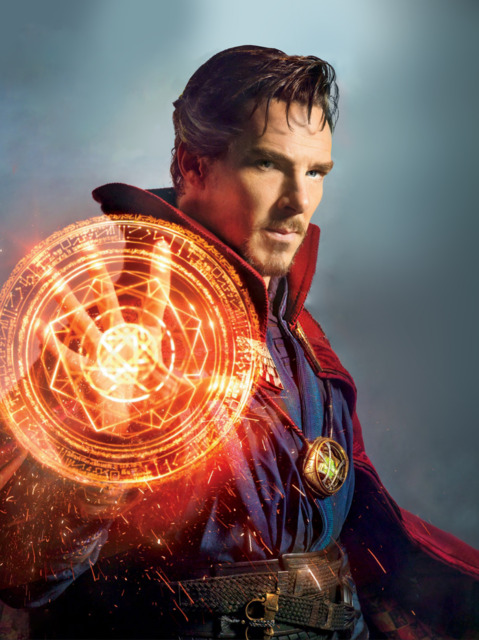
Dr. Strange (4/5 Stars)


I read somewhere that Marvel had just made the 13th successful blockbuster in a row. It speaks to the strength of the brand. True, it has a tremendous advantage in having a backlog of sixty years of story and the built-in audience to boot over other great brands such as Pixar, but that shouldn’t take away from the great franchise craft that can be found in these movies. “Dr. Strange” is one of my favorites already. It was so good that I saw it twice in a theater and took my family to see it over Thanksgiving.

Blockbusters are mainly to be seen for Spectacle. Spectacle should be big but also unique as should convey a sense of awe on the viewer. Given the consistent multitude of Spectacles that all look alike it is hard for any single one to have a great deal of their impact. A city being blown up hardly excites me anymore. I’ve already seen it many times.“Dr. Stange” to its great credit, showed me Spectacle I had never seen before. It was awesome.

To explain how, here is a character from the movie: “The Avengers protect the world from more physical dangers. We protect the world from supernatural forces from other worldly dimensions.” Like many comic books, “Dr. Strange” melds modern science with ancient bullshit. Dr. Strange practices magic but this magic comes in the form of 21st century mathematical babbel about relativity, the multiverse, and particle physics. The audience hardly understands either so I guess it makes sense to put them together. Anyway during certain fight scenes, the magic works less on the participants of the fight than on their surroundings. Spells are casts and buildings fold up and down, the axis of the world tilts, gravity goes every which way, and then everything splits up in a crazy fantastical kaleidoscopic effect. You really have to see it to believe it. I was blown away a couple of times by what was going on.

What makes it great of course is not necessarily that things are crazy, but that these things are explained, have rules, and follow them. The biggest laugh in the movie contains a fight between two ghosts of two physically comatose people in a hospital emergency room. How the movie gets there is just superb story-telling. It is a very nice ‘aha!’ moment.

Dr. Stephen Strange of course believes none of this in the beginning. He is a famous and successful brain surgeon dedicated to science. Like many Marvel Superheroes, his main flaw is arrogance (an all too common flaw for superheroes I still believe) and after an accident that ruins his hands, he humbles himself and seeks help from The Ancient One who lives in a monastery in Tibet. The background of these training scenes are perhaps more interesting than what takes place during them as it illustrates the benefits and limitations of corporate marketing.

This Tibetan monastary is an exceptionally diverse Tibetan monastary. The three main wizards are a Black Man named Mordo (Chiwetal Ejiofor), a Chinese man (Benedict Wong), and a Woman (Tilda Swinton). There are a multitude of others in the background. I spotted a Japanase guy somewhere at some point. White men are represented by our main protagonist, Dr. Steven Strange (Benedict Cumberbatch playing another snarky genius) and our main antagonist, Kaecilius (Mads Mikkelson). Everybody seems to be here except, well, Tibetans. Now the Tilda Swinton character, The Ancient One, used to be Tibetan in the comic book. But she was changed to a Celtic sorceress in the movie. Why? Well, one of the main markets for Marvel movies is China and the Chinese don’t like it when you say good things about Tibetan monks. Also notice that the three main sanctuaries for the wizards are located in New York, London, and Hong Kong. Now why would these three locations be all that special in terms of magic. The answer is they aren’t. What these three places happen to have in common is that they are major financial hubs, the three biggest in the world actually.

You can take a look at this and see crass manipulation of character and location for marketing reasons and corporate gain as well as craven capitulation in the face of a corrupt Chinese government. But you can look at the glass half-full as well. For instance, when corporations try to make as money as possible, they follow a strategy of inclusion. So these stories contain as many different and diverse people as possible. And really its the Chinese government, not Marvel, that are jerks at the end of the day. If Marvel wasn’t being pressured (i.e. the market was more free in China) The Ancient one would have remained Tibetan and we would have all enjoyed a movie that would have been even more cosmopolitan.


p.s. Conveniently, I can date back the start of the Marvel Universe (I put that at 2008’s Iron Man) with my arrival in New York. Yes, every time the Avengers and their enemies destroyed New York City, I was living there.

Tuesday, January 27, 2015

The Imitation Game (3/5 Stars)


‘The Imitation Game’ suffers from ‘Mighty Ducks’ syndrome, a disease of storytelling born of its namesake. “The Might Ducks” is a Disney movie starring Emilio Esteves. It was a popular movie that made a lot of money and spawned several sequels, not to mention many ripoffs that seemed to change nothing but the sport i.e. The Little Giants, The Big Green. Ostensibly ‘The Mighty Ducks' is about ice hockey, but curiously the more plausible it seems (and thus more enjoyable) is inversely related to the viewer’s knowledge of ice hockey. That is to say the syndrome refers to a movie that is more effective the less the audience is familiar with its subject matter. Perhaps not coincidentally when the NHL expanded to include a team called the Mighty Ducks their home was Anaheim, California, a place that has never had and never will have ice.

“The Imitation Game,” is a biopic of Alan Turing, the British code-breaker responsible for cracking the Nazi Enigma code during World War II. I am not a code-breaking expert. However I can tell when a movie is deliberately not engaging with its subject matter because it either is not smart enough to explain it or does not believe I am smart enough to understand an explanation. If I were a code-breaking expert, and wanted to see this movie about a famous code-breaker, I would expect to be appalled by the sheer lack of attention paid to the science of breaking codes. It must have taken quite a bit of smarts and hard work to crack Enigma. The movie at least explains why it would be so hard. It is a code that has 150 million million combinations and resets every single day. Alan Turing’s great idea was to create a machine fast enough to go through the combinations in a single day. I have not the slightest clue how Turing came up with that idea or how the machine worked. Here is what the movie was concerned with instead: Turing was not very good at making friends and the people he worked with did not like his dismissive and arrogant attitude. Therefore, according to the movie, in order to break the code and win the war Turing has to draw up enough social grace to give apples to his colleagues and tell a joke about a bear in the woods. That (and not his genius) is what won over the room so they could finally work out his idea.

Anyone with some concept of how dangerous the World War going on outside will understand how petty this movie’s insistence on the importance of social drama was to the greater scheme of things. And anyone with some concept of how code-breaking machines work will be eternally frustrated with how the movie completely sidesteps any discussion of code-breaking theory. And anyone who has some respect for the intelligence of past generations will roll their eyes at the way the screenwriter has chosen to dumb down the characters in order to help what they must have assumed to be a pitifully ill informed modern audience. A good example is when the codebreakers are first presented with a stolen Enigma machine. One of the men asks why they don’t just type an intercepted radio code into it. The makers of the movie (Director Morten Tyldum, screenwriter Graham More) are under the impression that the audience does not know that Enigma is more complicated than that, so not unlike a sacrificial lamb given unto slaughter to sate the gods of idiots a real historical figure has been made to pretend he is not smart enough to know not to ask stupid questions. A little later in the same scene the head of MI:6, the British secret service, is introduced. Another poor bastard asks, “But the military only has five divisions.” No shit. The Secret Service is secret. Why would a person hired to break a top secret Nazi code be adamant about the impossibility of a secret intelligence division in the army when he is literally already apart of it? Quack, Quack, Quack!

This stupid pandering to modern sensibilities reaches the level of questionable storytelling ethics when it concerns the homosexuality of its subject Alan Turing. We all know now that there is nothing wrong with homosexuality, the key word being ‘now.’ They did not know that then. Alan Turing probably did not even know that then. The way to honor the experience of real people is to show what it was like through their eyes. But here whenever a character learns of Turing’s homosexuality they not only know what it is literally, but also act as if they do not believe it is a moral choice of Turing’s. Furthermore are sympathetic to him even the policeman who, more than anybody else, has no historical reason to be. These are reactions that supposedly take place side by side in a time period where Turing would later be chemically castrated by the government for his homosexuality and eventually commit suicide. If you want to see how a movie should treat something like this, I recommend “Far From Heaven.” Or not pay attention to it at all. If you asked Alan Turing what he felt was most interesting about his character, do you suspect he would mention his homosexuality or the giant precomputer he spent day and night developing for years. How about we focus on that a little?

There is a reason to see this movie though and that is the always-superb performance by Benedict Cumberbatch as Alan Turing. The man has made a career out of playing geniuses such as Sherlock Holmes and Frankenstein and here he does another version of a very smart man. His Turing is a far less smooth and confident as his Sherlock, but the underlying intelligence is immediately apparent. Turing apparently had a stammer and Cumberbatch performs it well. So that’s good. But hold fast, and I wonder if anyone else picked up on this. Take the character that Keira Knightley plays. She gets a job as a codebreaker by filling out an extremely hard crossword in the London paper and finishing an unfinishable test before a classroom of other applicants. So she too is super duper smart. Amazingly though, she is not beset with the quirks and characteristics of a genius that Cumberbatch brings to his role. She spends a great more time on screen being a love interest/plucky feminist than being a nerd that's very good at math. What’s going on there you may ask? Or not ask. I don’t think anybody but me has.

What stops these performances from being awards worthy has more to do with the mediocre movie that they are attached to. This one has been getting awards buzz lately. I don’t agree with that. And I also think it was a rip-off of “A Beautiful Mind,” to have the breakthrough in the code-breaking take place in a bar in a scene concerned with the unspoken code of human mating habits. For fuck's sake Hollywood not everything is about sex.

 I think Mark Zuckerberg said it best when he was asked about, “The Social Network.”

“The whole framing of the movie is I’m with this girl who doesn’t exist in real life who then dumps me…and basically the whole reason for making Facebook is because I wanted to get girls or get into some social institution…It’s such a big disconnect from the way people who make movies think of what we do in Silicon Valley, building stuff. They just can’t wrap their head around the idea that someone might build something because they like building things.” (cue wild applause from audience of engineers)

Exactly.


Friday, November 8, 2013

12 Years a Slave (5/5 Stars)


“It was unearthly, and the men were—No, they were not inhuman. Well, you know, that was the worst of it—this suspicion of their not being inhuman.”
- Joseph Conrad, Hearts of Darkness

In Joseph Conrad’s Hearts of Darkness, a young British officer travels up the Congolese river to seek out a renegade Colonel named Kurtz. Africa, and this especially undeveloped part of it, was an entirely different world to the educated officer. It is a given in both the story’s authorial voice and in the character itself that the British with all their clothes and technology are superior to the hunter-gatherer savages of Africa. But as the officer contemplates the natives upon seeing them at the start of his journey he is overtaken with a strange discomfort. It isn’t a discomfort born from a sense of racism. No, on the contrary, he recognizes that there is no difference between him and the “savages.” They are obviously of the same species. And this brief acknowledgement of the native’s humanity unnerves him.   

12 Years a Slave, is the third feature by Director Steve McQueen having previously made Hunger and Shame, both collaborations with actor Michael Fassbender. Fassbender in a DVD Bonus feature once referred to McQueen as a man of great empathy. McQueen’s movies are a witness to the truth of that statement. One of the things that make 12 Years a Slave especially remarkable is its treatment of the white characters who are not portrayed as 100% nasty but are allowed brief moments like the one given to the British officer in Conrad’s Hearts of Darkness where they recognize the humanity of those they consider inferior. Apparently this is true not only of McQueen’s adaptation of Solomon Northup’s autobiography 12 Years a Slave, but of the novel itself. Solomon, born a free man in New York, kidnapped, and sold into slavery, repeatedly put himself in the shoes of his slave masters in his account of the ordeal. (I have said before that Django Unchained treated its slave-owners like the Nazis in Indiana Jones. Here I would argue that 12 Years a Slave treats its slave-owners like the Nazis in Schindler’s List, particularly the Ralph Fiennes character, Amon Goeth) Counter intuitively, this does not make the slave owners look better. In fact, it makes them look far worse. In law, it would be the difference between crimes committed knowingly (like murder) as opposed to unknowingly (mere manslaughter). A character like Leonardo Dicaprio’s deluded and indulgent plantation owner in Django Unchained is not shown making moral choices. He considers only one way of doing things. Here, though, the slave-owners can sense what is morally correct if only in that Huck Finn way of feeling ‘something not quite right in the pit of my stomach.’ Then given the choice of whether or not to recognize the humanity that they sense, they choose not to do it. Their behavior comes off as especially cruel, unnatural, and evil. After all, even if they lived by the moral code of the South, Solomon Northup still deserved to be set free. All he had to do to be released was get a letter to his family back home telling them where he was so they could find him and show the local sheriff his free papers. Even in the South this was all the law needed. What stood in the way was the insidious nature of slavery; an institution that oppresses the slave but also warps the moral constitution of the master. It makes cowards of good men as well as enabling the worst impulses of the evil ones.

Is there anything that Michael Fassbender would not do for Steve McQueen? It is a relationship between actor and director that can only be rivaled by the 70s relationship between De Niro and Scorsese. These are all especially hard performances and it speaks to the enormous amount of trust that Fassbender has in McQueen that he is willing to do them. Fassbender in 12 Years a Slave is taking on one of the most notorious of slave-owners, Edwin Epps, in this role. In a world of systematic cruelty, he somehow stood out as being notably more cruel than usual. One of things that 12 Years a Slave portrays that Django Unchained conveniently sidestepped is the subject of widespread rape. (Not to say Django Unchained was not a brave movie, it just seemed that rape was one too many things to consider. And thus Dicaprio lives with his sister, not a wife.) Rape would be one thing, but as Malcolm X liked to point out, most slave-owners were married. And boy how would you feel as a wife if your husband continually raped his slaves? Could you really bring yourself to think the adultery did not count because the women your husband repeatedly raped were black? And thus is set up the most horrific love triangle in the history of cinema between Master Epps, his wife played by Sarah Paulson, and the slave he is in love with Patsy played by newcomer Lupita Nyong’o.

Patsy is perhaps one of the more remarkable slaves in the world, picking an average rate of 500 pounds of cotton a day. Most men in the field pick around 200 pounds. This among other obvious things captures the attention of Epps, who absolutely hates himself for finding her attractive. He rewards her abilities by continually raping and beating her. His wife, fully aware of his philandering, demands that Epps sell her. He will not do so. The wife, who has no power herself in this ridgidly patriarchal society, responds by making Patsy’s life even more of a living hell. Among other things, she denies her soap for cleaning, cuts her rations, and throws a bottle of hard liquor at her face from point blank range. What can Patsy do about this? Commit suicide? That literally seems to be her only and best option.   

I think it would make sense to go ahead and include 12 Years a Slave within the genre of survival movie that is being exceedingly well represented this year with such movies as Gravity, Captain Phillips, and All is Lost. McQueen’s presentation of slavery Solomon Northup's situation absolutely akin to it. There is an extraordinary scene of Northup, played by Chiwetel Ejiofor, being almost lynched by an overseer named Tibault, played by Paul Dano, after a mild disagreement. The lynching is in mid-swing when a second overseer stops Tibault not because, you know, it’s murder, but because Northup is property of a different man named Ford, played by Benedict Cumberbatch. Mr. Ford is summoned to make the decision himself. Meanwhile Northup waits all day on his tippy-toes, hands still fastened behind his back, neck still hanging in the noose. In the background all the other slaves go about their business, the situation being that if anybody helped Northup they might be killed as well. Northup may as well be in the middle of the ocean like Old Man Redford or up in space like Sandra Bullock. There is no human community bound by law and order here. All is savage, brutal, and uncaring. 

“Why don’t the black people just rise up and kill the whites?” asks Dicaprio in Django Unchained. Perhaps the fate of one of the newly kidnapped slaves, played by Michael K. Williams, in an ingenious choice of casting, may illustrate the answer to that. Michael K. Williams, best known as one of the more badass characters in TV history, Omar from The Wire, brings up the idea of revolt. He is killed within the space of a couple of minutes. If Omar would last only half a scene, how do you think you would fare?