Search This Blog

Showing posts with label bradley cooper. Show all posts

Saturday, December 30, 2023

Maestro (4/5 Stars)


Producer Rick Rubin famously has one piece of advice for artists: make the art for yourself. The audience should come last. And as he explains, this is not because the artist should not care about the audience, but it acknowledges the counterintuitive notion that what the audience ultimately wants is not art about a particular subject matter expressed in a certain way, but the best art. And the best art always is that which is personal to the artist, that means something to the artist. There is plenty of art out there that is made for the audience, and it will be inevitably mediocre, because by its nature it is designed that way. The bigger the audience a piece of art is made for, the less special it will be. 

I bring this up in the context of Maestro because it would appear to me that Bradley Cooper, an actor, who became a director and co-writer with A Star is Born five years ago is taking Rick Rubin’s advice. I’m not sure anyone was demanding a biopic about Leonard Bernstein or necessarily believed that Bradley Cooper (The Hangover, Silver Linings Playbook, American Sniper) would have been the man to do it. This movie seems to exist because Bradley Cooper thought it was interesting and wanted to do it. I generally agree with Rick Rubin that art developed in this matter is usually the best art. I didn’t know all that much about Leonard Bernstein’s oeuvre, conducting or composing (although I have seen Tar and Amadeus) or his personal history. Essentially, all I really knew of him was that he was famous and composed the score to West Side Story. That didn’t matter. I got what I needed to know from Bradley Cooper. One of the best things about following the work of good directors (and at this point, I am going to include Bradley Cooper in that list), is that it generally does not matter what the movie is about. If a movie is made by someone who is highly competent and cares about the work, it will almost always be worth the time to watch it. And the guidance of good artists is the best way to be exposed to new things.

Leonard Bernstein (played by Bradley Cooper) is a man of many talents in the musical world: he conducts orchestras, he composes symphonies, operas, and musical theater, he plays musical instruments. He is also Jewish and a homosexual. He was born in 1918 and entered into the music business in the late 1930s. That would make him right on time to push the cultural envelope by keeping his surname (as opposed to changing it to Burns) but too early to be openly gay. Leonard marries a woman named Felicia Monteleagre (played by Carey Mulligan) who is content, at least at first, to be his beard, his muse, and the mother of his children. Their relationship in all its complications is really what this movie is about. Both Bradley Cooper and Carey Mulligan affect arresting performances. (Although this isn't completely relevant to whether Carey's performance was good, I was affected by how much she aged in the story-line. After all, Ms. Mulligan is my age and I've always thought of her as being young or generally young.)

Bradley Cooper is a good director. He shows a general competence with the camera in certain flourishes and the choice of different film stock. (The movie switches from black and white to color based on the time period). But more impressive is his choice to set the camera at a distance and to employ long takes for scenes that are especially intimate. One is reminded that we are witnessing the domestic strife of real people and that these scenes are intensely private in nature. They are so well done and the characterization of the people involved so well developed, one wonders how the details got related to the writers. I am told that in addition to the many public interviews both Leonard and Felicia took together or separately, the creators also spent a lot of time interviewing the children. I suppose it would be impossible to really know what two people who knew each other very well said to each other in any particular room on any particular day (there is one especially intense scene that is incredibly specific as to it time/place, it literally takes place during the Macy’’s Thanksgiving Day Parade), but some scenes are likely to have happened in the manner we see it. For instance, the conversation between Leonard and his daughter as to the rumors going around (that Leonard is cheating on his spouse with men) is not something I think a child would forget or misremember.

I think the best comparison to make for Bradley Cooper is Warren Beatty, another actor turned director that starred in the movies he made. Warren Beatty described such dual roles as exceedingly difficult to pull off. He said being a director required a lot of control, whereas being an actor is about letting yourself get carried away. And because the process was such an ordeal, Beatty only made a few movies this way. How many movies will Bradley Cooper direct and star in? We will see, but I am for him not taking as many starring roles in order for him to make more of his own movies. 


Sunday, January 2, 2022

Nightmare Alley (3/5 Stars)


“Nightmare Alley” was directed by Guillermo del Toro (Pan’s Labyrinth, The Shape of Water) and adapted from a novel that had earlier been made into a movie in the 1940s (I haven’t seen it). Ostensibly it is a horror film, but it felt more like the devolving efforts of Tim Burton, that is, much competent and loving attention is paid to the macabre look of the film, the creepiness of carnivals, the moodiness of 1930s-1940s noir style and fashion, but not so much to the underlying emotional landscape. In other words, Nightmare Alley looks like it might be scary, but it isn’t.

The movie looks very good on paper. It has a large talented cast including Bradley Cooper and Rooney Mara in romantic leads, Cate Blanchett as a psychiatrist/femme fatale, Willem Dafoe as an unscrupulous carnival operator. In supporting roles are Toni Collette, Richard Jenkins, Ron Perlman, and David Strathairn. It has great production design and costumes and in general, looks really good. The writing is at its most interesting when carnival techniques are explored. In particular, the David Strathairn character is a mentalist, that is a person who can read other people’s minds (and perhaps communicate with ghosts). Mentalists cannot actually read minds, but like magic in general, sometimes the technique and artistry of how they appear to do so is just as interesting or even more so than the act demanded to be believed. Stanton Carlisle (Bradley Cooper) shows up to the carnival as a no-name drifter. He does odd jobs until he becomes involved with Pete (David Strathairn) and his wife Zeena the Seer (Toni Collette). Soon they begin to teach him the art of mentalism. These details, and later scenes in which Stanton Carlisle performs a mentalist show in front of a well-heeled audience in Chicago, are the best in the movie.

What seems to be the problem is that the movie has no hook. As such, the plot progresses without anticipation and/or suspense. We are presented with Stanton Carlisle, a man with no background, and must take him as he is. As he is a poor drifter, my first inclination is to want him to gain a living. Stanton Carlisle starts learning and performing mentalism, first in an emergency situation and then as real bona fide act. The movie appears to frown upon this, with a character or two making vague suggestions that he don’t get into the ghost part of the business. My first inclination is that I support him in his new venture. Stanton woos a fellow circus performer Molly Cahill (Rooney Mara) and proposes that they ditch the carnival and move their mentalism show to Chicago where they will make lots more money and live in a nice hotel. The movie appears to frown upon this. Bruno, the strongman in the carnival, (Ron Perlman), tells Stanton to stop being so friendly with the girl and that he is watching him. My first inclination is that Molly works for a carnival. She should take this opportunity to make more money with Bradley Cooper, who is nice enough, good-looking and ambitious.

It is hard to say, but I’m not sure the movie was aiming at my first inclinations. I think Guillermo del Toro wanted instead some sense of growing dread that the whole thing wouldn’t turn out so good. If this is the case, I think he miscast Bradley Cooper, who wasn’t giving off “bad guy” vibes at all. Moreover, when things do go wrong, they don’t quite seem to have the proper motivation. Like, I don’t understand what Dr. Lillith Rader’s (Cate Blanchett) motivations are, or why Stanton, if he is assuming she is untrustworthy, would trust her so blindly. I also didn’t get why Stanton starts drinking whiskey after swearing that he never touches the stuff, or after all the inevitable bad things happen, why Stanton doesn’t just start over. I mean, isn’t he at the end of the movie exactly where he was at the beginning. Why are there no options? Why doesn’t he just move his mentalist act to Canada? Perhaps there are explanations but I did not pick up on them.

The movie seems to want to say something about a certain set piece of a carnival show: the geek. This is a guy that goes in front of everyone and bites the heads off of chickens. The geek we see is unkempt, dirty, and wild. I thought for certain he may have a mental disability. Instead, it is explained that he is an alcoholic that Clem Hoatley (Willem Dafoe) surreptiously got hooked on heroine. (If this is the case though, why can’t the geek speak a language. Here his ability to communicate is limited to grunts and screams.) In this way, the movie appears to be saying that even Stanton Carlisle. who once successfully swore off drink, worked hard, wooed a beautiful girl, and performed as a perfectly fine mentalist, could subsequently become so degraded by life as to become a carnival geek. I’m sorry, I don’t buy that, which ultimately means, that I didn’t get the whole point of this movie. Oh well, they can’t all be winners.


Saturday, November 24, 2018

A Star is Born (4/5 Stars)


Most popular movies spawn sequels. This is the case when we are more in love with the characters and/or the movie stars. “A Star is Born” is the type of movie that finds its staying power in its archetypal plot. This particular plot can be categorized as an evolutionary offshoot of Pygmalion, that ancient myth about a male sculptor who labors over the sculpture of his perfect woman. The goddess Aphrodite is so impressed by his creation that he deigns to grant one wish of the sculptor. The sculptor wishes that his perfect woman was real. Aphrodite grants that wish and the perfect woman becomes flesh, climbs down from her pedestal and embraces the artist. This myth has as its progeny in every “make-over” play and movie that followed, the best “My Fair Lady”. The “A Star is Born” plot is disarmingly simple but powerful. A famous man spies a talented but unknown woman. He helps her with her career. She becomes a star. Meanwhile, his personal demons and substance abuse set his career path on a downward trajectory. The movie is especially powerful in its treatment of its themes. Fame has both good and bad facets. Personal relationships are both a help and a hindrance. Art is created by both good fortune and personal destruction. Meanwhile we are treated to mandatory great performances, that which must attest as to why the Stars in the story should be considered Stars. For this reason, “A Star is Born” is continually remade. You know the story, but then you’ve always known it. What is interesting is how it is being done this time. And of course, the success of the movie ultimately depends on the “A Star is Born” test: The plot states that the characters are Stars? Do the actors and creators of this movie live up to this description?

A Star is Born (2018) was directed by the actor Bradley Cooper who also has a writing credit. along with two other screenwriters and a host of other story credits for the past three iterations of this movie. Bradley Cooper also acts in this movie in the lead role of Jackson, a country music rock star. I don’t know if he can actually play the guitar or whether that is actually him singing, but it sure looks like it. Bradley Cooper also speaks fluent French. Just thought I’d throw that out there. The look and feel of A Star is Born is a simple and straightforward style. You get the feeling that it does not really matter that Bradley Cooper is the director. However, one must recognize that the director’s invisibility is also a choice of the director. Bradley Cooper has decided to draw attention to his characters not his director’s self. This is probably a good idea.

Bradley Cooper is eminently believable as a country-music star named Jackson. One night, Jackson, needing a drink after a concert, randomly walks into a bar populated by drag-queens. They are tolerant of him and he of they. The drag-queens are having a revue. It’s almost all drag-queens, but they have made an exception. An old employee of the bar named Ally, played by Stephanie Germanotta aka Lady Gaga, performs a perfect rendition “La Vie En Rose”. Jackson falls in love with Ally’s talent, if not yet her person, at first sight. It is important to stress here the importance of this scene and how it is acted. We as an audience have to come to realization along with Jackson that we are watching a first-rate albeit unknown talent. To do this, Lady Gaga has to sing and perform a great version of “La Vie En Rose” without production value, backup, or flash. She does. The pipes on that girl. Holy shit.

Here is where the movie really works and what makes it arguably the best “Star is Born” to date. The soundtrack of this movie is first rate and performed by fantastic artists. Bradley Cooper can’t be said to be a great musician or vocalist, but he doesn’t noticeably suck either. I liked his songs. Lady Gaga just absolutely kills it every time she opens her mouth and/or is on some sort of stage. What is also interesting is the variety of music in the movie. Jackson has some good fast and slow country songs. Lady Gaga starts out in this vein and then, true to her character, she becomes her own star with her own voice, which in the 2018 version includes pop songs. There are also the customary romantic ballads. Like the best musicals, there isn’t a song which makes you want to fast forward the movie to the better songs. Can Lady Gaga act? Yes, and with brown hair. I bet she can speak fluent French too. These freaking talented people.

A Star is Born is further populated with interesting choices for supporting characters. Ally’s father is wannabe crooner turned blue collar limo driver. He is played by Andrew Dice Clay, a former comedian, who seems to have gotten out of bed playing the role. There is a certain warmth that one would not expect, but when he beams with pride about his daughter’s success you totally believe it and feel enthused with him. Another character that flits into the movie is an old colleague of Jackson, that had lived fast for a while and then moved on. He is played by the comedian Dave Chappelle. Something about the way Chappelle speaks, his laid back delivery of precise words, sounds preternaturally wise. I enjoyed his presence. The movie is populated with non-actors (I think the pop producer character might be an actual producer). They all do fine work.

Is this the best “A Star is Born”. Well, I wouldn’t know. I’ve only seen the Judy Garland version. I can say this one is better than that one. I never bought a forty-year old Judy Garland as a twenty-year old neophyte (whereas Lady Gaga here seems to be playing her own age). I’m pretty sure this is better than the Barbara Streisand version simply because I’m pretty sure Babs wouldn’t allow her ego to act like she wasn’t a Star the entire way through the movie. The first movie I heard does not have any music. A bet this “A Star is Born” is the best one. I look forward to the next one, like thirty years from now.

Saturday, June 30, 2018

The Avengers: Infinity War (5/5 Stars)


The last time a movie franchise achieved something akin to what Avengers: Infinity War accomplishes had to be The Lord of the Rings. That epic multi-Oscar winning movie was itself the third installment of a cohesive and perfectly realized trilogy of movies based on revered source material. Avengers: Infinity War leap-frogs that accomplishment. This movie is the culmination not of a trilogy but a universe of interconnected movies that spans nineteen films. Perhaps the HBO series Game of Thrones is the closest thing, but that TV series is still not of the same scale nor found in so many variations as the Marvel franchises that have climaxed into Infinity War. No, there really is nothing quite like Avengers: Infinity War in the history of movies.

Avengers: Infinity War has seventeen credited writers. It has two directors, Anthony and Joe Russo. It tells a story that attempts to involve all of Marvel’s outstanding franchises. These include:

Iron Man: Robert Downey Jr. (Tony Stark/Iron Man); Gwyneth Paltrow (Pepper Pots); Don Cheadle (James Rhodes/War Machine), Samuel L. Jackson (himself)
Thor: Chris Hemsworth (Thor); Tom Hiddleston (Loki); Idris Elba (Heimdall); Mark Ruffalo (Bruce Banner/Hulk); Peter Dinkalge (Eitri)
Captain America: Chris Evans (Steve Rogers/Captain America); Scarlett Johansson (Natasha Romanoff/Black Widow); Paul Bettany (Vision); Elizabeth Olsen (Wanda Maximoff/Scarlet Witch); Anthony Mackie (Sam Wilson/Falcon); Sebastian Stan (Bucky Barnes/Winter Soldier)
Guardians of the Galaxy: Chris Pratt (Peter Quill/Star-Lord); Zoe Saldana (Gamora); Karen Gillan (Nebula); Pom Klementieff (Mantis); Dave Bautista (Drax); Vin Diesel (Groot); Bradley Cooper (Rocket); Josh Brolin (Thanos)
Dr. Strange: Benedict Cumberbatch (Doctor Strange); Benedict Wong (Wong)
Spider-Man: Tom Holland (Peter Parker/Spider-Man)
Black Panther: Chadwick Boseman (T’Challa/Black Panther); Danai Gurira (Okoye); Letitia Wright (Shuri)

Any of these franchises can and have carried a great movie on their own. (In particular, since 2013 Marvel has made a stretch of great movies including Guardians of the Galaxy, Captain America: Civil War, Dr. Strange, Spider-Man: Homecoming, Thor:Ragnarok, and Black Panther). So one of the great obstacles Infinity War had to overcome is how to fit all the above in the same movie giving each and every character their own moment to shine. Amazingly, this is done. All of the above share this movie in equal heft and have their own moments to shine. I’m not sure how seventeen writers and two directors go about doing something like that, but its time to start handing out Oscars.

What may to be the hardest thing to accomplish is how consistently funny the movie is. I say this because there are two big things fighting against it. The first is that the main villain, Thanos (played by Josh Brolin) is trying and succeeding throughout the movie to kill off half of the universe. It is heavy stuff and is taken quite seriously, not least by Thanos. Two important characters from the Thor franchise, Loki and Heimdall, die in the first fifteen minutes. Another important character from the Guardians of the Galaxy franchise dies at the half-way point. At the end, well, it seems like half the characters die. I won’t tell you which half, that would be a spoiler. The second is that this is an action-heavy blockbuster and huge spectacles and jokes generally do not generally complement each other. A good example of blockbuster spectacles and laughs working is the first Ghostbusters movie. A good example of blockbuster spectacles and laughs not working is the Ghostbusters remake. But in Infinity Wars, every joke lands. Dr. Strange is funny, Thor is funny, Star-Lord and Drax are funny, Spider-man is funny. Some characters are generally funnier than others. For instance Captain America and Black Panther were never particularly humorous, but almost everyone has their moments. There is also the added pleasure of seeing various characters interacting for the first time. At one point Thor meets up with the Guardians of the Galaxy. Bruce Banner has a scientific conversation with Shuri in Wakaanda. Dr. Strange and Tony Stark have this dialogue upon meeting.

Tony Stark: Nice cape. What's your job, again?
Dr. Strange: Protecting your reality, douchebag.

Infinity War is supposedly only the first of a two part movie, the other coming out next year. In that case, it is hard to judge the overall story at this point. But really, given how well this movie did what it set out to do, how could it be bad? Marvel is at its peak and the movies it has been making deserve to start getting serious recognition and not just for special effects. I expect Black Panther will run away with a serious amount of Oscars next year. Perhaps the year after Infinity War 2 will take the ultimate prize. As far as I’m concerned, Marvel has already earned it. At this moment, They are the best in the business.

Tuesday, September 27, 2016

War Dogs (4/5 Stars)


Miles Teller does not understand why a twenty-something guy like him, who was a physical therapist a few months ago, is making a living running guns for the United States' war in Iraq. It’s like this, Jonah Hill, his childhood friend and current employer explains: Remember little league where at the end of the year they would only give out one trophy to the Most Valuable Player. Then one year a parent complained and so they had to start giving out trophies out to everyone. Even the fat retarded kid got a trophy. Well the Bush-Cheney people fucked up big. When Halliburton got all the big contracts for the Iraq War, all the other mid-range suppliers’ strarted screaming unfair. So now there is this website that anybody and I mean anybody can bid for contracts on and that’s how we are in this business.

“So you’re the fat retarded kid?” asks Miles.
“Dude, I’m the fattest and most retarded kid there is!” exclaims Jonah.

Such is the backdrop for this stranger-than-fiction tale from director Todd Phillips. Phillips, known as a comedy director (Old School, The Hangover) is expanding his creative scope here and make no mistake, although “War Dogs” has a lot of laughs, it is drama, and a very well made one at that.

The screenplay was co-written by Phillips and Steven Chin. Chin has an interesting story. In his young twenties he became interested in doing a story about two young arms runners in Iraq. So he went to Iraq to interview them and get their story rights. This story isn’t exactly about those two guys but Chin’s experiences, and his innate ability to understand the type of person who would go half way across the world on a whim in search of forturne, lends this story the its impressive amount of rich contextual detail.

There is nothing I like more than a story that is told by people who seem to really know what they are talking about. “War Dogs” is that type of movie. When Miles and Jonah (I’m writing this review so late that I have forgotten the names of the main characters) need to solve problems, they need to solve very specific ones. For instance, they have a contract to deliver a certain amount of Remington handguns to  a particular general in Iraq. The Italian legislature has just passed a bill outlawing the selling of arms to Iraq. So Miles and Jonah (under threat of never getting business again if they do not deliver) need to redirect their Italian handguns to Jordan, bribe the local officials, and then personally drive the hand guns through Anbar province to Baghdad.

When I speak of the power of details in strong action storytelling this is a good example. The nitty-gritty down to earth stuff lends suspense to a journey regular action blockbusters can’t deliver even with the help of giant robots and the destruction of entire cities. And you might learn something too like bribable soldiers like Marlboro cigarettes.

At its heart, “War Dogs” in is a story about a small business start-up and has all the hallmarks of the trials and tribulation of a good business tale. It has unpaid subcontractors, personal disputes between partners, the joy of success, and the business deal that goes wrong and then goes really wrong. This movie could maybe have been made about any small business but it says a lot about movies, and storytelling in general, that business movies are generally only about two types of businesses: Drugs and Guns. Businesses are perhaps inherently boring or put another way, if they go well, should be boring and so most businesses in movies generally have outside action to enliven the experience of them. How many times have you seen a movie about a bank robber? And how many times have you seen a movie about a bank manager that operates a bank efficiently and competently? That's my point.

As a member of a two man small business, it was fun for me to see a movie like this with my employer. It felt very right. I mean besides the fact that Jonah, the boss in the movie, is a sociopath. My boss isn’t like that. That's obvious enough. I'm not sure why I even mentioned it.

However, going back to Jonah Hill. He is great in this movie. There are certain actors that can really stretch a performance to hit as many notes as possible and in this movie there is not a scene that Jonah is not doing something interesting or funny in it. It is odd that I need to say this next thing given that he already has two Oscar nominations, but Jonah Hill is a great actor with considerable range. Given his girth, there is really not so many other actors like him that can fully supersede the comedy genre and become full-fledged dramatic actors. But he can do it and I look forward to see him do it for a while in the future. (On an irrelevant note: He has successfully gained back the entirety of the weight he impressively lost over the past couple years. That's too bad. I bet he's really struggling about it.)


Bradley Cooper also shows up as a heavy dramatic presence in this movie. It is a role I haven’t seen him play before but he does a good job at being scary enough. My favorite line, “I am not a bad man, but in my line of business, I sometimes have to ask myself: what would a bad man do?”

Thursday, February 26, 2015

American Sniper (5/5 Stars)


Early on in “American Sniper,” Chris Kyle (played by Bradley Cooper) sidles up to his future wife in a bar. She tells him to get lost. Why he asks? Because you are a Navy Seal she says, and Navy Seals are pushy, self-centered, egotistical, loud, etc. Chris takes most of this in a way that suggests he is in agreement with her assessment of how Nacy Seals are. He does however take issue with one adjective. “Self-centered,” he objects, “I would give my life for my country. How is that self-centered?”

“American Sniper” is an extraordinary character study. It shows the life of Chris Kyle who served four tours in the Iraq War and was credited with 160 confirmed kills as a sniper before coming home and being shot and killed by a fellow veteran with Post Traumatic Stress Disorder. As far as war movies are concerned it belongs in that new brand of modern cinema that makes obsolete the line between a bullshit PG rated John Wayne version of war and a slow motion violin-playing Oliver Stone version of a war. It is more like the “The Hurt Locker,” another movie that showed real brutality of a battle side by side with its strange ability to seduce the fighter to keep coming back to it. Like the I.E.D. specialist in “The Hurt Locker,” Chris Kyle only owes one tour of duty but keeps volunteering for more. Once he is home with his loving wife and kids he can’t think of anything more important than going back to Iraq to finish the war.

Cinema in general is a liberal establishment and this type of behavior is unreal to most of the people in it. They look at Chris Kyle’s accomplishments (i.e. killing a record number of people) in a very unpopular war and recoil at the idea that anybody over there could be called a hero. I hope they see this movie because the fact that Chris Kyle was nicknamed “Legend” by his fellow soldiers has far less an insidious truth to it than they think. He was “Legend” because when he watched over the battlefield with his rifle, the men on the ground were never safer. (In one scene the soldiers relieving him at his post find him in position on his rifle but stinking of urine. He wouldn’t take his sight off the street for however long it would take to piss.) In other words, Kyle saved many lives of American soldiers and that is why he is considered a hero. Unfortunately those statistics are impossible to tally. Of course one could make the argument that the entire war was wrong in the first place so it does not matter that Kyle killed people to save people if nobody at all deserved to die. I think Chris Kyle had the best retort in his book, “We didn’t vote in Congress; we didn’t vote to go to war. I signed up to protect this country, I do not choose the wars.”

I submit that this movie is apolitical. Chris Kyle surely was pro-war, but this movie takes a middle ground. How the movie shrewdly pulls this off is by assigning doubts about the war to other characters in the movie. One of his fellow soldiers asks Kyle if he ever reads that Bible he carries around. Another writes a derisive poem about ‘Glory’ that is subsequently read at his own funeral. (Kyle suggests that the attitude that brought about the poem got the soldier killed but the movie itself gives the poem reverential treatment.) Kyle’s brother upon leaving Iraq after a tour tells him, “Fuck this place” as if coming there was the worst decision he ever made in his life. The multitude of viewpoints amongst the veterans in the movie is what makes this movie pro-veteran first than about any sort of politics. If there was a veteran that felt it, this movie wants to show it. Movies about controversial topics generally make their characters choose sides and then take a side as well, which usually has the effect of judging those characters that picked the wrong side. I think it is fair to say that “American Sniper” supports everyone. Clint Eastwood directed this movie. It is arguably his best movie since “Unforgiven” in 1993. It is very inspiring to see a movie with this much energy and precision made by a guy in his mid-80s. Eastwood has made good movies in the last decade (Million Dollar Baby, Gran Torino) but they generally felt like an old man who wasn’t about to make a great movie ever again made them. I was wrong.

I was also wrong about what I felt was the natural range of Bradley Coopers’ acting ability. This is arguably his best performance and a role he almost completely disappears into. If you had asked me to cast someone like Chris Kyle, Bradley Cooper would not have been my first choice. But here he gains a good amount of weight in pure muscle, grows a beard, and has a great sounding Texan accent. He pulls off two counterintuitive personality traits: Being a macho guy but not being conceited about it. That is to say he completely loses the Romantic Comedy pretty boy without completely gaining the Schwarzeneggarian action hero. The story, the performance, the very strong writing, and the clarity of the directing, elevate Chris Kyle’s life into the realm of Shakespearean tragedy. That is to say the character traits of Chris Kyle, namely his comfort with firearms and his unwavering convictions, make him great on the battlefield and at the same time provide for his downfall post-war. The last two scenes of this movie involve him jokingly pointing a revolver at his wife (perhaps the biggest do not do in the annals of gun safety) and then taking a veteran with PTSD to a shooting range because gee isn’t shooting things a fun thing to do. What is the rule for biopics: If it were completely fictional would it be any good. This movie would be great even if there were no real Chris Kyle.

There are two minor problems with the movie that I felt could have been done better. One was the treatment of Chris Kyle’s Iraqi doppelganger, an Olympic sharpshooter that plays for the other side and becomes Kyle’s main antagonist throughout the movie. I don’t believe he gets any lines and his life on the other side is unexplored. It would have been cool if we learned more about him. Also the movie’s pinnacle action sequence suffers from we may call a “Fury” problem if anyone remembers my review of that movie from last fall. The Iraqi insurgents display a stunning lack of tactics when they attack a building holding only four Americans and suffer countless casualties. That sort of thing never happens in a war and is a letdown in a movie that otherwise took the war scenes seriously. But it wasn’t that bad and didn’t wholly compromise the seriousness of the movie.

Go see “American Sniper." Bring along a sense of empathy.


Monday, August 4, 2014

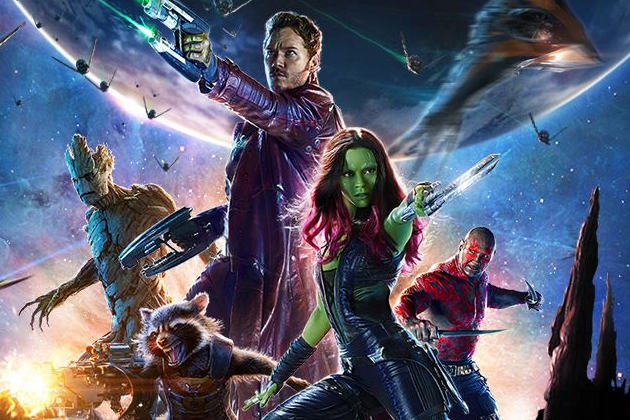
The Guardians of the Galaxy (4/5 Stars)


Our Hero, the Awesome Chris Pratt, lands his intergalactic spaceship on a desperate and dangerous alien landscape. He steps into a derelict and cavernous ancient cathedral overgrown with dangerous fauna. Chris Pratt puts on his Walkman and plays his “Awesome Mix Tape #1.” The song, played loud and funky is “Come and Get Your Love,” by Redbone. And to this tune, the opening credits of our movie come on the screen as Chris Pratt dances and shuffles through the many dangers of his archeological mission. That’s when I knew I was watching something new, something interesting, and most importantly something undeniably fun. And you know what, it was.  

Until now, I have not heard of the Marvel comic “Guardians of the Galaxy.” Apparently it is rather recent comic without much of a fan base. There are no recognizable characters. The team consists of a Firefly-esque band of misfits that have come together to do fun outlaw stuff, mostly salvage jobs. The leader is Peter Quill (Chris Pratt), a human who was abducted by aliens when he was a just a little kid in 1988. This particular back-story is a boon to people like me who are somewhat turned off by the complete arbitrariness of most way into the future science fiction. The most obvious perk of the story happening basically in current day even if we never see Earth is the soundtrack. It comes from the Walkman containing his Awesome Mix tape that young Peter was carrying when he was abducted. It has got Marvin Gaye, David Bowie, and even Blue Swede. These songs reflect good taste on the part of Peter’s mother who made the tape for him before she died of cancer. I was surprised and delighted that “Cherry Bomb” by The Runaways got an extended play over one of those getting-for-battle montages. It’s a killer song. Then there is the marvelous pair of digital creations Rocket Raccoon and Groot. They are originally a pair of bounty hunters. Rocket Raccoon is the product of a mad scientist who turned a raccoon into a living, breathing, sarcastic as all hell, and complete with a snarly Napoleaonic complex. Bradley Cooper voices Rocket Raccoon. Admittedly, I could not recognize him in the voice. Groot is, I guess, an Ent, a walking tree. Vin Diesel voices him in what can be safely be said is an underwritten role. All Groot can say is “I am Groot.” Although, he is a bit like Chewbacca in that apparently the Raccoon can interpret his connotations perfectly. These two characters are not muppet sideshows. They are so well conceived and artistically put together that after awhile I realized that I had forgotten that I wasn’t simply watching actual actors. We are at a point in movie technology where these characters are alive. It is an extraordinary to watch and given the progress I would think this might be the last time I comment on how well it is done. From now on, perhaps I’m going to judge these performances just how I would judge a human performance. On a very basic level what has been have achieved is a blurring of the distinction between the two. Joining the party late is the Pro Wrestler Dave Bautista as Drax. He does a very convincing job of being big and dumb and completely incapable of grasping metaphors. Finally there is Zoe Saldana painted dark green this time as a fierce warrior of some sort. She is the serious one of the bunch because you know she’s a woman.

The plot of this story is arbitrary and absurd and quite frankly really comparable to some truly awful movies like John Carter of Mars and the like. There are bunches of people with weird names in weirdly named places you’ve never heard of and they are trying to get this weapon that is going to kill everybody unless Peter Quill and the gang get it first. Motivations come and go easily for the people and not much makes sense in that annoying Science Fiction way you know where because it takes place in a far off place you don’t have to worry about making any of the technology realistic or plausible. But guess what? I did not care. I just did not care. Because what this movie does good it does awesomely great and I could forgive all the absurdity because the movie never really asked me to take it all that seriously. What it asked me to do was have fun and then it provided great music, good jokes, quirky characters, but above all abosolutely stunning things to look at.

The design of this movie is truly Oscar worthy effort. It is hard to assess who is exactly responsible for what. When you look up the crew on IMDB you are faced with the fact that hundreds of people have worked on the movie. But here are couple of names of the people in charge: Charles Wood of Production Design, Ray Chan of Art Direction, Alexandra Byrne of Costume Design, and whoever was in charge of makeup. There has not been a movie so vibrant and fun to look at since “The Fifth Element.” This movie makes use of a comic color palette. The prison jumpsuits are bright yellow. Several characters are of light blue and hot pink and orange hue.  My favorite design has to be the makeup of a character named Nebula (Karen Gillan). Now that is a sexy blue robot (I think she is a robot, maybe). If the makeup and hairstyling of this movie doesn’t win an Oscar I have no idea what I’m talking about. At one point I was looking forward to seeing new characters being introduced just to see what they looked like. What was better about Benecio Del Toro’s part in this movie? His performance or his white suit and hair?

This movie was directed by James Gunn and partially written by him too. I have not seen anything else he has done but given the size of these blockbusters, it is hard to say (and probably shouldn’t be said) that this is his movie. This is a corporate movie and as a corporate movie it has certain plusses and minuses. It does not, cannot have the personal touch that small movies have. But it does have the ability to apply lots of money for the employment of hundreds of artisans and designers. “Guardians of the Galaxy,” is a persuasive argument that summer tent-pole blockbusters can be worth the money spent to make it not just profit-wise but also in artistic merit. Yes, corporate movies can be quirky, original, and fun too. Attidude is all, i.e. the courage to play “Hooked on a Feeling” by Blue Swede in a science fiction movie and have faith that the audience is going to like it enough to ignore how the whole setup is completely absurd. Such courage in very expensive projects is rare but take a look, it exists. 


Sunday, January 5, 2014

American Hustle (5/5 Stars)


The feel of this movie reminded me of a great Hall of Fame Rock and Roll concert. You know those concerts where they induct a great musician and all his friends get up on the stage and they play all the great songs songs and everything is great. ‘American Hustle,’ the new movie by David O. Russell feels like that. It has an incredible cast and a plot that allows every actor the opportunity to do some really throw down acting. In essence this movie is acting in that it is about people who are reinventing themselves in order to pull off scams and sting operations. The backdrop of the movie is the late 1970s ABSCAM scandal in which several members of Congress were convicted of taking bribes from an Arab sheik that in reality was an undercover FBI agent. It should be noted however that almost none of the movie is true. The names of the Congressmen are the same but all the FBI agents and con artists are fictional characters. As the movie’s opening subtitle states, “Some of this actually happened.” So expect fiction as a default not the other way around. In terms of storytelling this strategy is an unambiguous success in that it allows the actors to make very broad dramatic choices with their performances without the inherent worry that a movie inspired by real events usually has, i.e. that they are unfairly slighting real people.

The main quartet of actors involves the con artist team of Christian Bale and Amy Adams, Bradley Cooper as the FBI agent, and Jennifer Lawrence as the housewife of Christian Bale. In supporting roles are Jeremy Renner as the main target of the sting, Mayor Carmine Polito, Louis C.K. as Bradley Cooper’s long suffering supervisor, and Robert De Niro as the mobster who appears to get a cut of the deal when the original sting starts getting escalated way out of hand.

This is the third great movie of David O. Russell about redemption and reinvention. “The Fighter” was about a down and out boxer who came back as a champion. “Silver Linings Playbook” was about a manic-depressive fresh from a stint in a mental asylum trying to get his life back on track. “American Hustle” draws from both movies in terms of theme and cast. From “The Fighter” are Christian Bale and Amy Adams and from “Silver Linings Playbook” are Bradley Cooper, Jennifer Lawrence, and Robert De Niro. Making their debut in a David O. Russel movie is Jeremey Renner and Louis C.K. It is no mistake that actors in the last two movies were nominated for Oscars (Amy Adams, Bradley Cooper, Robert De Niro, and Jacki Weaver were nominated. Christian Bale, Melissa Leo, and Jennifer Lawrence won) and this movie should be no different. The only question is who gets nominated and who wins because almost every performance is worthy of it.

Christian Bale plays Irving the main con artist. For this role, Christian Bale that most humble/masochistic of actors decided to gain sixty pounds and sport an elaborate comb-over. There are very few actors in movies that would gain an ungainly amount of weight (or lose it!) to portray a fictional character. Perhaps the best thing though about his performance is his willingness to support all his fellow actors. Irving is a soft-spoken kind of guy who spends his time trying to bring everybody else in the cast back from the brink of insane shenanigans. It also helps that he has all that weight because he moves slower than everybody else.

The opposite side of the coin is the manic cocaine-addled performance of Bradley Cooper as the over-ambitious FBI agent that snags the con artists and employs them to catch bigger game. This man is all sound and fury and not so much thinking. Louis C.K. plays his long suffering supervisor and the interactions between the two are some of the funniest in the movie what with Bradley yelling and screaming and Louis C.K. doing the definitive embarrassed put upon Louis C.K. performance. At the same time however, the Bradley Cooper character of Richie Tomaso is the most tragic. I won’t give away how everything turns out but the treatment of the FBI agent says a lot about how David O. Russel probably feels about the ABSCAM scandal in general. It was a bad thing wasn’t it because after all everybody in politics in beholden to money anyway (just not in an illegal way) and what exactly is the point of entrapping people who do not have a history of criminal behavior.

Amy Adams puts in several performances as a stripper from Alburquerque who moves to New York and somehow finagles her way into a job at Cosmopolitan magazine before falling in love with Irving and becoming a British financier with royal connections in their respective scams. After the FBI catches Amy and Christian she pretends to fall in love with Bradley (or does she pretend?) in order to have just one more trick in the bag if things go south. She is playing just about everyone. It is a very bold performance by Amy Adams and perhaps the most complex character she has ever created.

Rounding out the main cast is Jennifer Lawrence, the wildcard. She plays the housewife of Irving whose reckless impulsiveness is guided by the fact that she knows nothing of what is going on. The funniest scene in the movie involves Irving bringing home a new invention, a “science oven,” as a gift from the man he is conning. He tells J-Rentz to not put any metal in it but doesn’t say why. So she puts metal in it almost immediately and microwave bursts into flames all over the house. Here’s the exact quote: “Don’t put metal in the science oven. Don’t put metal in the science oven. He’s always treating me like a fucking child. I do what I want.” BOOM!

As much of a character as anything else are the little details that inhabit the movie: Christian’s combover, Amy Adams revealing dresses, Bradley Cooper’s curlers, J-Rentz furs, Jeremey Renner singing Tom Jones’ ‘Delilah,’ Duke Ellington’s role in two characters falling in love, the thump and grind of Led Zeppelin’s ‘Good Times, Bad Times,’ a trip to the disco with Bradley and Amy, Louis’ story about ice fishing, the Mexican-American Arab sheik, a pool party in the middle of the winter, and the purity and goodness of mayor Carmine Polito and his family. Everything about this movie is exceptional. But above all, “American Hustle” cares deeply about these exciting, fun, and charming people that care deeply about what they are doing and who they want to be. They fight, they laugh, they cry, they sing, they scream, they cheat and tell the truth, and they live and fall in love. It was a wonderful experience to spend a few short hours in their company.

If anything, this will be the Best Original Screenplay of the year. Hands down. It’s great. 


Tuesday, January 8, 2013

Silver Linings Playbook (5/5 Stars)


White-Knuckling It


“Yeah about a week before the incident I called the cops and I told them that my wife and the history guy were plotting against me by embezzling money from the local high school which… wasn’t true. It was a delusion. And we later found out from the hospital that it’s because I’m uh….undiagnosed bipolar.”
- Pat

It turns out that Pat, played by Bradley Cooper, had been white-knuckling his mental disorder for most of his life without the proper help. Then one day he walked in on his wife with another man, snapped, and nearly beat the other guy to death. He was arrested. The court ordered him to spend eight months in a psychiatric institute. As the movie starts just about as he is to leave the hospital. How do you know that he still might have a problem? Well, he is in his late 30s. He has lost his wife, his job, most of his friends, and his home and is moving back in with his parents. The kicker though is that he is very optimistic about his chances of getting all of it back especially his wife even though she sought and received a restraining order against him. His plan involves not taking his medication, getting in shape by running around the neighborhood while wearing a garbage bag (for the sweat you see), and reading his ex-wife’s summer reading list for the high school English class she is teaching. His parents, played by Robert De Niro and Jacki Weaver worriedly try to impose some sort of reality on him to no avail. Until that is he has a couple of rage induced episodes at 4am in the morning brought upon such trivial matters as not being able to find his wedding video and a not-so-happy ending to Hemingway’s  “Farewell to Arms” that end up waking up the entire street and getting the police invited over to the house. And at that point after the subsequent mood swing and humiliation set in, he finally and sadly realizes that he simply cannot white-knuckle it anymore. He still needs help.

The director of Silver Linings Playbook is David O. Russell, a filmmaker who is the preeminent authority in cinema on eccentric slightly crazy families. Other must-see movies he has made about these types of people are “Flirting with Disaster” starring Ben Stiller and “The Fighter” starring Mark Wahlberg and Christian Bale. There is such a degree of authenticity to these off-kilter movies that it would not surprise me a bit if David O. Russell came from an extremely dysfunctional family himself. He has had huge blowups and arguments on the sets of his movies before (George Clooney won’t ever work with him again after “Three Kings” and there is a video on YouTube that involves him getting supremely pissed off at Lily Tomlin on the set of “I Heart Huckabees”) and has freely admitted that one of the reasons he was inspired to make “Silver Linings Playbook” was his own son’s issues with depression. Like the father and son in this movie, I think that it is likely the Russells have mental illness in their genes. But let me be clear: whatever ‘crazy’ David O. Russell does have in him, it is definitely the kind that borders with brilliance.

Great directors tend to have signature styles. Some are so strong that it becomes easy to spot their stories with or without knowing beforehand who directed it. You can’t really mistake an Alfred Hitchcock or Stanley Kubrick movie with any other director’s movie. Contemporary moviegoers should also be able to pick out the latest Wes Anderson, Martin Scorsese, or Quentin Tarantino movie without much help. David O. Russell too has a very recognizable style but it is itself a very unique unique style. Whereas most of the time a great director’s films are characterized by clarity of vision or a certainty in which types of camera movements and angles they use, Russell’s style is impenetrably chaotic. There is a kinetic shakiness and unpredictability to the camera movements that lend his movies a disconcerting rhythm. He is doing something behind the camera that I do not understand. And yet it still works and given the subject matter is perhaps the best way to tell a story.  

And he is an amazing writer too. His movies are always insightful, original, and funny. One of the ways you can tell a movie has very good writing is when awards season comes along and most of the cast is nominated for awards. And right now Bradley Cooper, Robert De Niro (playing Pat Senior), and Jennifer Lawrence (playing Tiffany, a recently widowed and equally damaged love interest) are being considered for all kinds of awards. My favorite scenes include the pharmaceutical shoptalk between Pat and Tiffany at a dinner party about what kind of drugs they have taken, Pat Sr.’s OCD obsession with the Philadelphia Eagles, and the ballroom dancing contest. Yes, there is also some really not that bad dancing in this movie. The writing can be said to be so good that it got Chris Tucker out of retirement. You might remember him. His last movie was a lead role opposite Jackie Chan in “Rush Hour 3.” That was in 2007. His last movie before then was 2001’s “Rush Hour 2.” So basically he has been retired for ten years. Chris is one of those rare cases where a movie star quits after starting to pull in $20 million a movie in salary. He just did not want to act anymore. But, inexplicably, here he is as Danny, a friend of Bradley’s from the mental institution. He pops into the movie a couple of times after illegally breaking out of the asylum.

I would say the only real problem with this movie is the casting of Jennifer Lawrence. She does not do a terrible job but I bet somebody else could have done it better. The character calls for an emotionless deadpan performance sure, but there are emotionless deadpan performances and then there are emotional deadpan performances that nonetheless convey every single emotion the person is feeling anyway. Go ahead and rent an Aubrey Plaza movie, either “Safety Not Guaranteed” or the TV show “Parks and Recreation” and you will see what I mean. Jennifer Lawrence may just get a nomination for this movie, but I figure that has less to do with her talent and more to do with the fact Tiffany is an extremely well written role combined with the fact that the supporting actress category always has notoriously few well-written roles, this year being no exception. Any competent actress probably would have had a chance to be nominated.

Oh and this movie has a much better ending than “Farewell to Arms.”


Saturday, June 18, 2011

The Hangover: Part II (2/5 Stars)


“10: The author shall make the reader feel a deep interest in the personages of his tale and in their fate; and he shall make the reader love the good people in the tale and hate the bad ones. But the reader of the “Deerslayer” tale dislikes the good people in it, is indifferent to the others, and wishes they would all get drowned together.”
- Mark Twain, Fenimore Cooper’s Literary Offenses


Comedy happens when somebody gets exactly what they deserve. Tragedy happens when bad things befall good people. If you do not have the ability to grasp this very simple basic difference than you might just be one of the makers of “The Hangover: Part 2,” a movie that discards nearly everything that made Part I a superior comedy and leaves behind a mess of awkwardness, unpleasantness, and a story that, if it took place in the real world, would be really sad.

The original conceit of the first Hangover movie was nothing short of brilliant. Four guys go to Vegas for a bachelor party. The next morning, Alan (played by Zach Galifinakis), Stu (played by Ed Helms), and Phil (played by Bradley Cooper) wake up in a trashed hotel room with disastrous hangovers. The groom is missing and nobody can remember where they lost him. But there are several clues around: a hospital band, a receipt from an ATM, a tiger, a chicken, a baby, and a police car. The rest of the movie concerns the three trying to piece together the mystery and meeting many different comic characters along the way. “The Hangover: Part II” follows this formula but in a vastly inferior way. This time it is Stu getting married. The wedding is taking place in Thailand. A couple of nights before the wedding, the four guys plus the bride’s 16-year-old nephew, Terry, have one beer by a campfire. Stu, Alan, and Phil wake-up the next morning with disastrous hangovers in a vagrant apartment in Bangkok and Terry is missing. But instead of a multitude of clues there is but two, a monkey and a severed finger. Both are dead ends and don’t lead to anything. In fact, whenever a clue or lead is finally brought to light it is usually entirely explored in the very next scene. Thus, there is very little mystery to Part II and that is a huge problem both in terms of the movie’s pace and comedy.

One of the more brilliant things about the first movie’s structure was the way it efficiently set up subplots. A clue was shown at the beginning and this gave the movie an excuse to switch tracks from one comic situation to another via some hilarious shock moments. Some good examples are the cops busting into a room, Mike Tyson waiting for the guys in their hotel room, or an Asian gang purposefully ramming the guys’ car. These moments don't exist in Part II because nothing is ever set up. So instead of quick comical transitions we are left with the guys walking around in depressed moods to locations that seem arbitrarily chosen. This movie isn't nearly as intelligent nor as interesting to watch unfold.

But this wouldn’t be nearly as big a problem if the movie were funny. And this is where “The Hangover Part II” inexplicably fails consistently. For one thing, all the characters have turned into jerks. The most notable transformation is Alan. What was a very funny weird but well-meaning oddball in the first movie has turned into a total asshole. He is mean to his parents, his friends, and most notably to Terry, who hasn’t done anything to deserve all the insults. This isn't funny. It's awkward. Generally speaking, a movie should make the audience like the good people in the story and dislike the bad. That way the movie is enjoyable when good stuff happens to the good people and bad stuff happens to the bad. (You would think that this would go without saying). But here there is no difference between the good and bad. They are all assholes. This goes for all the side characters in the sub-plots as well. Where Part I had some variability in the types of people the guys met (like say sweetheart Mike Tyson, heart of gold hooker Heather Graham, macho cop Rob Riggle, the annoyed doctor, etc.) everyone in Part II seems to be slightly different versions of the same jerk. The tattoo guy is a jerk. The Buddhist Monks are jerks. The drug dealers are jerks. The father-in-law is a jerk. The crime boss, played by Paul Giamatti, is a huge snarling screaming jerk. Nobody seems to be having any fun. Even the flashbacks of the night before don't show anybody having fun. The one exception is Mr. Chow, played once again by Ken Jeong, and he’s dead for half the movie. The story takes place almost entirely in a dank cesspool of inner city Bangkok. Everything is the color of puke. The funniest lines are spoken by Alan and these are mostly non-sequitors. You know a comedy is in trouble when the best jokes are funny precisely because they have nothing to do with the storyline.

The director Todd Phillips has always been very skilled at casting groups of comedians with different comic styles (Road Trip, Old School, Starsky and Hutch). In the first Hangover he hit the motherlode with the oddball Galifinakis, the neurotic Helms, and the laid back Bradley Cooper. The three played off each other very well. This was especially true whenever things would get too crazy. At that point the movie could depend on Cooper to be a relaxing agent. They wake up in a trashed hotel room. “Looks like we had a bit of fun last night,” Cooper wryly remarks, hardly worried. A valet brings around a cop car instead of their Rolls Royce. Cooper volunteers to drive it, not missing a beat. In Part II, this dynamic falls apart completely and the main reason is that Cooper can’t realistically be a relaxing agent without sounding like an uncaring asshole. The situations the guys find themselves in are far too serious. Do you understand the comedic difference between getting tasered as a punishment for stealing a cop car as opposed to getting shot for no reason whatsoever? Do you understand the difference between a very bad sunburn and a permanent face tattoo? Or how about the difference between cheating on an unfaithful shrew of a girlfriend by accidentally marrying Heather Graham as opposed to cheating on your faultless fiancé via sodomy with a transvestite prostitute? If you do, then I would argue you have a much keener understanding of what is funny and what is not than the makers of this movie. There is a very telling scene in this movie as far as the audience’s laughter level in the theater with me was concerned. It dealt with Stu’s father-in-law giving a toast. It starts with a couple of insults at Stu’s expense, which the audience definitely laughed at. It goes on for several more insults, each one drawing less laughter than the one before. And then the toast just keeps on going for much longer than the movie needed to make absolutely clear that the father-in-law isn’t telling jokes at all. Instead, he is expressing outright hatred of his son-in-law and maliciously intends to humiliate him in front of his bride to be, his entire family, and all his friends. By the end of the toast, the audience had stopped laughing. It wasn’t funny. It was just really fucking mean. 

The Hangover Part II has made so much money already that I’m sure there is more than enough financial incentive to make Part III. I am of the belief that Part III could still be very funny if it stayed competently faithful to the formula of the first movie. The first step I would think is to hire back the original writers, Jon Lucas and Scott Moore, and fire the hacks they hired to write this one.