This one is for all us losers.
The conceit of “The Suicide Squad” is a classic stock plot. I couldn’t tell you where it first was used, I expect B-movies have done something like it many times over since the early days of cinema, but one of the best examples is the 1967 movie “The Dirty Dozen”. The idea is that there is this important military objective that needs to be accomplished, but the chances of successful mission are minimal, so a bunch of guys with no future, like criminals serving life sentences, are given the opportunity to take a shot at it. They will probably die in the attempt, but they were going to rot in prison anyway, so what do they have to lose?
“The Suicide Squad” updates this premise with a modern comic book movie twist by making all of the criminals super-heroes. But you wouldn’t send Batman on a suicide mission. He’s a billionaire that works for himself. You need some more expendable product, super-heroes that wouldn’t be too much of a loss if they were going to die. Turns out, D.C. Comics has plenty of them. So much so that within the first fifteen of the minutes of the movie, at least half the squad is dispatched, and I don’t think anyone is going to miss the Swedish guy with the javelin known as (...looking it up by IMDB…) “Javelin”.
The remaining squad are as follows:
Colonel Rick Flag (Joel Kinnaman) superpower: competence, moral compass, leadership
Bloodsport (Idris Elba), superpower – good at weapons, killing people
Peacemaker (John Cena), superpower – good at weapons, killing people
Ratcatcher 2 (Daniela Melchio) superpower – can control rats
King Shark (voiced by Sylvester Stallone) superpower – indestructible sharkman
Polka-Dot Man (David Dasmalchian) superpower – throws polka dots at people
Harley Quinn (Margot Robbie) superpower – likely insane, innovative with melee weapons
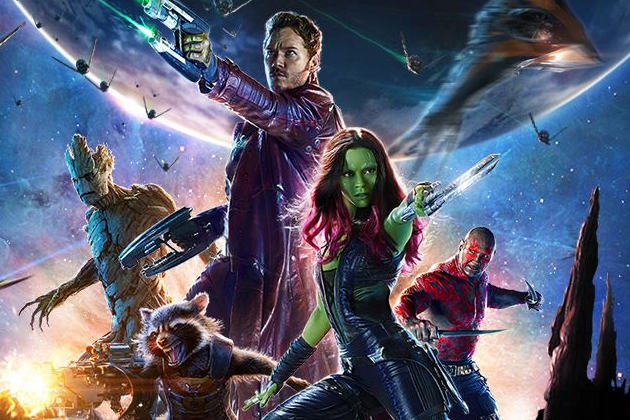
Writer/Director James Gunn has a long storied history of juggling misfits in a group setting. He is the writer/director of the Guardians of the Galaxy movies after all. Now, you are not supposed to switch between rivals like Marvel and D.C. Comics like he is doing here, but then again Marvel fired him for uncouth Twitter jokes (before waiting a year while the cultures vultures attention went elsewhere and then hired him back) so I figure he doesn’t owe anybody anything. He does a very good James Gunn here. I especially liked the fact that Bloodsport and Peacemaker have essentially the same superpower which sets up a childish competition between them; how King Shark is so big and dumb; and how Polka-Dot Man, who shoots polka dots at people, is as sad, crazy, and pathetic as he sounds. (It is revealed that his motion injected him with radioactive stuff because she wanted superhero children which gave him polka dot powers but also daily polka dot rashes and he has to puke rainbows each day or die of polka dot exposure.) He fits right in. Rounding out the suicide squad is the only half-way well known superhero and the only one that also starred in the original and lessor “Suicide Squad” movie from a few years back, Harley Quinn. Harley gets the full James Gunn treatment in a scene where she dispatches plenty of nameless bad guys to the tune of Louie Prima singing Just a Gigolo.
This movie is frequently funny and has plenty of good action set pieces. And the final battle, which involves an especially B-movie type boss monster is big and ridiculous in a good way. There is also real pathos here (via certain cameos by fellow director and character actor Taika Waititi). In particular, James Gunn is decidedly for the underdogs, a very sympathetic note to take. However, his glorification of the underappreciated is a little belied by the many many gratuitous deaths of unknown extras. Let me ask you this: when was the last time you saw a SWAT team head into a combat zone in any movie vaguely like this one and thought that a single one would leave alive. These guys have all the body armor and automatic weapons yet they never don’t stand a chance. You want an underdog, make a movie about a SWAT team that fights superheroes.
What is left is the politics of this movie. It isn’t meant to be front and center, but it is interesting to talk about as, like many comic book movies, the message it contains is meant for a very large mainstream movie, and therefore kind of needs to be safe.
The mission is as follows: A fictional South American banana republic has recently suffered a military coup. The previous government was corrupt and so is this new one, but the previous government was tolerated by the United States because, it is revealed, it was willing to serve as a base for the United States to develop alien technology, which involves the experimentation and torture of political dissidents. This would not be the first time it was revealed in a movie that the American led team found out that the United States was really the bad guy, and like everything in this movie, it is a trope competently recycled. But what does this trope mean? Why do American movies so often reveal that America is the ultimate bad guy?
First of all, we should point out that the reveal of America being the bad guy leads to conflicts between the members of the Suicide Squad, which is a diverse group of people and at least one fish. How will this mainstream movie sidestep awkward political battles that may double as racial conflicts. Easy, the conflicts will be mano a mano between members of the same race. For instance Colonel Rick Flag (white) has his major conflict with Peacemaker (white) while Bloodsport (black) has his main conflict with Amanda Waller who is played by Viola Davis (black). Whew, dodged a bullet there.\
But why is the mainstream movie so hesitant to sidestep racial conflict but it still quite comfortable with laying an evil fictional plot at the feet of the United States government. There are a few possibilities to explore.
The most obvious is the movie industry’s leftist tilt. It is an urban industry, mainly centered in two very blue cities Los Angeles and New York City and, like seemingly all businesses within the realm of the arts and humanities, it draws a certain type of person with blindspots. For example, Oliver Stone who can brilliantly articulate all the bad things America has done in Latin America in the past one hundred years and in the next breath make a puff piece documentaries about autocrats like Fidel Castro and Hugo Chavez.
Second, it may have something to do with corporate cowardice. The movie business is well acquainted with its free speech rights and is not fearful of retaliation from the American government. In contrast, a hint of any criticism towards the Chinese government may result in an American movie being completely banned from China’s gigantic market. Because of this, America’s government gets routinely trashed while China’s government, which is presently disappearing its citizens into gulags, is never criticized.
But there may also be something else at work here. I recently read Charlie Kaufman’s latest book Antkind which was about a ficitional movie critic B. Rosenberg Rosenberg, an insufferably woke white man who rails against white privilege and toxic masculinity (and expects credit for it), uses non-binary verbs (that he invented and only he uses), and calls himself an ally of every last victim on Earth (without asking whether or not they want his help). Half-way through this hilarious book it dawns on the reader that this character’s obsequiousness masks in even deeper pretentiousness. After all, in order to feel like you need to apologize for everything, one must first believe they are responsible for everything, which, if you think about it, is an extraordinarily egotistical view of the world. B. Rosenberg Rosenberg inflates his own importance by constantly apologizing for the terrible influence people like him have on the world. Perhaps the trope of America being the ultimate bad guy is but an exercise in vanity. Ultimately, it matters less whether or not we are the good or bad guy, what matters is that we matter. Think about it.