Search This Blog

Saturday, June 13, 2020

Portrait of a Lady on Fire (3/5 Stars)


I had fun watching “Portrait of a Lady of Fire”. Perhaps that they may not have been the desired effect of Writer-Director Celine Sciamma and I do not mean to insinuate that the movie is so bad it is good. It is a good movie, well made, poetically composed, and filled with good performances. It just is too serious for a plot that has so little at stake and it moves so slowly and relies so heavily on looks and gazes e to move itself forward that the impatient among us are provoked to add their own comments to fill in the space. If you want to see this movie, you should not see it with me. I talked a lot during it.

The plot can be briefly summarized. A young woman, played by Noemie Merlant, is hired to paint the portrait of another young woman, Adele Haenel. They are both French and the entire movie takes place in a scenic isolated villa on the coast of France. There is lots of wind that blows through their hair, brunette for Noemie, blonde for Adele. Adele has endured a recent tragedy. She has a very French reaction. in full ennui she does nothing every day but walk through gorgeous cinematography looking striking and miserable.

There is a clear subtext in all the gazes between Noemie and Adele. The movie does not outright say it for the first hour of the movie, but they are totally lesbians. There is no one else in this villa but the maid, and every other scene is them looking at each other without talking. These types of pauses that generally lead to sex in most movies seem to happen every five or ten minutes or so. I incorrectly predicted that Noemie and Adele would start making out several times. I’m not going to spoil whether they ever do it…Not! They totally do!

There is a lot of painting in this movie and Celine Sciamma probably did a good job of portraying the process. I don’t know, I don’t know much about painting. However, I do know however when a woman is correctly framed and lit in cinematography. In this regard, Sciamma clearly knows what she is doing. It’s hot. I especially like the scene where the lady was on fire.


Saturday, April 18, 2020

The Invisible Man (4/5 Stars)


The story behind the production of “The Invisible Man” reads like a cautionary tale for a terrible movie. “The Invisible Man” is one of several very old properties from Universal Studios that make up its monster movie franchises. (Others include “Frankenstein”, “Dracula”, and the “Wolfman”). When it appeared that franchises with endless chapters like Marvel, DC Comics, and Star Wars were the future of movie money, Universal was sad to contemplate that it did not have a ready franchise to pour all of its money into. All it had were theses monsters. So it attempted to create an interconnected “Dark Universe”. This led to the Tom Cruise led “The Mummy” flop, after which the “Dark Universe” appeared to be a dead idea. However, for shits and giggles, and because creative directors in movie studies are legendarily averse to new ideas, all the monster movies look like they will be rebooted anyway. “The Invisible Man” is one of those movies. A top-down directive is always a bad reason to make a movie.

The next bad idea for making a movie is to cash in on a political moment, in this case #MeToo. I’ve complained several times now about movies and scenes in movies that seem to exist solely to garner applause for being woke but have little to add to the cinematic experience. (“Game of Thrones”, “Captain Marvel” and my last movie review about “Wendy” come to mind). “The Invisible Man” fits squarely in the definition of a #MeToo movie. I bet the pitch for “The Invisible Man” probably went something like this:

Producer: We want to reboot “The Invisible Man”. The franchise made a lot of money in the past. There is a built-in audience and the horror movies are a safe genre to open in theaters.
Creative Director: I like it!
Producer: But it will be different. We’ll make it a #MeToo movie and market it as such. It’ll start Elizabeth Moss, an actress perpetually put upon by mean men in successful series like “Mad Men” and “The Handmaid’s Tale”.
Creative Director: Green Light! Is there a script?
Producer: I’ll get the monkeys to start typing it right away!

Well, sometimes even the worst ideas can turn out all right. I am happy to report that “The Invisible Man” is a hell of a movie. It well-directed, brilliantly acted, and is scary. I never saw the original movie, but I did see Kevin Bacon’s “Hollow Man”. This movie is much better and scarier than “Hollow Man” and I expect better and scarier than the original movie franchise. Credit for this is heavily dependent on the #MeToo premise. Movies in the past about invisible men, at least “Hollow Man”, told the story from the man’s point of view and leaned on the voyeuristic pleasures of being invisible, for example, peeping at naked women. Here, the point of view of the movie switches to that  of a visible woman, Elizabeth Moss playing a recent escapee from an abusive relationship who then becomes suspicious that her controlling ex has turned himself invisible to better continue harassing her. The voyeurism is gone because the audience generally does not know whether it is happening in any given scene. What replaces it is a sense of uneasiness and then terror. The #MeToo premise, far from being its usual anachronistic annoyance, makes the story far more effective as a horror movie.

If this movie has a predecessor in old cinema, I don’t think it would be the original movies, but “Gaslight” from 1944 starring Ingrid Bergman. That movie’s impact wound up verbing the name of the movie in the English lexicon. To “gaslight” is to “manipulate (someone) by psychological means into questioning their own sanity.” Here, the the invisible man pulls the ultimate gaslight. (Double Feature, anyone?).

The object of the ultimate gaslight, slowly questioning her sanity and being terrified out of her mind is Cecilia Kass, played by Elizabeth Moss. Because there are no other actors in the room, Elizabeth Moss is effectively in a one-woman-show. It is the sort of performance that would garner an easy Oscar nomination if it weren’t in the horror genre. She is perfectly cast in this movie for the reasons outlined along with her preternatural ability to bring a character through the gamut of all the emotions in the right order. She is helped by a wise script that knows that a woman does not need to win every scene in order for the movie to be considered feminist. To understand why this character is interesting and Captain Marvel is not, is to understand what makes characters interesting in general, a standard which applies equally to both the sexes.

“The Invisible Man” was written and directed by Leigh Whannel, who was awful person that wrote the first three “Saw” movies and helped provoke a decade of disgusting torture porn. Only within the last six years, has the horror genre entered a mini renaissance of talented writers and directors like Ari Aster, Robert Eggers, and Jennifer Kent whose movies are actually scary, not simply exercises in cruelty. “The Invisible Man” belongs in this mini-renaissance. It seems Leigh Whannel has learned something about making movies in the last few years. I suppose there is hope for every single last one of us.

Friday, April 3, 2020

Wendy (3/5 Stars)


I cannot say that I am all that familiar with the Peter Pan story. I have only seen untraditional versions of story, Spielberg’s “Hook”, the J.M. Barrie biopic “Finding Neverland, and now “Wendy”. From the first two I gleaned a few details I thought were: 1) Peter Pan is good; 2) Captain Hook is bad; and 3) Neverland is fun.

 “Wendy” the long-awaited second feature of Writer/Director Benh Zeitlin (Beasts of the Southern Wild) kind of turns the whole thing on its head. The inhabitants of Neverland reminded me of H.G. Wells’ Eloi and Morlocks which would make Peter, the instigator, a sort of nefarious Pied Piper luring innocent children to a dangerous place. I don’t think Zeitlen wanted the movie to feel this way, but it does for the most part, because the dark side to Neverland is much worse than the boring real world that Wendy and her brothers escape from. This movie has what Beasts of the Southern Wild had in terms of precocious child actors, untamed cinematography, and soaring music. Apparently, Zeitlin even shot the movie on an island with an active volcano. None of this makes up for the dramatic lack of fun. Neverland is never a place without crisis and anxiety. I don’t think children after watching this movie would ever want to go there.

Peter is played by a boy named Yashua Mack. He has dreadlocks, a cool red coat, and a great screen presence. However, it is the sort of screen presence that is more unsettling than exciting. He lures adventurous children, including Wendy (played by Devin France) and her two brothers, onto a train, throws them off a bridge into the ocean, and then paddles them in a canoe to an island with a large active volcano. The kids have fun playing in the jungle for a while. Then one of the brothers dies. The other brother, now bereft of his best friend, starts physically transforming into an old person. This we are told is a condition of the island. If you do not have a best friend, you rapidly age. It is then revealed that on the other side of the island, amidst a ramshackle of decrepit buildings, lives a large group of old sick people. These were kids that Peter brought to the island before exiling them after they experienced a tragedy (i.e. lost their best friend) and were cursed to grow old. The cursed kids can’t even go back home because they would be unrecognizable to their parents. I’m not even sure they know how to go back home. Peter does not seem to care about any of this. Like I said, this is not fun.

The movie gets interesting halfway through the second act when Captain Hook shows up. Before that it is mostly uncomfortable. Captain Hook has a plan to kidnap the children, deprive them of their essence, and use it to become young again. Who would you like to win this fight? Captain Hook who was betrayed and robbed of his youth by Peter, or Peter who is an asshole.

The revision of the basic story extends most importantly to Wendy. Zeitlin in interviews has stated that he had feminist inclinations, that he did not like how the girl in the original story always depended on Peter and did not hold sway over the events of the story. Here, Wendy has a more active role, making decisions, coming up with ideas, and trying to persuade people. That’s nice, but it doesn’t make sense in this children’s story. The character Wendy is a girl true, but she is also a stand-in for the audience. It doesn’t make sense for the audience character to be responsible for fixing everything. Doing that takes the experience of being taken on a ride to a new, strange, and wonderful place and replaces it with a bunch of work. Peter isn’t of any help because boys are stinky and of no hlep. So, Wendy, bound by a feminist viewpoint, for all intents and purposes is the only adult in this movie. She isn't allowed to be a child. If you can’t be a child in Neverland, well, what is the point?

It took Benh Zeitlin an unconscionable eight years to make this movie. Beasts of the Southern Wild, an incredible feature debut, came out in 2012 and feels like ancient history. We have all become old waiting for Zeitlin’s next movie. Having seen “Wendy”, I’m not particularly looking forward to his next movie, which, given the man’s lack of productivity, may never happen. After Beasts of the Southern Wild, he was the new hot thing. Wendy will not make any headlines and Zeitlin may be forgotten by the time he makes another movie. 


Sunday, March 29, 2020

OSCARS 2020

This year was notable in that I found several talented relatively new filmmakers that had been around for a few years whose movies I had not been aware. The main reason may be my general aversion to horror films, at least the kinds of horror films that I grew up with, which specialized in torture scenes. The horror movies that are coming out now, spearheaded by the very talented producers at A24, are very good movies that have more in common with the horror renaissance of the 1970s than the schlock of the 80s and the torture porn of the aughts. I saw my first Jennifer Kent movie last summer ("The Nightingale") which led me to see her brilliant first movie (2015's "The Badadook"). I saw my first Eggers Brothers movie last fall ("The Lighthouse") which let me to see their very good first movie (2015's "The Witch"). I just saw Ari Aster's extraordinary "Midsommar" and have put his first movie "Hereditary" on my list. Then outside of the horror genre, I saw the Safdie Brothers "Uncut Gems" leading me to put "Good Time" on my list, and I saw Keanu Reeves "John Wick 3: Parabellum" leading me to watch the first movie in the series. I already knew about Marielle Heller ("A Beautiful Day in the Neighborhood") and Greta Gerwig ("Little Women"), so all in all I feel more caught up with new talent in movies than I have been in years.

Also, I feel like for the first time in forever, the races for Best Supporting Actress and Best Actress were just as competitive as the races for Best Supporting Actor and Best Actor. This probably reflects more and better roles for women.

BEST SUPPORTING ACTRESS

Kathy Bates – Bobi Jewell – Richard Jewell
Laura Dern - Nora Danshaw - Marriage Story
Nicole Kidman – Gretchen Carlson - Bombshell
Scarlett Johansson – Rosie – Jojo Rabbit
Yeo-jeong Jo – Yeon Kyo - Parasite


BEST SUPPORTING ACTOR

Baykali Ganabarr – Billy – The Nightingale
Brad Pitt – Cliff Booth - Once Upon a Time…In Hollywood
Joe Pesci – Russell Bufalino – The Irishman
Kang-ho Song – Ki Take – Parasite
Wesley Snipes – D’Urville Martin – Dolemite is My Name


BEST MAKEUP AND HAIRSTYLING

1917
Bombshell
Jojo Rabbit
Joker


BEST COSTUME DESIGN 
Joker
Jojo Rabbit
Little Women
Midsommar
One Upon a Time…in Hollywood


BEST PRODUCTION DESIGN
A Beautiful Day in the Neighborhood
Joker
Midsommar
Once Upon a Time…in Hollywood
Parasite


BEST USE OF A SONG IN A MOVIE
Old Man Piano Medley – Under the Silver Lake
I’m a Believer and Heroes (German Version) – Jojo Rabbit
In the Still of the Night – The Irishman
Being Alive – Marriage Story
Beethoven (Pathetique Sonata) – Little Women


BEST SOUND EDITING AND SOUND MIXING
Ford v. Ferrari
The Lighthouse
They Shall Not Grow Old
1917
Ad Astra


BEST VISUAL EFFECTS
1917
Avengers: Endgame
Captain Marvel
The Irishman
 Star Wars IX: The Rise of Skywalker


BEST FILM EDITING
Honeyland
The Irishman
Knives Out
Parasite
Uncut Gems


BEST CINEMATOGRAPHY
1917
Honeyland
The Lighthouse
Midsommar
Once Upon a Time…in Hollywood


BEST DOCUMENTARY
American Dharma
American Factory
Honeyland
One Child Nation
They Shall Not Grow Old


BEST ACTRESS
Aisling Franciosi – Clare – The Nightingale
Awkwafina – Billi – The Farewell
Charlize Theron – Megyn Kelly – Bombshell
Florence Pugh – Dani – Midsommar
Taraji P. Hensen – Ann Atwater – The Best of Enemies


BEST ACTOR
Adam Driver – Charlie – Marriage Story
Adam Sandler – Howard Ratner – Uncut Gems
Joaquin Phoenix – Arthur Fleck – Joker
Keanu Reeves – John Wick-  John Wick 3: Parabellum
Willem Dafoe – Thomas Wake – The Lighthouse


BEST ADAPTED SCREENPLAY
Anthony McCarten - The Two Popes
Greta Gerwig – Little Women
Jojo Rabbit – Taika Waititi
Lulu Wang - The Farewell
Micah Fitzerman-Blue, Noah Harpster – A Beautiful Day in the Neighborhood


BEST ORIGINAL SCREENPLAY
Bong Joon Ho - Parasite
Chris McKenna and Erik Sommers - Spider-Man: Far From Home
David Robert Mitchell - Under the Silver Lake
Mike Leigh - Peterloo
Rian Johnson – Knives Out


BEST DIRECTOR
Ari Aster – Midsommar
Bong Joon Ho - Parasite
Safdie Brothers – Uncut Gems
Sam Mendes – 1917
Quentin Tarantino - Once Upon a Time…in Hollywood


BEST PICTURE:

This was the first year that a foreign language film won the Best Picture Oscar (Bong Joon Ho's "Parasite") and it will be the first year since I've started this blog (2005) where my pick for Best Picture was also the Academy's pick. So good job Academy.

1917
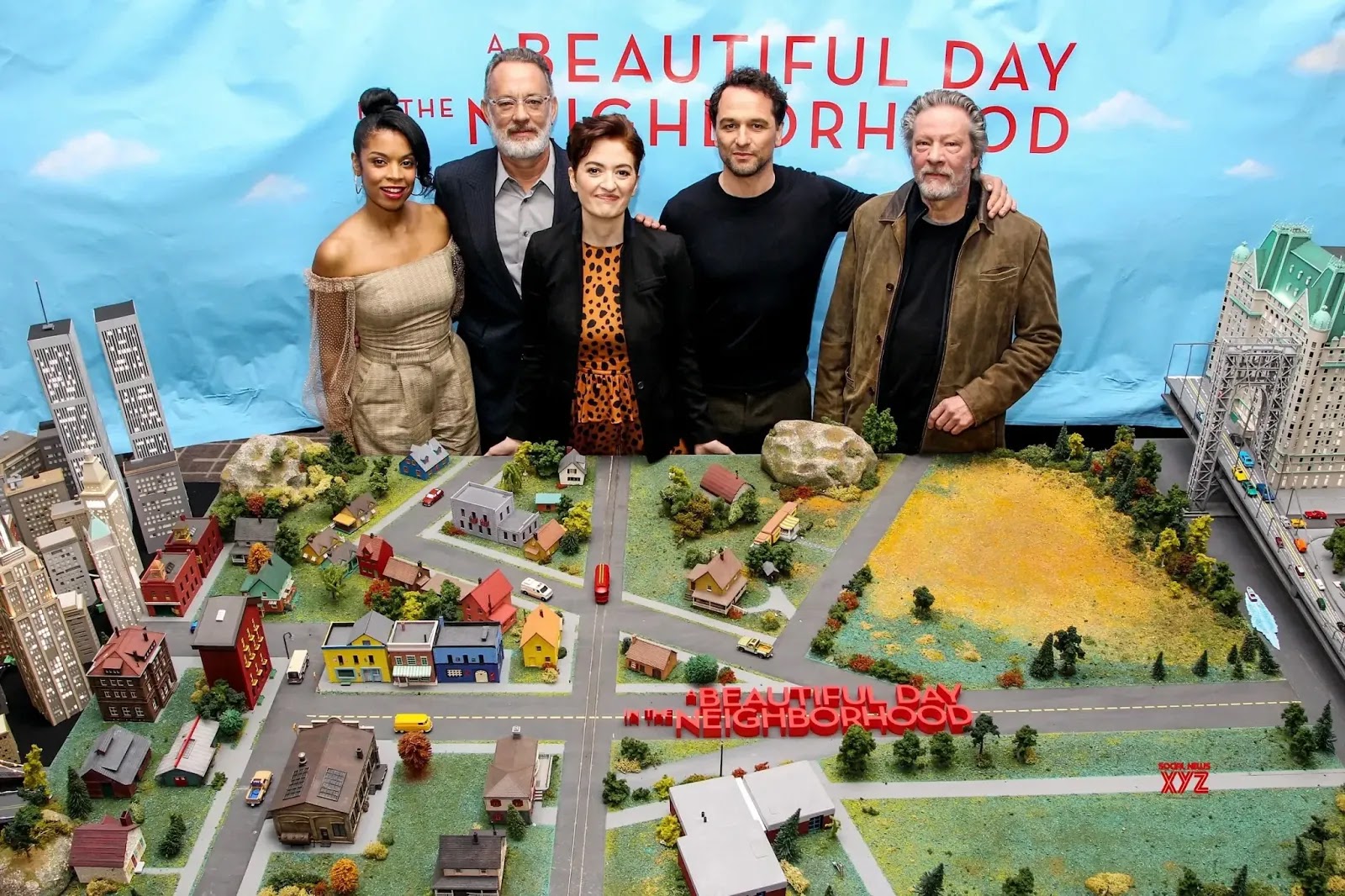
A Beautiful Day in the Neighborhood
The Farewell
Jojo Rabbit
Knives Out
Midsommar
Once Upon a Time...In Hollywood
Parasite
Spider-Man: Far From Home
Uncut Gems


Sunday, February 9, 2020

1917 (4/5 Stars)


The technical achievements of 1917 alone are enough to warrant a viewing of this movie in a theater where one can experience in focus and isolation the high level of skill the creators exhibit. The Director of 1917 is Sam Mendes and the cinematographer is Roger Deakins. This is the fourth time they have worked collaborated. Notably, they previously worked together on James Bond’s Skyfall. What this movie attempts and largely achieves is one long broken shot, a technique first attempted by Alfred Hitchcock in the middling movie “Rope” and perfected by Alfonso Cuaron and Alejandro Innaritu in the more recent movies “Gravity” and “Birdman”. “1917” efforts fall somewhere in between.

The digital revolution in filmmaking has made long shots much easier to edit and cheaper to produce. Surely it still takes much skill in creating a movie that relies so much on logistics and choreography, but, at the end of the day, when everything in movies now seems possible and comes out every week, it is just as important to ask whether any story should be shot in one take. Let’s consider for a moment exemplary uses of the technique in “Gravity” and “Birdman”.

“Gravity” is a great example of the utility of long shots, especially in action sequences. Long takes build up the you-are-there suspense to a scene, a sort of kinetic energy if you will, that makes watching them especially exciting. When done well, the audience has a perfect sense of where everyone is and how fast everything is moving. Any danger presented is more immediate more serious because there is not present the safety of editing, which too often in lesser movies bends time and space to aid the protagonist. How many times have the main characters not gotten hit by that train which is barreling down on their stalled car. “Gravity” was set in space. Its subject does not particularly lend itself to a one-shot technique, but there is no reason why it wouldn’t be appropriate. As it is an action movie, it the one-shot technique greatly enhances the overall effect of the movie.

“Birdman” is not an action movie, so it is a particularly good example of using the one-shot technique as a way to develop an appropriate subject matter. That movie was centered around a Broadway play. Plays and movies are written differently due to differences in the immediacy of the audience and the fact that movies have editing. By taking out the editing, “Birdman” allowed a movie audience to experience “play writing” in a cinematic experience.

“1917” is a movie about World War I. There is plenty of action in any war and the long takes here make those sequences in this movie more exciting. The storyline is sparse and includes a journey of two British soldiers through enemy lines with the mission to call off an assault that will certainly be ambushed and end in slaughter. We follow two Lance Corporals, Black (played by Dean-Charles Chapman) and Schofield (played by George MacKay) as they march through no-man’s land, tunnels, fields, a burned-out city, and forest, till they get to their mission’s endpoint. They have until the next morning to stop the assault, so a time limit is set and the journey happens pretty much in real time. George MacKay has a face that belongs in the 19th century and does a good job inhabiting the old world. There are several more prominent stars in the cast that pop up now and again in what are essentially cameos. Colin Firth is a general. Andrew Scott is a lieutenant. Mark Strong is a captain. Benedict Cumberbatch is a colonel. Everyone does a fine job.

A journey story with a time limit is good for a one take technique. But (and I realize this may be a bit unfair) is a plot about a journey with a time limit appropriate for a World War I story? After all, World War I more than any war before or since was not about going places in a hurry. What generally defined that war was that nobody went anywhere and took an exceedingly long time not to do it. World War I was about hoping a bomb didn’t land on you while you waited in the mud.

Sam Mendes has made a very good movie and he dedicates it his grandfather, a World War I veteran. Do you think his grandfather would have recognized the subject matter of this movie? Is such a mission that we see here likely to have occurred in a World War I setting? Do you think the veteran would have laughed at the sheer distance the characters make within a day? At least the mission seems to be generally futile. That at least is in the spirit of World War I.


Saturday, February 1, 2020

Uncut Gems (5/5 Stars)


The comedian Artie Lange once described the lure of a gambling addiction. He’s sitting at his home with a friend watching a football game, Browns v. Rams, two terrible winless teams.

“What a boring game, I don’t care about this game,” says his friend.
“You want to make it interesting?” says Artie, “How much money do you have in your savings account?
“$800”
“Put $1,500 on the Rams.”

Suddenly you are watching the most exciting game of your life.

Artie’s anecdote came to me while watching “Uncut Gems,” a whirlwind of a movie about a compulsive gambler, Howard Ratner, played by Adam Sandler. The movie starts with Howard Ratner in the hole six figures deep with loan sharks circling and his family falling apart. We do not have much sympathy for Howard. It seems highly likely that he legitimately owes the money (he probably gambled it away) and that his wife should definitely divorce him (he is cheating with an employee at his jewelry store). But Howard has a plan or at least chutzpah and he is about to take us on a fast and frenetic tour of the diamond district in NYC at a very specific time in 2012. It’s all or nothing game time. He is betting big long shots to either save everything or lose everything. Whether or not he wins feels besides the point. Who cares if the Browns win or Rams win. Everything is on the line and it is exciting.

This movie is exciting, remarkably so. It was written and directed by a relatively new team of writer/director brothers Benny Safdie and Josh Safdie, and their natural talent sparks off the screen. The movie’s plot is all walking and talking. There are no special effects, no fight scenes. And yet, “Uncut Gems” feels like it has more action than most blockbusters. And it is continual action. It starts off frenetic and keeps the pace for the entire movie. This is great writing, stirred with great direction, finished with great editing. I would love to see the Safdie brothers get their hands on a comic book blockbuster. It would be interesting to see if they can translate their skills through the machine. The outcome, if successfully, ought to be the best of both worlds.

The plot is exceptionally clever. Howard Ratner’s crazy scheme involves getting his hands on a lucky rock, a solid block of uncut gems, smuggled in from black Jews in Ethiopia. He loans it to a professional athlete who believes the rock is lucky and will help his game. Howard then bets big on the personal stats of the professional athlete. As his bookie says to him, “that’s the dumbest fucking bet I’ve ever heard of.”

But who is this professional athlete? Well, it is Kevin Garnett, the real professional basketball player. And guess what, there is Kevin Garnett, cast in this movie as himself. And when does this movie take place? It takes place during the 2011-2012 Eastern Conference semifinals between the Boston Celtics and the Philadelphia 76ers. These are real games and the actual ESPN footage is shown in this movie. And here Garnett is in this movie acting as his approximately seven years younger fictional self, looking to give his historical self an edge via a lucky stone. Because “Uncut Gems” is such a great movie, it may have the effect of cinematically immortalizing that playoff series. Print the legend sort of thing. For what it is worth, Kevin Garnett’s performance is the best by an NBA player I have ever seen, but then again that bar is decidedly low (looking at you, Shaq)

The casting in this movie is perfect and contains the kind of names that make you believe the Safdie Brothers may have some special pull in the acting community. Adam Sandler pulls off a great performance. Everyone who has seen “Punch Drunk Love” knows he can be a good actor, if only he showed up and cared more than once a decade instead of doing a fourth Hotel Transylvania. The Safdie Brothers somehow made him care. They also got three of the more interesting Jews in the business: Eric Bogosian, Judd Hirch, and Idina Menzel. And these guys aren’t especially in the business anymore as far as I know. Eric Bogosian is a monologist. Judd Hirsch is retired. Idina Menzel is on Broadway. Then there is the irreplaceable LaKeith Stanfield who always seems to be underutilized.

Overall, “Uncut Gems” is one of the best movies of the year. I think they should pass it out in all major movie studios to those in charge of the action blockbuster department. If only movies with 100 million dollars budgets were this entertaining.


Thursday, January 30, 2020

Jumanji: The Next Level (3/5 Stars)


I had written in my review of Jumanji: Welcome to the Jungle that it was the type of movie that you had to take a step back and shake yourself into realizing it was a great film. Jumanji: The Next Movie is the same concept, with the same actors, and the same director, but it is not a great film. Again, one has to take a step back and contemplate what exactly is the different since there is so much in common.

The most obvious difference is the disappearance of the original writers: Chris McKenna and Erik Sommers. I sung their praises before so I will not dwell on their greatness here. Notice instead how this movie lacks the sheer efficiency and ingenious character development of the first movie. In particular, the game itself was more fully realized (and more obviously a video game) in the first movie. Here, the video game’s plot is not so clearly constructed. It is hardly to imagine the various scenes as video game levels. Still, this movie has a few good ideas and does its best to exploit them to their most enjoyable.

The best idea of this sequel, and a further confirmation into what made the first movie work so well, is to fully lean in on the actors doing impressions of other actors. Regardless of what the plot is doing, I always find this interesting. This sequel introduces two more real-life characters: Uncle Eddie played by Danny Devito and his ex-business partner Milo Walker played by Danny Glover. When the real people are sucked into the game this time, Danny Devito inhabits of Dr. Smolder Bravestone, played by Dwayne “The Rock” Johnson. Likewise Danny Glover inhabits Moose Finbar, played by Kevin Hart. Both are fun impressions. I would give Kevin Hart the upper hand on his though. (Favorite line: “Did…I just kill Eddie…by talking…too slow…just like…he always said I would).

Dr. Shelly Oberon, played by Jack Black, who was the avatar of the mean girl in the first film, is now the avatar of Fridge, the black football player. So Jack Black's impression this time around is a complete 180. This is one of those things that might seem controversial but much like Robert Downey Jr.’s performance in Tropic Thunder has inexplicably not raised eyebrows. Also joining the cast is Awkwafina as another avatar player character in the video game. Near the end she  switches places and becomes the avatar of Danny Devito. She does a great job (dare I say better job than The Rock) in acting like an old short fat outspoken Italian man.

The acting shenanigans are the most interesting part of this movie. So much so, that the action sequences, though packed with special effects, feel like they are get in the way of the performances. In the original movie there was more of a balance (or at least the action sequences seemed to be more intertwined with the character development). What is also lacking from the original movie is any particularly interesting development in the original four teenage characters. The pathos of this movie belongs entirely to the characters of Danny Devito and Danny Glover who have had some bad blood in their previous business break-up and are seeking away to heal old bonds. In effect, this makes them the main characters as they have the more emotional territory to cover. Unlike the first movie, there is not enough for all the characters to do, less balance between the character plots and the character's skills/weaknesses do not pay off as well.

Overall, Jumanji: The Next Level is a decently good movie. It is what a sequel should be in a way: the same, but more of it. I got enough of exactly what I was looking for.

Sunday, January 26, 2020

Knives Out (5/5 Stars)


The Trope (aka Movie Cliché) abounds for a practical reason. They represent to the unimaginative a kind of shortcut in the creative process. Instead of going through the rigamorale of producing from scratch a totally original plot, they reuse tried and tested plot devices gleaned from genre and tradition. Like jokes told more than once, these tropes lose some of their effect each time they are employed, but this should not cover up their inherent truth: They are used so often because they work.

Perhaps the most used plot is the murder mystery. Agatha Christie at one point would churn these stories out annually making her the most best-selling author behind The Bible and William Shakespeare. Someone gets killed: Big Deal. The killer is still out there: Present Danger! Who is it? Suspense! The most used trope within the murder mystery plot is the locked room. That is, all the characters are in the same locked room with the dead body. We don’t know who the killer is but they must be someone in the room.

This story has been told many times over. As stated before, such retelling lowers the effectiveness of the trope. That is unless the writer reemploys creativity to the trope, subverting the audience’s already held expectations. In this way, the plot’s dull edged are resharpened and, once again employ their original effectiveness. Such is “Knives Out” an ingenious locked room murder mystery written and directed by Rian Johnson (Brick, Looper)

The setting is an old mansion isolated in the New England woods. Therein Harlan Thrombey (Christopher Plummer), best-selling author of murder mysteries, is holding his 85th birthday party. All his family is in attendance, a colorful privileged lot of bigoted conservatives and insufferable liberals. Harlan does many things that night to give a colorable argument for each of his family members to seek his death. And then Harlan commits suicide by slitting his own throat. The police are pretty sure it’s a suicide but then the great private detective Benoit Blanc (Daniel Craig) shows up, hired by an unknown someone who suspects foul play.

Benoit Blanc is himself a mystery. He is played by an Englishman (James Bond no less), has a decidedly French name, and employs a southern accent. This is not explained. Without giving too much away, and I can’t because what I am about to reveal happens in the first twenty minutes, the story is not necessarily a whodunit, but more of a how did a particular character didn’t do it?

We are shown in the first twenty minutes that Harlan’s in-house nurse Marta Cabrera (Ana de Armas) mixes up his medication, giving him an overdose of morphine. In order to spare her a criminal conviction, Harlan instructs her how to escape the house without attracting suspicion and then kills himself. But is that all to this story? And who hired Benoit Blanc to investigate? And why?

The family of Harlan Drysdale is a cabinet of unique caricatures and good casting. The more important ones are: Linda Drysdale, daughter of Harlan (Jamie Lee Curtis), her husband Richard Drysdale (Don Johnson), and their playboy son Ransom Drysdale (Chris Evans); Walt Thrombey, son of Harlan (Michael Shannon); Joni Thrombey (Toni Collete), daughter-in-law of Harlan. It is to the credit of Rian Johnson, that they are not all terrible people. They have their faults, and some are worse than others. Others, like Walt Thrombey, are not so bad, well, most of the time. In this way, the writer throws the audience leads and red herrings and makes us thinks very hard about how much we trust everyone.

There is one character that Rian Johnson wants us to trust completely and that is the in-house nurse Marta Cabrera. Marta has a medical disorder that causes her to vomit every time she tells a lie. But she is also the one who gave Harlan a fatal dose of morphine and last saw him before he died. How did she not do it? Well, watch the movie and see if you can figure it out before the cliché everyone-in-the same room as the great detective makes his speech scene. The reveal is highly effective.