Search This Blog

Tuesday, February 28, 2017

Fences (4/5 Stars)


 “Fences” is obviously adapted from a play. It helps to keep reminding yourself of this as you watch. That way you can get past the long speeches in confined areas without succumbing to the unreality of all. People act differently within the confines of a play and when they are brought into the wide open of movies it can seem weird. So it is best to come into this movie with that expectation.

The biggest choice any adapter of a play needs to make is how much of the talking of the play should be ditched for scenes of action. Director Denzel Washington ditches so little of the lines that it hardly makes sense for to see “Fences” as a movie. If you can see it as a play, do that instead, the immediacy of the live medium will make it more exciting and easy to follow. Not that “Fences” is a bad adaptation. Denzel’s directs in long takes and makes everyone speak very quickly. This helps move the whole thing along even if it must as designed stay in a backyard for the most part.

Denzel stars as Troy Maxson, an arrogant man who bitterly notices that his life was unfair and that he is too old to get a better one. He is a garbage truck hauler with ambitions to be a garbage truck driver. He also wants to turn back the clock about thirty years and play baseball in the major leagues. He once was a very good ball player., but as the play goes along it becomes clearer and clearer that he didn’t really have a chance to make it. Everything went against him: racism, non-existent parents, his own character. It is hard to tell where societies ills end and where his weaknesses start. This blinds him to the promise of his children, his relatively good life, and his own faults. There are several dramatic scenes that start with this man being on the high road talking a lot and end with his moral grandstanding backfiring. A good example is when his grown son, a musician, asks to borrow ten dollars. He makes a big scene about how his son should get a real job and not mooch. Then it turns out that Denzel was in prison for his son’s childhood and really does owe his son ten dollars every now and again no matter how old he is.

His wife, played by Viola Davis, is a standard long suffering wife. She is an upstanding reasonable woman, the sort of character whose personality is sacrificed to provide a foil to more complex and interesting people. Someday someone might make a story about a guy like Denzel, (“which has happened many times before think “Death of a Salesman”) about a woman instead. Maybe once the 60s roll around again.


All in all, there is great acting in “Fences.” There is almost nothing else and no potential for anything else. And I’m not sure if anyone else noticed, but there is only one fence in “Fences.” This movie should really be called “Fence.”

Saturday, February 18, 2017

The Founder (3/5 Stars)


This movie never really makes up its mind about what it thinks about Ray Croc, the man who franchised McDonald’s, a small family owned chain in Southern California, into a global company. Is he a hero or a villain in this story? Does he represent good things like ambition, persistence, and work ethic? Or does he represent bad things like bullying, cutting corners, and unfair dealing? Or is he half-good or half-bad? I actually think the last one may be closer to the truth, but the movie is ambiguous.

Now the creators of the movie may have felt that keeping the movie ambiguous is a way of portraying Ray Croc in a half-good/half-bad way. But saying nothing about either thing isn’t the same about saying something about both things. “The Founder” would have been a much better movie if its creators were more insistent on having more of a point of view. A much better movie with a very similar plot is David Fincher’s great movie “The Social Network.” That too told the story of a small business that grew into a giant and the collateral damage of early partners it left in its wake. That movie is superior to this one because it was explained to the audience why it was necessary that the collateral partners were pushed aside and explained why that wasn't completely fair, whereas “The Founder” never quite makes the argument that Ray Croc was wrong in how he expanded McDonald’s (he is shown maintaining a great product and giving business opportunites to many hardworking normal people) and never quite makes the argument that Ray Croc was right in how he cut out the original founders, the McDonald’s brothers (Ray Croc’s real estate deals are shown in a slippery manner and the movie blatantly shows the infamous hand shake deal that courts later said couldn’t be proved.)

The lynchpin of the whole thing was a milkshake that didn’t need a freezer. It was an insta-mix. You put it into a glass of cold water and stirred it for a couple minutes. The McDonald’s brothers (played by the perfectly cast Nick Offerman and John Carrol Lynch) balk at this even though Ray Croc and all the other franchisees prove that it will save them a lot of money. What does the movie think? Did the McDonald’s brothers have the right to stop all the other franchisees from saving money with insta-milkshakes? Are the original standards of McDonald’s sacrosanct and not worth the expansion of the franchise? This could be clearer.

Another thing mixed up in this could be clearer. Ray Croc was married to a woman who didn’t share his ambitions. The woman who came up with the Insta-milkshake became his later wife after he divorced the first one. What does the movie think about this? It kind of waffles here too. It is under the impression that the first divorce is not a good thing. But it can’t admit (because I don’t think the evidence is there) that the second marriage was a bad thing. When I watched the “Social Network,” I felt it was making an argument that the company, Facebook, and its success was important enough to warrant hurt feelings and disloyalty to members that weren’t on board with the program of making it the biggest and best thing ever. “The Founder” is in the same position, but doesn’t make the argument. I’m not entirely sure what “The Founder” thinks of McDonald’s. Does it think it should have stayed in San Bernadino? Or does it think it should have expanded across the world? This is an important question because Ray Croc was responsible for the second scenario and he could not have done it with the McDonald’s brothers as his business partners.

Ray Croc is played by Michael Keaton, one of those actors that is sort of beyond definition. He looks white-bread neutral and yet the man has played Beetlejuice, Batman, Birdman, and a police sergeant that moonlights at Bed, Bath, and Beyond and quotes TLC lyrics. He is an off-kilter surreal actor playing in a boring white man’s body. He is perfect for Ray Croc, whose weird enthusiasm and persistence, renders him borderline uncanny valley. That is he looks human but there is something not quite right. Like L. Ron Hubbard, he seems to have brainwashed himself. Early scene of him as a traveling milk-shake salesman has him alone in his hotel room listening to self-motivation records on a loop. It would be nice if the movie had an opinion about that.


The first McDonald’s in San Bernadino looks and feels like a great restaurant. In fact, it reminds me of the best fast food restaurant I’ve ever been to: In-N-Out. The menu is only burgers, fries, and soda/shakes. The quality of the food is great. The people working there are clean cut and well paid. As a mainly Southern California restaurant, the restaurant is airy and people can easily eat outside. Contrast this with your average McDonald’s today. A depressing conglomeration of colors and menu options, all of which contain substandard ingredients, and a general aura of uncleanliness confined in the commercial space of a crowded urban area (at least in NYC). Of course we don’t see what McDonald’s became in “The Founder,” and I really don’t know what the makers feel about what happened.

Sunday, February 5, 2017

Silence (4/5 Stars)


“Silence” is an outlier in movies. It was adapted from a book of the same name by Japanese author Shusako Endo. That book is a fictionalized account of a historical occurrence. The persecution of Christians in mid-17th Century Japan. The Christian evangelists are Portugese Jesuits. (This movie substitutes English for Portugese but the Japanese stays the same.) Persecution and even martyrdom do not faze the Jesuits. As one states in the movie, “the blood of martyrs are the seed of the church.” And yes, the Japanese shogunate starts realizing this. So instead of making martyrs out of priests for not apostatizing (renouncing God’s name publicly) they start torturing and killing innocent Christian Japanese civilians, mostly just poor fisherman, whether or not they apostatize until the priests apostatize. This is a much harder choice for the Jesuit missionaries. They were ready to give up their lives for God, but they weren’t so ready to watch other men do it when an apostasy by the priest would save them.

There is much pain and cruelty and heavy theological talk in this movie. Almost immediately it becomes apparent why it took the director Martin Scorsese twenty years to get funding to make the movie. There are no commercial reasons for making the film. But that in itself is a reason to go see it. For it is a good movie and a good movie about this subject matter is something you probably haven't seen before.

The movie starts in Portugal with more bad news. The persecutions have been off and on in Japan for fifty years now and all the Christians have resorted to practicing in secret. But this latest news is the most dire yet. Father Ferrera has been reported to have apostasized in public, changed his name and taken a Japanese wife. Two young Jesuit missionaries in Lisbon do not believe it. After all, Ferrara was their teacher. These two men are Father Rodrigues (played by Andrew Garfield) and Father Garupe (played by Adam Driver). Over the concerns of their monsignor, they set off to Japan to find the truth and Ferrara. They are told that theirs will be the last mission the Jesuits take to Japan as it is now too dangerous for any Christians there.

Indeed it is too dangerous for Christians there. Rodrigues and Garupe succeed in finding a poor fishing village inhabited by secret Christians. They say mass and give absolution under dark of night. But sooner or later, simply by being there, they draw the attention to the authorities somehow. And the authorities start cruelly torturing to death all the poor men, women, and children that look up to Rodrigues and Garupe for solace.

At this point, Rodrigues and Garupe split up as Rodrigues goes further to look for Ferrara. And giving meaning to the title of the movie, he starts to have a crisis of faith. Where is God when his faithful are going through unimaginable tortures? Good question.

“Silence” is a good complementary film with Scorsese's last sincere exploration of Christianity, 1987’s “The Last Temptation of Christ.” (Fun fact: That movie was one of the reasons why there weren’t all that many blatantly religious movies between 1987 and 2004’s ‘The Passion of the Christ.’ It turns out when certain Christians don’t like how Christ is portrayed (in that movie 100% human and 100% divine) they denounce and picket. Movie studios wanted none of that.) It reflects the sincere interest of a Roman Catholic and what it means to have faith in the most trying of times. I heard that he held a screening for Papa Frank, another Jesuit. I’m not surprised by Papa Frank's openness.

The movie falters somewhat in its casting of Andrew Garfield. Try as I might, I had hard time seeing him as someone who would have lived in the 17th Century. He seems too smooth in the face for that. I actually think this movie could have been more effective if Andrew and Adam Driver had switched roles. Adam Driver doesn’t really look normal and that I feel is what these characters require.

The Japanese in the movie, unknown unless I’m betraying my lack of knowledge of Japanese movies, are cast perfectly. Shin’ya Tsumakato plays Mokichi and really looks like he has been living hard in a dirt poor fishing village all his life. Yosuke Kubozuka plays the interpreter Kichijiro. This is a rather pathetic person who ultimately draws less of the audience’s contempt as it does its pity. Finally, the big bad inquisitor Inoue is played by Issei Ogata as not big and bad and not even particularly intimidating. Actually he’s rather polite and goes out of his way to reason with Father Rodrigues about the futility of spreading Christianity to Japan. Of course he’s also evil, anyone who tortures and kills innocent people always is, but like all well written characters, his stance is explained well and understood, which makes Father Rodrigues’s reaction to it all the more meaningful.


“Silence” is a good movie. For its kind of movie, it's one of the best. All too easy a thing to accomplish given there are so few movies like it.

Wednesday, January 18, 2017

La La Land (5/5 Stars)


Watching “La La Land,” one wonders why there aren’t more movies like it. After all, it is a lot of fun. The movie starts in a typical traffic jam on a Los Angeles overpass. That is until one person starts singing a cute upbeat tune entitled “It’s Just Another Day of Sun.” She is joined one by one by her fellow commuters and then all at once by every other person stuck on the overpass. They are of all creeds and colors and are lightly dressed and brightly colored. They start dancing, doing tricks with bikes and skateboards, and at one point the back of a van opens to reveal a band already playing this upbeat song. Suddenly the song ends, everyone gets back into their cars, and the traffic jam continues. The camera pans up to show the Los Angeles skyline and the movie’s best joke appears as a title. Simply, it states, “Winter.”

“La La Land” is written and directed by a young man named Damien Chazelle. He’s made three movies so far. His first “Guy and Madeline on a Park Bench,” was notable in how it contained distinct musical numbers, set pieces almost never seen in a no-budget movie (almost never because Damien Chazelle did it). “Whiplash,” Chazelle’s first brush with a budget (albeit still a very small one), was a virtuoso in editing which spoke volumes about the director’s preternatural talent and industry for displaying rhythm on the screen. “La La Land” is the full flourishing of Chazelle’s power. He reunites with Justin Hurwitz, the musical director of his previous features, and has created the best movie musical since 2002’s “Chicago.”

Unbound by a restrictive budget and reveling in the presence of movie stars like main leads Ryan Gosling and Emma Stone, “La La Land” is a brilliantly romantic and exceptionally kinetic movie musical. The music riffs several themes over and over in various ways and they are good enough that the repetition is welcome. The cinematography wastes no frame in its attempt to make the movie wall to wall artistry. Cinema lovers who have watched Gene Kelly’s “Singin’ in the Rain” and “An American in Paris” will notice where the movie gets its inspiration. Gosling and Stone are not exceptional dancers (though they do a flawless Viennese Waltz at one point) but they don’t really need to be for you to have fun alongside them.

The movie might just win Best Picture and the reason it is the front-runner is also the only minor quip I have with it. The story, like previous Oscar winners like “The Artist,” “Argo,” and “Birdman,” is about people in the movie business. Emma Stone plays a wannabe actress striking out at various auditions and Ryan Gosling is a struggling jazz pianist. As someone who watches lots of movies, I believe I have seen enough movies about these particular types of people. “La La Land” is an exceptional movie musical, I just wish there were exceptional movie musicals that weren’t about people convinced the epitome of life is becoming famous.


Having said that, you may notice that these two characters aren’t necessarily equal in these cliche ambitions. Gosling is already good enough to get a good job in this movie, he just doesn’t want to settle for a regular gig. His ultimate goal is to open a jazz club where patrons can receive a very specific experience he feels is valuable. Whereas Emma Stone would be happy with any type of work and her ultimate goal is apparently to be recognized while buying coffee and insisting to pay for it when the manager tries to give it to her for free. One goal is actually worth having and this may reflect Chazelle’s far greater interest and experience in jazz than in whatever vague abstraction of success the Emma Stone character is going after.  

Saturday, January 7, 2017

Manchester by the Sea (3/5 Stars)


Lee Chandler (played by Casey Affleck) works as a janitor in a housing project in Boston. He fixes stuff and doesn’t take shit from the tenants. His boss excoriates him for not taking shit from the tenants. Lee Chandler points out that he’s cheap, he does good work, and he knows about a bunch of illegal stuff the boss does on the side. “So do what you have to do,” he says. Lee doesn’t care if he gets fired. He goes to a local bar at night. Women try to hit on him but he doesn’t respond. He starts a fight later on that night. Lee doesn’t really have a problem with the other guy. He wants to get punched in the face.

There is tragedy in Lee’s past. As the particular nature of it is only revealed half-way through the movie, it is technically a spoiler. But given that it seems to be the premise of Lee’s character and various flashbacks point to a wife and three children that are no longer there, you can take a guess at what happened. My guess was that Lee got drunk and while driving everyone home from a party somewhere he got them all killed in a car crash. I wasn’t too far off.

“Manchester by the Sea,” is the name of the town where this tragedy took place and where the people from his past still live (or are buried). Lee doesn’t visit. And when he does its because something bad has happened, specifically his brother, Joe Chandler (played by Kyle Chandler) is in the hospital. Joe has congenital heart disease and every once in awhile collapses and is taken to the hospital. In the opening scenes of this movie, Joe collapses and dies. Lee goes to Manchester by the Sea where he sees Joe’s friends at the hospital and picks up Joe’s teenage son, Patrick (played by Lucas Hedges) from hockey practice.

At the will reading, his brother throws him a curve ball. The will says Lee Chandler will be Patrick’s guardian. This is something Joe although he knew he would die soon, did not inform Lee of because as Lee puts it, “he knows I would have never agreed to it. Being guardian to Patrick necessarily entails Lee moving back to Manchester by the Sea and trying to live with the tragedy. The story is well written and directed by Kenneth Lonergan who treats his subject with patience, care, and good humor. Casey Affleck’s performance is perfect and a scene he shares with his ex-wife, Randi, played by Michelle Williams, is one of the saddest scenes in movies. (Michelle Williams, it is fair to say, is underused in the movie but when she is on screen, she captivates).


As a slice of life or character study, “Manchester by the Sea” is as good as it gets. But its tragic centerpiece calls for something more than a glimpse into the lives of these people. Kenneth Lonergan owes us some theory on what it all means or what the next correct step is in Lee’s life. This the movie does not provide. The tragedy occurred for no particular reason and Lee’s life has no particular lesson to teach us. It’s okay for comedy to be pointless, but tragedy needs something more. Lonergan made me cry a little, he owes me that.  

 Perhaps a good idea would have been to tell two parallel stories. One for Lee and the other for Randi. After all, Randi got remarried and had another kid. How she accomplished that in the wake of the tragedy while Lee couldn’t would be interesting and instructive to see.

Arrival (4/5 Stars)


The screenplay for Arrival was written by Eric Heisserer adapted from the book “Story of Your Life” by Ted Chiang. Arrival is one of those movies where you get on IMDB and look up the name of the writer. Eric Heisserer past resume would not make him a likely suspect for “Arrival” one of the most intelligent movies in theaters today. He is a horror remake/sequel movie writer. His credits include “The Thing” (2011), “Final Destination 5” (2011), and “A Nightmare on Elm Street” (2010). I guess he had to do what he had to do to get his foot in the door.

“Arrival” is several leagues away from these previous movies. The basic premise, an alien visitation (or is it an invasion?) has been done a thousand times but “Arrival” is something entirely different. It isn’t about humans battling angry alien instincts. At its core, “Arrival” is a movie about linguistics. It mainly concerns a linguist named Louise Banks (played by Amy Adams) and her efforts to communicate with the aliens (referred to as heptapods, and two specifically called “Abbot & Costello”). If there is a movie that “Arrival” is like, I suggest it would be Christopher Nolan’s “Interstellar,” another smart movie that went out of its way to demonstrate scientific principles to the audience. To watch “Arrival” is to learn something about how your brain processes language. At the same time, there is much humor and a good deal of suspense. “Arrival” is one of the best written movies of the year.

What “Arrival” isn’t is a particularly good looking film. This is more noticeable than usual because Director Denis Villeneuve’s last two films (Prisoners and Sicario) were very beautiful movies. It just so happens that the cinematographer, the great Roger Deakins, worked on the last two but not on “Arrival.” So if you want a good idea of the value a great cinematographer brings to the screen, compare and contrast these movies. Looking at IMDB I am very glad to discover these two will be working together again for the new Blade Runner movie. That movie should be incredible, at least to look at.

The aliens land in strange ships on thirteen (give or take) parts of the globe. A major concern of the movie is the various ways that different countries respond to the aliens. (Get it, the lack of unified culture and language plays out importantly in this way too.) Because it is vogue in this particular decade (as opposed to say the Japanese in the 1980s), the Chinese have a big role in the unfolding of the plot. On the American side, the military led by Colonel Weber (Forest Whitaker) and Agent Halpern (Michael Stuhlberg) seek out two experts, one a mathematician named Ian Donnelly (Jeremy Renner) and the linguist Louise Banks (again Amy Adams). It is unmistakable that Louise Banks being the only woman in a sea of military men in this movie is not mutually exclusive to her being also the main advocate for a peaceful response. Storywise it also helps for exposition purposes because she continually has to persuade all the dudes to give her more time to figure out the Alien language so she can figure out why the Aliens came. By doing so, she explains her procedure to us, and it is enlightening and entertaining. The mathematician is generally supportive. The military men are generally not supportive but, of course, they have a Columbus and the Native Americans situation on their minds.

The story of the aliens is interspersed with a subplot about the life and death of Amy Adams’ daughter. Why and how it is being shown in the movie is one of the more interesting devices the movie uses to explain how language affects the mind. I’m not about to give it away too much except to level a general appreciation of the song used: “The Swimmer” by Max Richter (This is the same violin Martin Scorsese used in that sad and gorgeous scene in “Shutter Island”) and again to note that like “Interstellar” the movie uses Time to provide a very optimistic dues ex machina.

p.s. The Sanskrit word for "War" and its translation is 'gavisti' and it means either 'a disagreement' or 'a desire for more cows.'

Wednesday, January 4, 2017

Loving (5/5 Stars)


Jeff Nichols wrote and directed “Loving” a movie about the couple behind the 1968 United States Supreme Court case “Loving v. Virginia” that declared unconstitutional bans on interracial marriage. Joel Edgerton plays Richard Loving and Ruth Negga plays Mildred Loving.

“Loving” is a perfect movie about a couple of very boring people. The fact that they are boring, that Richard Loving fixes cars and lays brick and that Mildred raises her children and wants to live a simple life close to her family home seems to be best reason the American Civil Liberties Union took on their case pro bono and took it all the way to the Supreme Court. You could not come up with another less threatening pair of persons and the fact that the government is spending time and energy trying separate them is the greatest evidence of the absurdity of the government’s position.

The story goes that Richard loved Mildred and felt that the right thing to do would be to marry her. The State of Virginia believed that Richard Loving officially marrying Mildred Loving, a colored woman, was a threat to society. It would be noted that Richard and Mildred simply living together would not have provoked the arrest. Richard and Mildred Loving are arrested because they took a day trip to Washington D.C. and got a marriage certificate. Sometime after, the local police burst through their bedroom door in the middle of the night and put them both to jail. Mildred happens to be pregnant at the time. They are dragged in front of a judge that lectures them on who they should sleep with in their own bedroom in their own home. (I must admit a certain disgust, particularly as a lawyer, when I saw the Virginia courtroom scenes in this movie.)

And yet, the director, Jeff Nichols, does the story a great service by not over dramatizing the interactions between the law and the couple in such a way that makes them unbelievable for their time and place. Normal people generally act like the characters in this story act. You don’t talk back to cops and judges and here Richard and Mildred Loving are nothing but consistently polite. It only makes them that much more validated in their continual decision to challenge the law. “Loving” is a particularly engaging and effective movie not only in its argument for civil rights but simply (and probably because) as a fully developed character portrait. Surely you can watch this movie and go, “I know this person. I know that person. The government really should them alone.”

I especially liked the scenes where Mildred and Richard talk to their lawyer, here played by the comedian Nick Kroll, an inspired choice for a Jewish ACLU lawyer. All the enthusiasm for the case is on Nick Kroll’s side. Richard looks nothing but uncomfortable and wary the entire time. His decision to be in the room seems to be based entirely on his loving deference to his wife’s wishes to be there. After all, Richard doesn’t particular care about making history. All he wants to do is lay brick, work on cars, and take care of his family. These two things aren’t necessarily the same thing, and the latter is way more important to him.


Richard and Mildred Loving don’t even bother to show up to the Supreme Court to listen to the arguments. Nick Kroll asks Richard if he wants to say anything to the Judges. Richard says that Kroll should tell judges that he loves his wife. To him, that is all that matters. Nobody is hurting anybody and this whole thing is a stupid absurdity that he doesn’t feel like he should waste anymore time on. This movie goes a long way in presenting that argument in the most forceful way imaginable. “Loving” is one of the best movies of the year.

Friday, December 9, 2016

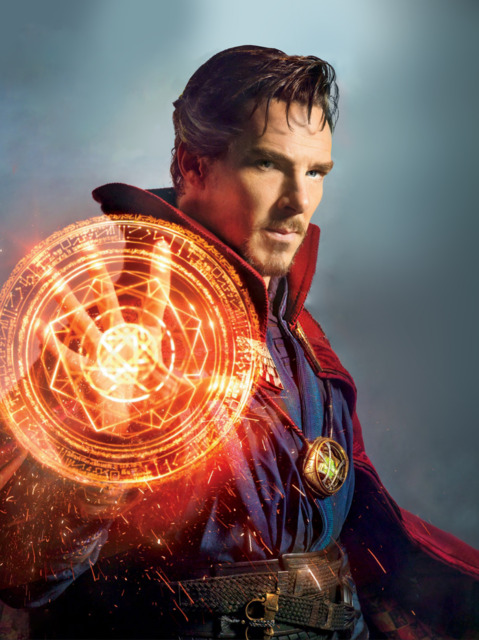
Dr. Strange (4/5 Stars)


I read somewhere that Marvel had just made the 13th successful blockbuster in a row. It speaks to the strength of the brand. True, it has a tremendous advantage in having a backlog of sixty years of story and the built-in audience to boot over other great brands such as Pixar, but that shouldn’t take away from the great franchise craft that can be found in these movies. “Dr. Strange” is one of my favorites already. It was so good that I saw it twice in a theater and took my family to see it over Thanksgiving.

Blockbusters are mainly to be seen for Spectacle. Spectacle should be big but also unique as should convey a sense of awe on the viewer. Given the consistent multitude of Spectacles that all look alike it is hard for any single one to have a great deal of their impact. A city being blown up hardly excites me anymore. I’ve already seen it many times.“Dr. Stange” to its great credit, showed me Spectacle I had never seen before. It was awesome.

To explain how, here is a character from the movie: “The Avengers protect the world from more physical dangers. We protect the world from supernatural forces from other worldly dimensions.” Like many comic books, “Dr. Strange” melds modern science with ancient bullshit. Dr. Strange practices magic but this magic comes in the form of 21st century mathematical babbel about relativity, the multiverse, and particle physics. The audience hardly understands either so I guess it makes sense to put them together. Anyway during certain fight scenes, the magic works less on the participants of the fight than on their surroundings. Spells are casts and buildings fold up and down, the axis of the world tilts, gravity goes every which way, and then everything splits up in a crazy fantastical kaleidoscopic effect. You really have to see it to believe it. I was blown away a couple of times by what was going on.

What makes it great of course is not necessarily that things are crazy, but that these things are explained, have rules, and follow them. The biggest laugh in the movie contains a fight between two ghosts of two physically comatose people in a hospital emergency room. How the movie gets there is just superb story-telling. It is a very nice ‘aha!’ moment.

Dr. Stephen Strange of course believes none of this in the beginning. He is a famous and successful brain surgeon dedicated to science. Like many Marvel Superheroes, his main flaw is arrogance (an all too common flaw for superheroes I still believe) and after an accident that ruins his hands, he humbles himself and seeks help from The Ancient One who lives in a monastery in Tibet. The background of these training scenes are perhaps more interesting than what takes place during them as it illustrates the benefits and limitations of corporate marketing.

This Tibetan monastary is an exceptionally diverse Tibetan monastary. The three main wizards are a Black Man named Mordo (Chiwetal Ejiofor), a Chinese man (Benedict Wong), and a Woman (Tilda Swinton). There are a multitude of others in the background. I spotted a Japanase guy somewhere at some point. White men are represented by our main protagonist, Dr. Steven Strange (Benedict Cumberbatch playing another snarky genius) and our main antagonist, Kaecilius (Mads Mikkelson). Everybody seems to be here except, well, Tibetans. Now the Tilda Swinton character, The Ancient One, used to be Tibetan in the comic book. But she was changed to a Celtic sorceress in the movie. Why? Well, one of the main markets for Marvel movies is China and the Chinese don’t like it when you say good things about Tibetan monks. Also notice that the three main sanctuaries for the wizards are located in New York, London, and Hong Kong. Now why would these three locations be all that special in terms of magic. The answer is they aren’t. What these three places happen to have in common is that they are major financial hubs, the three biggest in the world actually.

You can take a look at this and see crass manipulation of character and location for marketing reasons and corporate gain as well as craven capitulation in the face of a corrupt Chinese government. But you can look at the glass half-full as well. For instance, when corporations try to make as money as possible, they follow a strategy of inclusion. So these stories contain as many different and diverse people as possible. And really its the Chinese government, not Marvel, that are jerks at the end of the day. If Marvel wasn’t being pressured (i.e. the market was more free in China) The Ancient one would have remained Tibetan and we would have all enjoyed a movie that would have been even more cosmopolitan.


p.s. Conveniently, I can date back the start of the Marvel Universe (I put that at 2008’s Iron Man) with my arrival in New York. Yes, every time the Avengers and their enemies destroyed New York City, I was living there.