Search This Blog

Tuesday, August 14, 2018

Sorry to Bother You (5/5 Stars)


Sorry to Bother You has lots to say and uses its time wisely. This is one of those movies that you can spend much time afterwards discussing what it had to say. On an originality scale from 1 to Being John Malkovich, it is around 8 or 9 Charlie Kaufmans. It starts off in a new place and then half-way through goes completely crazy.

Sorry to Bother You was written and directed by Boots Riley. Never heard of him, but the way this movie plays, it feels like he’s had half a decade worth of material backed up in his system wrestling for position at the floodgates of creative fulfillment. Sorry to Bother You is about many things: wealth and poverty, capital and labor, ambition and community, individuality and conformity, weird art, wrong-headed genetic experiments, and slavery.

Our hero Cassius Green (played by Lakeith Stanfield) starts with an existential crisis. He lives in his uncle’s garage and hasn’t a job. He is simply surviving. What will his life amount to future generations? (Even when the movie is small, it is big.) Cassius Green lands a soul-crushing seemingly impossible job at a telemarketing firm. They will hire anyone who walks in the door. He is not doing well. Then, a fellow colleague played by a wonderful Danny Glover (still alive!) gives him great advice. Use your white voice he counsels. “White Voice?” asks Cassius. Glover explains what he means. Its not just sounding nasal. It means sounding like you don’t have student loans, that you pay all your bills on time, that you don’t have a care in the world. You are who the other person on the phone wants to be like. Oh, that white voice. Cassius Green gives it a shot. (He sounds remarkably like the actor David Cross, best known as Tobias Funke the therapist turned actor in “Arrested Development”.) This apparently is what black people think white people sound like. Like the movie in general, it’s too funny to be truly offensive.

Pretty soon, Cassius’s telemarketing career takes off and two subplots run right along side his growing success. The first is that the telemarketing center tries to unionize. This is led by a guy named Squeeze, played by Steven Yuen, who stages a work stoppage during prime calling hours. As one character remarks, it is some very Norma Rae shit. Having seen that movie, I agree. The second is that after Cassius gains a promotion he starts selling a product called “Worry Free” labor. “Worry Free” is a company that contracts with regular people to provide guaranteed food and shelter in exchange for otherwise unpaid labor. Its not necessarily slavery but Sorry to Bother You wants to liken it to such. Obviously, Cassius, being black, has some qualms about selling slavery to anyone, even if the slaves are of all races. But he also doesn’t want to be poor loser anymore and what exactly is his responsibility to everyone else?

Then there are weird art show, at least one riot, and the horse people. But I’m not going to get too far into that. It would be impossible to explain here. Two more points. First, this is the second movie this year that puts Oakland, California on the map. The first was Ryan Coogler’s “Black Panther”. It is beginning to feel like that place is the next hot place to make great movies. If one more great movie from one great new filmmaker springs from there in the near future, it would be fair to say its a trend.

Second, is a philosophical qualm. Unlike Boots Riley, I don’t believe slavery is a particularly profitable or productive way to run a business. Here, “Worry Free” is making cash hand over fist by this type of business practice. History disagrees. As the Adam Smith would say, the problem with slavery (besides all the evil) is that, because there is no hope of bettering their situation, the workers are not incentivised to worker smarter and/or harder. Rationally, a slave will work just as hard as they can to avoid punishment. I’ve heard this weird argument flitting about that the wealth of America was produced through slavery. That is a bit like saying the economy of South Korea was built by North Koreans. If slavery produced wealth, the world would have been a whole lot richer a whole lot longer ago. This the truth of the matter. Having said that, Boots Riley made a great film and Lakeith Stanfield, well, his character reminded me of some great white characters like Peter Gibbons from Office Space and C.C. Baxter from The Apartment.

Tuesday, July 31, 2018

Ant-Man and the Wasp (4/5 Stars)


Like an antidote to universe-sized seriousness, Ant-Man and the Wasp sneaks into theaters just a few months after Avengers: Infinity Wars. Importantly, it takes place before that movie. A good thing since the Ant-Man franchise is notable in its complete lack of bigness in both themes and superhero size. It stars the nice and cute Paul Rudd as a petty thief named Scott Lang who teams up with the reclusive scientist Hank Pym (played by Michael Douglas) who engineers for him a suit that shrinks his size but outsizes his strength, you know, like an ant. Hank’s daughter, Hope Pym (Lost’s Evangeline Lily), gets her own suit this time around and becomes The Wasp. Really, she was better at this thing than Paul Rudd was even in the first movie. She was the one who trained him after all.

Ant-Man and the Wasp is all fun and action. I mean really, it is a Paul Rudd movie (everybody is nice or at least means well) but with car chases and quantum mechanics. However, to explain anything that happens in this movie takes a stupid amount of exposition. In fact, this movie could serve as a screenwriting class on exposition. There are some really good examples and others not so good.

Exposition is something that all movies need to do. Since Ant-Man and the Wasp is like the twentieth movie in an intertwined Marvel Universe, much exposition is needed to explain what this particular movie is about. The best exposition in this movie happens in the first ten minutes as a soliloquy performed by the scene-stealing Randall Park. (I’ve been doing this for so long that I can say about Randall Park what I said about Paul Rudd after “Knocked Up”, I think this guy is a leading man who needs his own movies). Randall Park plays a FBI agent who is checking in on Scott Lang during his house arrest. Scott Lang’s seven-year-old daughter asks why the FBI doesn’t like her daddy. Randall gets down on his knee to better connect with the little girl. “It must be hard to understand for you,” he relates and then speaks at length in a direct and literal tone about the various legal codes in effect since Avengers: Age of Ultron and Captain America: Civil War. Classic. This does three things: One it explains the most important events of past Marvel movies concerning Ant-Man’s situation. Two and Three: It is a character-defining joke, the FBI agent seemed like he knew how to relate to a girl by getting down on her level but comically revealed that he was too straitlaced to do so.

The worse exposition concerns all the explanations concerning Hank Pym’s wife being lost in the quantum realm, how the quantum realm works, and the nature of the movie’s bad but not so bad guy Ghost. These do not come along with jokes or character development. They are necessary scenes but pales in comparison with good exposition as above. In fact, it pales in comparison with a scene of unneeded exposition provided by Luis (played by the scene-stealing Michael Pena) who answers the simple question “Where is Scott Lang?” in a very funny not simple at all way.

But besides the exposition, what is this movie like? Well, it’s got a bunch of good people trying to figure out problems. There are a few bad guys but they are either kind of goofy (Sonny Burch played by Walter Goggins) or mean well (Ghost played by Hannah John-Kamen). They have car chases over and about the hills of San Francisco. You may have seen that before, but have you seen it with cars that shrink and unshrink and sometimes a huge Ant-Man? It is good times.

This movie has notable diversity. It is a casting laundry list of the better actors of various ethnicities in its supporting roles. Obviously Paul Rudd is the straight white male. But two main superheroes beside him are both female (The Wasp and Ghost). Paul Rudd’s friends who run a security agency are hispanic (Luis), some sort of Eastern European and black. The FBI agent is Korean. The lesser bad guy is a southern gentleman (Walter Goggins) who employs at least one Indian. Given the movie’s location, San Francisco, the cast seems possible and besides me, I don't think anybody has made a point of it.

The Ant-Man franchise adds another complexity to the nature of the Marvel Universe. Thor and Guardians of the Galaxy added the vastness of the universe. Dr. Strange added new dimensions. Ant-Man adds the minute quantum realm. The science behind these complexities is real if thinly realized. What is more interesting perhaps is how these various thin interpretations of real science will interact with one another. This is bound to happen in the next Avengers movie given how Ant-Man ends.

Tuesday, July 3, 2018

First Reformed (4/5 Stars)


It is hard to explain the appeal of devotional Christianity. That is, the type of Christianity in which one lives alone in prayer without any earthly comfort. Many saints lived in that way, some of which would endure what would be defined as torture, if it had not been self-inflicted. The early Christians had a reputation for suicide. Historians like Edward Gibbon argued that the downfall of the Roman Empire was in part caused by the many Christians who did not believe their civilization was worth living in: they opted out of Roman life, thus depriving the state of the citizens and soldiers it desperately needed to stave off internal revolution and outside invasion. In that way, the fall of the Roman Empire was caused in part by a Christian rejection of its unjust and unequal society. The Romans could not be beaten in a fight, so the Christians gave up all earthly ambitions in lieu of participating in a society they deemed sinful. In the end, Christianity defeated Rome by hollowing it out from within.

Can this devotional Christianity still hold appeal in our society today? In many ways our civilization is far better than the Romans in terms of equality, rule of law, health and happiness. But this movie makes a strong argument that there is still room for it, without sounding too much like Ezekiel or Jeremiah. If this polemic concerned the sexual revolution, crime, or immigration it could be dismissed by the scientific evidence that show either the problem is overblown or closer to being solved than it ever has been. However, what causes the despair in Pastor Toller (played by Ethan Hawke) is actually backed by the science. Pastor Toller becomes concerned about climate change due to encounters he has with a parishioner, a deeply troubled environmentalist.

Pastor Toller is the prime candidate for this form of Christianity before the film begins. He is recently divorced. His wife left him because he had encouraged his son to join the military (like he had done and his father had done before him) and his son was killed in Iraq in a war with no moral justification. He lives simply, alone, and in deteriorating health. He works at First Reformed, a museum church with a very small following that is being funded by a richer, fuller, and more entertaining church called Abundant Life. Abundant Life is headed by Pastor Joel Jeffers who is played by Cedric Kyles (better known as Cedric the Entertainer) in a rare dramatic role. The juxtaposition between what Christianity started out as and what is now being called the Prosperity Gospel may by itself cause despair. In one scene Pastor Toller when volunteering in a youth ministry, one of the kids explains that her father goes to church and prays all the time, so why she asks, is he still unemployed? Pastor Toller tries to explain that Jesus is not calling people to be successful (at least in the commercial sense). He is angrily attacked for this view by another one of the kids. At another point he finds out that Abundant Life has accepted charitable funds from the area’s main polluter, Balq Energy. What is Pastor Toller going to about all this? What would Jesus do?

Like most movies that deal with heavy philosophical questions, this movie could descend into unbearable melodrama. It was written and directed however by Paul Schrader, who has had much experience in bringing these types of moods and themes to our screens. (He is best known for his Scorsese collaborations Taxi Driver, Raging Bull, and The Last Temptation of Christ). This can be noticed almost immediately when he chooses to devote what has to be at least ten minutes of conversation in one room between two people, Pastor Toller and Michael, the despairing environmentalist. In most other movies, the scene would have ended five minutes earlier. But Schrader stays and flushes out all the arguments about life, forgiveness, hope, and despair. The result is fascinating, half because it is almost never done (perhaps the last time I saw something similar was the fifteen minute conversation between the priest and Bobby Sands in Steve McQueen’s Hunger) and half because all the arguments both for and against make sense.

Schrader has had a famously uneven career as a movie director. His last one starred Lindsay Lohan and James Deen and I’ve heard was particularly bad. It is nice to see him return to form here and make one of his best movies. Ethan Hawke is also very good and Cedric Kyles once again proves that comedians can be the perfect choice for certain dramatic roles. First Reformed does not end tidily and given the existential problems it explores, it probably could not do so. But its journey will take you places most other movies would not know how to find. I recommend watching it alone at home in a dark room with no distractions and a bottle of scotch.

The Incredibles 2 (5/5 Stars)


 A benefit of animation is the ability to stop time. Bart Simpson has been the same age since 1989. Here, the time between original movie and sequel was a full fourteen years. However, thanks to the wonders of technology, The Incredibles 2 starts immediately after the first film ended. Now, you will know exactly what happened when the villain Underminer (looks like a mole) burrowed beneath the city with a big drill to rob several banks. The human actors certainly look older but all they lend here are their voices and those are the same. Actually, there was a casualty. The young boy who voiced Dash in the earlier movie had to be be replaced by a different young boy. Still everyone else is back. Craig T. Nelson voices Bob Parr/Mr. Incredible, Holly Hunter voices Helen Parr/Elastigirl, Samuel L. Jackson voices Lucius Best/Frozone, Sarah Vowell voices Violet Parr (the author Sarah Vowell did not turn the ingenious bit of casting that landed her this part, and her first role in a movie, fourteen years ago into a voice career, The Incredibles 2 is her second role), and the Director Brad Bird again voices Edna Mode that tribute to old Hollywood costume design.

The Incredibles 2 is above all an action film. The superheroes fight villains and do so at regular intervals. At the beginning of the movie, they fight the Underminer together. The collateral damage from this fight has superheroes banned again (the bank after all was insured, so if the Incredibles had done nothing, things would have turned out better). As the government program is terminated, a billionaire philanthropist steps into the void. This man is voiced by the incorrigible excitement of Bob Odenkirk, perfect. The billionaire believes that superheroes have an image problem. He proposes that they wear cameras on their clothes and present their best sides first. By that he means, only Elastigirl and not Mr. Incredible because she wrecks less things while saving them. Mr. Incredible comically fights to hold onto his dignity and Elastigirl goes on to save runaway trains and fight villains every twenty minutes or so in spectacular display.

Meanwhile, Mr. Incredible is relegated to taking care of his family. Never has such a task been presented in such a heroic light. Those who are old enough will remember when American education “changed math” much to the chagrin of old men trying to help their sons with their homework. And can you really help a teenage girl deal with anything? The most pressing problem however is the toddler Jack Jack who is budding with new random and frightening superpowers. The movie’s best moment has to be when Jack Jack fights a raccoon, who starts the fight with way too much confidence and is continually surprised by the toddler’s more and more dangerous capabilities. Jack Jack is taken at one point to Edna Mode who goes crazy with the creative possibilities of a super-suit for such a superbaby.

The Incredibles franchise is notable in its slightly conservative tone. The first movie took swipes at bureaucracy and personal injury attorneys. The Incredibles 2 continues on this thread. This can be seen first in the billionaire’s modern liberal idea to present superheroes in a more favorable light by not highlighting the white man (I say that this discrimination is from a conservative point of view because it presupposes that the movie’s world would find a woman to be more acceptable than the white man. We all tend to see ourselves as the victim). That poor white man, it really hurts to not be wanted. At another point, the villain of the story, the Screenslaver, presents a very compelling reason for why it wants superheroes to remain illegal. Screenslaver posits that when there are superheroes around, normal people become complacent about their place and situation. Why should they try to better themselves or fight back when they can just call on superheroes to save the day? Superheroes, this villain reasons, make people weak. This is essentially an argument against patriarchal, i.e. big, government. The movie is not completely about this point. It is very funny and action-packed, but it is notable that a kid’s movie would so articulately make this point (even if, you know, the villain is ultimately vanquished). Pixar is a company that contains a multitude of voices.

Pixar has unfortunately gotten so successful they feel compelled to make sequels for their best films, i.e. most of them. If they were a less successful company, this movie may have been made ten years ago. (Instead it had to first wait for sequels of Finding Nemo, Monsters Inc., Toy Story, and Cars (twice) to be made). The Incredibles 2 is notable in that it is better than the first one. It is as funny and action-packed (perhaps more so) but also has a better villain and a better point to it. After fourteen years, and a stupid amount of other super-hero movies produced in the meantime by other studios, this sequel had much more to say about the genre than it had before. Give Pixar another Oscar. I most likely won’t see a better animated movie this year.

p.s. Samuel L. Jackson currently has the record for most box office receipts for movies he has acted in, $5.589 billion dollars to be exact as of now. He just reswiped this record from Harrison Ford, $4.963 billion dollars. How did he do it? Well, apart from being a reliable work-a-holic, he is also a big team player. He added substantially to his record this year with supporting roles, first in Avengers: Infinity War and now as Frozone in Incredibles 2.


Saturday, June 30, 2018

Deadpool 2 (4/5 Stars)


Deadpool 2 makes such a big deal about its sub-class of superheroes. In one scene, as Deadpool wanders about the X-Men superfortress, he wonders where everyone else is. Didn’t this movie get the rights to anybody other than Colossus and what’s her name!? (A room full of the important X-Men quickly close there doors upon a glimpse). That is unfair. Deadpool does not lack for great superheroes. Well, perhaps not great but at least very fun superheroes. Take Deadpool, just by himself. Here is a man who that cannot die and does not care whether or not he lives or even gets hurt. Demonstrating how indestructible he is, he attempts to kill himself by incineration at the beginning of the movie. He literally lies on a bunch of gas barrels, drops in a lighter, and blows himself up into many pieces. No doing. He can’t die and just how he survives these sorts of things is fodder for many jokes, most made by Deadpool himself, an accomplished wisecracker.

The next most fun is Domino (the more diverse and genderfied version of Longshot, my favorite superhero who I guess will never make it into a superhero movie now). Domino’s superpower is luck. She just gets lucky all the time. “Luck is not a superpower” retorts Deadpool. Well, what if you gave a dumb excuse to a movie production team and several screenwriters to make sure you escape in the most profound and unexpected ways from many many dangers. Yes, that just might be a superpower. Then there are the big guys like Colussus and Juggernaut. At one point they use their big metal fists to pound on each other. It’s fun.

You have already seen the plot of Deadpool 2. This engagingly humorous derivative product of superhero movies basically copies the twists and turns of two great prior movies Terminator and Looper. Terminator concerned a bad guy from the future who was on a mission to kill a hero before he became great. Looper a derivative of Terminator with a twist concerned a good guy heading back to kill a future bad guy, who at that point was still an innocent child. Deadpool 2 has the same exact plot, and it speaks to the power of these particular story-lines that they continue to have such power. It certainly works here. Why? Because time-travel is about regret, and that is universal. Deadpool is an ugly outcast second rate superhero (regret). Deadpool failed his loved ones (regret). Deadpool wants to help a child be a better person than he turned out to be (regret). Deadpool is one of us, just immortal and with a far more developed sense of humor.

I confess I did not like at all the first twenty minutes of Deadpool 2. A deep tragedy occurs in that time and, no, the sarcastic opening titles could not make me feel any shallower about it. Not until did I realize that time travel was going to be involved did I start to feel like I was allowed to have a good time. When Cable (played by Josh Brolin a fine straight man counterpoint to Ryan Reynolds wild and crazy Deadpool), a Terminator knockoff, finally shows up trying to change the past, I was finally okay, nothing matters, they’ll figure out how to change the past at some point here. Of course they do, and many other things that did not need to be changed at all.

I want to give a shout out to the soundtrack of Deadpool 2, the songs of which the movie would have you believe it is playing ironically. Yeah right, these guys obviously love Celine Dion and Barbara Streisand. And why wouldn’t they, they’re the best. Deadpool 2 also contains an extraordinary acoustic version of A-ha’s “Take on Me”. I had to mention it to the people I saw this movie with around 3-4 times before I got them to admit that they too believed it was great. There is no shame when your heart is in the right place, that’s what Deadpool 2 teaches us about life.


Disobedience (3/5 Stars)


I confess that I wanted this movie to be worse. Part of the reason I saw it at all had to do with the promised outrageous scandal of the Hasidic Jewish lesbian love affair between actresses Rachel Weisz and Rachel McAdams. A bad movie might have been hilarious and/or sexy. Unfortunately and fortunately this turned out to be a good movie about the forbidden romance of two Hasidic Jewish lesbians. Sexy at times yes, but not hilarious, and at some points rather touching. In fact, for the first time in an untold amount of movies, the conclusion to this particular type of story had a conservative bent. For once, sexual liberation does not get the upper hand in its age old war against traditional community values.

We find Ronit Krushka (played by Rachel Weisz) in New York. She works as a photographer. She ice skates. She drinks. She has casual sex with strange men. Then she receives a phone call. Her father, a venerated rabbi in a tightly bound Hasidic Jewish community in London has died. She has been outcast for some time.

She returns home. Everyone is surprised to see her but greet her with politeness. She first comes to the house of Dovid Kuperman (played by Alessandro Nivola). The funeral ceremonies are being held there because he was an important pupil of the rabbi. Its awkward though because Ronit and Dovid were in a relationship when she left for good. A further twist develops when the reason she the leave enters the room as Dovid’s now wife, one Esti Kuperman (played by Rachel McAdams). Esti it is established is lesbian. Ronit seems like she is bisexual. In any case, their relationship was frowned upon and Ronit simply left the community. Esti married Dovid.

For the most part, this movie follows the forbidden love genre track. It is a Romeo and Juliet storyline: the two lovers against the unjust world. Until, quite amazingly, it doesn’t follow through. There is something strange about this community. For all its stifling conformity, it is apparent that Ronit misses being apart of it. Witness her trying on a wig and keeping it on for a day. Look at the way she enviously eyes those she has left behind in the coffee shop. Then there is Esti. She finds Ronit more attractive than her husband, but she doesn’t want to elope to New York. She likes these people. There is even a scene where the husband is teaching Torah to some pimply faced teenage boys. They are studying a passage in which sex is the main feature. The boys interpret the passage as simply expressing physical pleasure. But, points out Dovid, isn’t there a type of love that is more than that?

What saves this movie from being a simple polemic against homosexuality is the main theme of it. It does not present the question as just dogma: if you don’t do as we say you will go to hell. It presents an actual choice. You can choose self-fulfillment in this particular way that this community does not recognize, or you can choose this community. The movie suggests that the latter can be a real choice made by a real person who is not brainwashed and not being abused by this community. That is, being part of this community might actually be worth the sacrifice being made. The point though is that the morality of the question necessarily depends on the choice of the individual. It is a question so fundamental to one’s identity that it needs to be independently made. What I love about this movie is that it asserts a free-thinking individual can assert an unselfish identity. There is rightly much cynicism about this topic, but yes, ultimately I believe it too.

The Avengers: Infinity War (5/5 Stars)


The last time a movie franchise achieved something akin to what Avengers: Infinity War accomplishes had to be The Lord of the Rings. That epic multi-Oscar winning movie was itself the third installment of a cohesive and perfectly realized trilogy of movies based on revered source material. Avengers: Infinity War leap-frogs that accomplishment. This movie is the culmination not of a trilogy but a universe of interconnected movies that spans nineteen films. Perhaps the HBO series Game of Thrones is the closest thing, but that TV series is still not of the same scale nor found in so many variations as the Marvel franchises that have climaxed into Infinity War. No, there really is nothing quite like Avengers: Infinity War in the history of movies.

Avengers: Infinity War has seventeen credited writers. It has two directors, Anthony and Joe Russo. It tells a story that attempts to involve all of Marvel’s outstanding franchises. These include:

Iron Man: Robert Downey Jr. (Tony Stark/Iron Man); Gwyneth Paltrow (Pepper Pots); Don Cheadle (James Rhodes/War Machine), Samuel L. Jackson (himself)
Thor: Chris Hemsworth (Thor); Tom Hiddleston (Loki); Idris Elba (Heimdall); Mark Ruffalo (Bruce Banner/Hulk); Peter Dinkalge (Eitri)
Captain America: Chris Evans (Steve Rogers/Captain America); Scarlett Johansson (Natasha Romanoff/Black Widow); Paul Bettany (Vision); Elizabeth Olsen (Wanda Maximoff/Scarlet Witch); Anthony Mackie (Sam Wilson/Falcon); Sebastian Stan (Bucky Barnes/Winter Soldier)
Guardians of the Galaxy: Chris Pratt (Peter Quill/Star-Lord); Zoe Saldana (Gamora); Karen Gillan (Nebula); Pom Klementieff (Mantis); Dave Bautista (Drax); Vin Diesel (Groot); Bradley Cooper (Rocket); Josh Brolin (Thanos)
Dr. Strange: Benedict Cumberbatch (Doctor Strange); Benedict Wong (Wong)
Spider-Man: Tom Holland (Peter Parker/Spider-Man)
Black Panther: Chadwick Boseman (T’Challa/Black Panther); Danai Gurira (Okoye); Letitia Wright (Shuri)

Any of these franchises can and have carried a great movie on their own. (In particular, since 2013 Marvel has made a stretch of great movies including Guardians of the Galaxy, Captain America: Civil War, Dr. Strange, Spider-Man: Homecoming, Thor:Ragnarok, and Black Panther). So one of the great obstacles Infinity War had to overcome is how to fit all the above in the same movie giving each and every character their own moment to shine. Amazingly, this is done. All of the above share this movie in equal heft and have their own moments to shine. I’m not sure how seventeen writers and two directors go about doing something like that, but its time to start handing out Oscars.

What may to be the hardest thing to accomplish is how consistently funny the movie is. I say this because there are two big things fighting against it. The first is that the main villain, Thanos (played by Josh Brolin) is trying and succeeding throughout the movie to kill off half of the universe. It is heavy stuff and is taken quite seriously, not least by Thanos. Two important characters from the Thor franchise, Loki and Heimdall, die in the first fifteen minutes. Another important character from the Guardians of the Galaxy franchise dies at the half-way point. At the end, well, it seems like half the characters die. I won’t tell you which half, that would be a spoiler. The second is that this is an action-heavy blockbuster and huge spectacles and jokes generally do not generally complement each other. A good example of blockbuster spectacles and laughs working is the first Ghostbusters movie. A good example of blockbuster spectacles and laughs not working is the Ghostbusters remake. But in Infinity Wars, every joke lands. Dr. Strange is funny, Thor is funny, Star-Lord and Drax are funny, Spider-man is funny. Some characters are generally funnier than others. For instance Captain America and Black Panther were never particularly humorous, but almost everyone has their moments. There is also the added pleasure of seeing various characters interacting for the first time. At one point Thor meets up with the Guardians of the Galaxy. Bruce Banner has a scientific conversation with Shuri in Wakaanda. Dr. Strange and Tony Stark have this dialogue upon meeting.

Tony Stark: Nice cape. What's your job, again?
Dr. Strange: Protecting your reality, douchebag.

Infinity War is supposedly only the first of a two part movie, the other coming out next year. In that case, it is hard to judge the overall story at this point. But really, given how well this movie did what it set out to do, how could it be bad? Marvel is at its peak and the movies it has been making deserve to start getting serious recognition and not just for special effects. I expect Black Panther will run away with a serious amount of Oscars next year. Perhaps the year after Infinity War 2 will take the ultimate prize. As far as I’m concerned, Marvel has already earned it. At this moment, They are the best in the business.

Saturday, May 19, 2018

Oscars 2018


I am too busy to write much this year about the movies. Here are my favorite from last year. Bold indicates a winner.


BEST PICTURE
Battle of the Sexes
The Beguiled
Call Me By Your Name
The Florida Project
Jumanji: Welcome to the Jungle
Lady Bird
The Little Hours
Logan
Thor: Ragnarok
Wakefield


BEST DIRECTOR
The Beguiled – Sofia Coppola
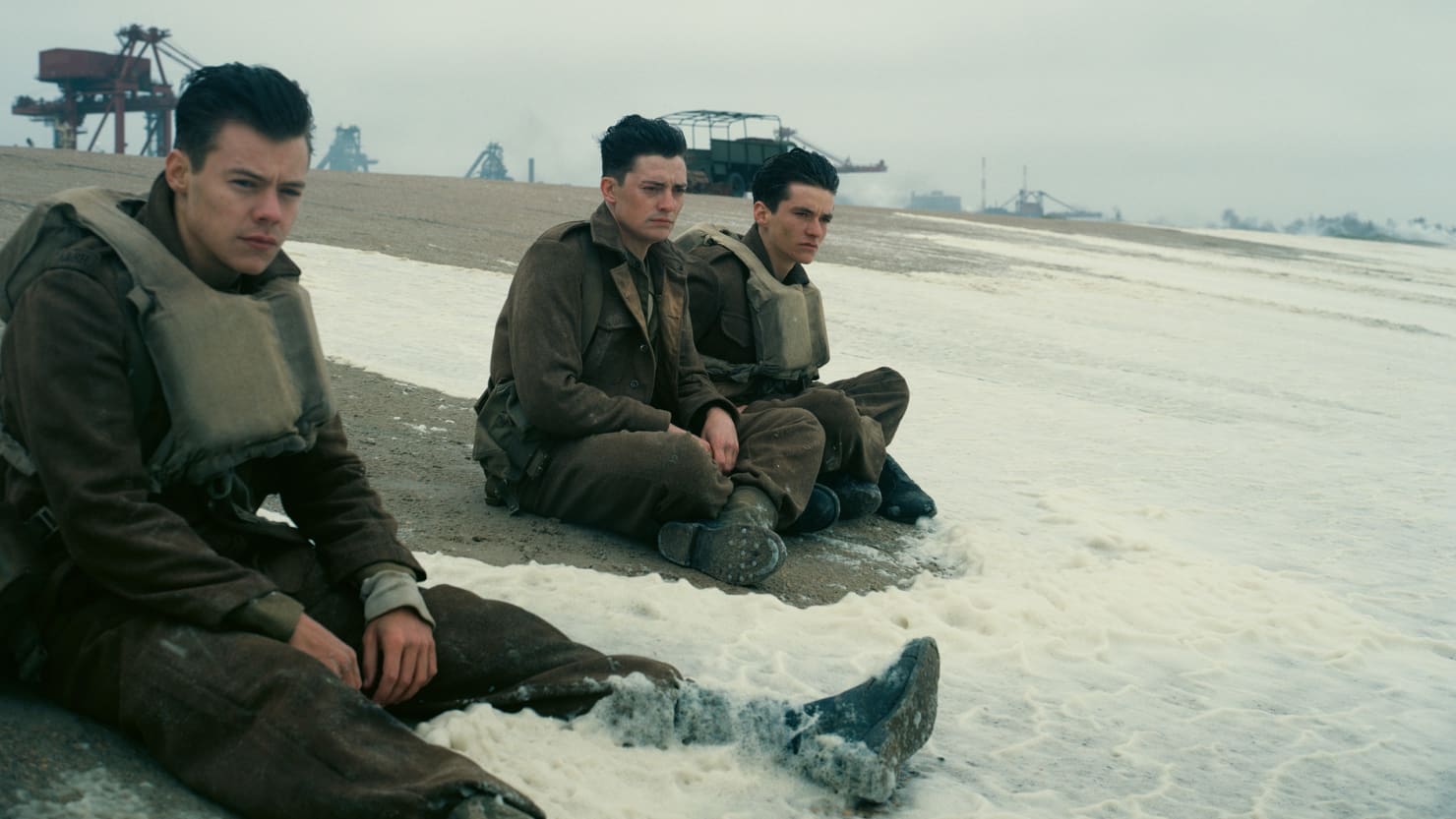
Dunkirk – Christopher Nolan
Lady Bird – Greta Gerwig
The Florida Project – Sean Baker
Call Me By Your Name - Luca Guadagnino


BEST ORIGINAL SCREENPLAY
The Big Sick – Kumail Nanjiani and Emily V. Gordon
Logan Lucky - Rebecca Blunt
Lady Bird – Greta Gerwig
Three Billboards Outside Ebbing, Missouri - Martin McDonagh
The Florida Project – Sean Baker


BEST ADAPTED SCREENPLAY
Logan – James Mangold
The Beguiled – Sofia Coppola
The Little Hours - Jeff Baena 
Call Me By Your Name - James Ivory
Jumanji: Welcome to the Jungle - Chris McKenna and Erik Sommers


BEST ACTOR
Logan – Hugh Jackman
Wakefield – Bryan Cranston
Call Me By Your Name – Timothee Chalemet
Jumanji: Welcome to the Jungle – Dwayne “The Rock” Johnson
Phantom Thread – Daniel Day Lewis


BEST ACTRESS
Lady Bird – Saiorise Ronan
Battle of the Sexes – Emma Stone
Three Billboards Outside Ebbing, Missouri – Frances McDormand
The Florida Project – Brooklyn Prince
The Shape of Water – Sally Hawkins


BEST EDITING
Baby Driver
Dunkirk
Logan Lucky
Mother!
The Florida Project


BEST MAKEUP/HAIRSTYLING
Logan
Darkest Hour
The Shape of Water


BEST COSTUME DIRECTION
The Beguiled
Spider-Man: Homecoming
Blade Runner: 2049
Star Wars: The Last Jedi
Phantom Thread


BEST PRODUCTION DESIGN
The Beguiled
Blade Runner: 2049 
Thor: Ragnarok
The Shape of Water
Star Wars: The Last Jedi


BEST ANIMATED FEATURE
Coco


BEST CINEMATOGRAPHY
Dunkirk
IT
Blade Runner: 2049 - Roger Deakins!
The Shape of Water
Star Wars: The Last Jedi


BEST VISUAL EFFECTS
IT
Blade Runner: 2049
Thor: Ragnarok
Star Wars: The Last Jedi
Spiderman: Homecoming


BEST SOUND EDITING/MIXING
Baby Driver
Dunkirk
IT
Mother!
Star Wars: The Last Jedi


BEST DOCUMENTARY
Wormwood - Errol Morris


BEST SUPPORTING ACTOR
Christopher Plummer – All the Money in the World
Three Billboards Outside Ebbing, Missouri – Sam Rockwell
Mother! - Javier Bardem
The Florida Project – Willem Dafoe
Jumanji: Welcome to the Jungle – Jack Black


BEST SUPPORTING ACTRESS
The Beguiled – Nicole Kidman
Okja – Tilda Swinton
The Little Hours – Kate Micucci
Lady Bird – Laurie Metcalf
The Florida Project – Bria Vinai


BEST USE OF A SONG
Coco – Remember Me
The Little Hours – Gregorian Chant
Baby Driver – Mint Royale Blue Song
Baywatch – Panda Dance Scene
Logan Lucky – Take Me Home Country Roads by John Denver